Category: Top Tips

  • Top Tips for Outdoor Learning in Winter

    Top Tips for Outdoor Learning in Winter

    Let’s be honest — winter isn’t everyone’s favourite season.

    The cold.
    The layers.
    The extra time it takes just to get outside.

    For me, winter is the hardest season. I don’t naturally gravitate towards it, and there are days when the thought of coats, hats, gloves, and waterproofs feels like a lot before we’ve even stepped out of the door.

    But over time, I’ve learned that outdoor learning in winter doesn’t have to be perfect — it just has to be embraced with care and realism.

    Here are some practical tips that genuinely make winter outdoor play more manageable, enjoyable, and worthwhile — for children and adults.


    1. Warm adults = happier outdoor experiences

    From someone who really feels the cold… This one matters more than we sometimes admit.

    If adults are cold, uncomfortable, or rushed, outdoor play quickly feels like a chore rather than a joy. Investing in suitable winter clothing for practitioners makes a huge difference.

    Things that really help:

    • good-quality waterproof coats
    • waterproof trousers (yes — for adults too)
    • thermal layers
    • warm socks, footwear and gloves

    When adults are warm and dry, they’re more relaxed, more present, and more likely to stay outside for longer. That calm energy carries straight over to the children.

    This isn’t indulgent — it’s practical.


    2. Appropriate clothing for children is key

    Children can only enjoy outdoor learning if they’re comfortable.

    Supporting families to understand the importance of:

    • waterproof coats and gloves 
    • waterproof trousers or all-in-ones
    • warm layers (including hats and scarves/snoods)
    • spare clothes …can transform winter play.

    When children are dressed appropriately, there’s less stopping, fewer complaints, and far more freedom to explore.

    Everyone feels happier when they’re warm.


    3. Storage makes all the difference

    One of the biggest barriers to winter outdoor play is how hard it feels to get outside.

    Good storage can completely change that.

    Helpful ideas include:

    • easy to access outdoor clothing
    • Outdoor storage (I previously used a greenhouse, which is a great low cost option but we’ve recently upgraded to a small wooden shed)
    • outdoor resources stored close to where they’ll be used

    When everything is accessible, going outside feels manageable — not overwhelming.


    4. Outdoor learning doesn’t have to mean “the garden”

    Outdoor learning isn’t limited to a garden or outdoor area.

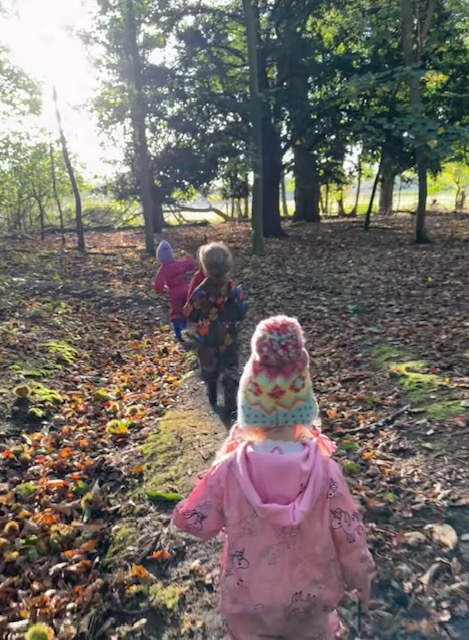
    Some of the most meaningful winter experiences happen beyond the gate:

    • local walks
    • bird spotting and listening
    • trips to wooded areas
    • nature trails
    • seasonal observations

    With events like the Big Garden Birdwatch approaching, winter is a wonderful time to notice birds, tracks, sounds, and changes in the environment.

    You don’t need elaborate plans — curiosity is enough.


    5. Forest-style learning can be flexible

    Forest School-inspired learning doesn’t have to be formal or complicated.

    If you feel confident:

    • small group woodland visits
    • regular nature walks
    • using Resources you enjoy inside, outside (for example taking play dough to the woods)

    can offer children consistency, calm, and connection.

    For those newer to it, joining local forest school groups or keeping things simple builds confidence over time.

    There’s no one “right” way to do this.


    6. Short, meaningful time outdoors still counts

    Outdoor learning in winter doesn’t need to be rushed. Children still benefit from long stretches of uninterrupted play outside, and this should always be something we work towards. At the same time, good practice means staying attuned to how children are feeling in the moment.

    Sometimes:

    • 15–20 minutes
    • one focused exploration
    • a short walk
    • a moment of stillness

    is enough.

    We all know there are days when little ones aren’t feeling 100% — they may be extra tired, under the weather, or simply not in the mood. I’m sure we’ve all experienced days, no matter the season, where we’ve had a lovely idea in mind, only for it to need cutting short because it just wasn’t the right day for it. That’s okay. Plans that felt right at the start of the day may need to change, and that’s part of responsive practice. It’s about quality, not duration.


    7. Lower the pressure (on yourself)

    Not every winter day will feel magical, and outdoor learning can feel more demanding in this season — both physically and emotionally. There will be days when conditions aren’t ideal, routines feel tighter, or energy levels are lower.

    That doesn’t mean outdoor learning has lost its value. What matters most is creating opportunities that are realistic, responsive, and sustainable — for children and practitioners alike.


    A final, honest reflection

    Winter outdoor learning does ask more of us.

    More preparation.
    More patience.
    More layers.

    But when we support ourselves properly, plan realistically, and let go of perfection, it becomes far more manageable — and often more rewarding than we expect.

    And on the days when it still feels hard, that doesn’t mean you’re doing it wrong. It means you’re human — and you’re not alone in feeling that way.

    Leave a comment

  • Top Tips for Treasure Baskets: Inspiring Curious Minds Through Sensory Play

    Top Tips for Treasure Baskets: Inspiring Curious Minds Through Sensory Play

    What is a Treasure Basket?

    A treasure basket is a simple yet powerful play resource designed for babies and young children, particularly those in the sensory-motor stage of development. It’s essentially a shallow basket filled with a carefully selected variety of everyday objects, chosen to stimulate all the senses — things to touch, smell, shake, look at and even mouth.

    Rooted in heuristic play, treasure baskets allow children to explore and discover at their own pace. There are no instructions, no right or wrong ways to play — just curiosity, choice and wonder. This kind of exploration builds early cognitive development, fine motor skills, concentration and confidence.


    What to Include in a Treasure Basket

    The beauty of treasure baskets lies in their simplicity. Most of the best items are inexpensive and often already found around the home or setting. When choosing objects, think natural, sensory, household, and safe.

    Natural Materials

    • Pine cones
    • Loofahs
    • Smooth driftwood/log slices
    • Dried fruits (whole/slices)
    • Large shells

    Metal and Wooden Objects

    • Wooden spoons
    • Curtain rings
    • Measuring cups
    • Stainless steel tea strainers
    • Bangles

    Sensory & Reflective Items

    • Old CDs/DVDs
    • Sensory bottles (filled with water, beads, rice etc.)
    • Crinkly foil or emergency blankets
    • Fabric scraps (silk, velvet, cotton)

    Themed Treasure Baskets: Play with Purpose

    Treasure baskets can be adapted to suit themes or learning focuses, helping keep play fresh and relevant.

    Colour Focus

    Create a colour themed basket by collecting a number of everyday coloured objects – stimulating the child/baby’s sense of colour recognition and visual exploration. It might include:

    • sensory scarves
    • Coloured balls
    • Whole fruit/vegetables (eg. a carrot for orange)
    • Sensory bottles

    Seasonal Exploration

    An autumn basket might include:

    • Crunchy leaves
    • Conkers
    • Cinnamon sticks
    • Pine cones

    Sound Discovery

    Include objects that make interesting sounds:

    • Bells
    • Rice shakers
    • Wooden castanets
    • Maracas

    These themes can gently introduce concepts like colours, seasons, and cause and effect, all through hands-on exploration.


    Treasure Baskets for Older Early Years Children

    Treasure baskets aren’t just for babies — they can evolve with the child. For older early years Young Ones, consider transforming them into discovery baskets or story baskets, filled with open-ended, curiosity-sparking items.

    Pirate Adventure Basket

    • Mini treasure chest
    • Coins, beads and old keys
    • Maps (you could include paper and pencils to create their own too!)
    • Shells

    Nature & Discovery Basket

    • Fossils, stones or replicas
    • Pine cones and bark
    • Magnifying glasses
    • Notebooks for observations

    Texture & Pattern Basket

    • Embossed tiles or textured rollers
    • Fabric swatches
    • Natural materials for printing or rubbings
    • Play dough for imprinting

    These baskets provoke deeper thinking, storytelling, role-play, and early scientific inquiry — perfect for education settings or at-home learning.


    Incorporating Books: A Literacy Boost

    Pairing a themed basket with a book adds a rich literacy element, connecting language and sensory play.

    Example Pairings:

    • Pirate basket“Ten Little Pirates” or “We’re Going on a Treasure Hunt”
    • Nature basket“A Rock is Lively” or “Peep Inside the Forest”
    • Colour basket“Brown Bear, Brown Bear, What Do You See?” or “Wow! Said the Owl”

    Read the book first, or explore the basket and then dive into the story and allow the children to look at the books independently too. This dual-sensory experience helps children link language, ideas, and objects — and encourages storytelling and comprehension.


    Sustainability in Play: Treasure the Earth, Too

    Treasure baskets are not only child-friendly — they can be planet-friendly, too. Instead of buying plastic toys, re-use and repurpose household items, making your basket both sustainable and affordable.

    • Old kitchen tools like whisks, pastry brushes, and silicone muffin cases make great sensory items
    • Reuse fabric scraps, ribbons or natural finds like pebbles and shells
    • Visit charity shops or car boot sales for unusual treasures

    This not only helps reduce waste but also teaches children the value of sustainability and the creativity of reusing.


    Final Tip

    Rotate items every week or two to keep interest fresh. Observe how children engage — what they’re drawn to, what they ignore — and adapt accordingly. The best treasure baskets respond to the child’s curiosity, not the other way around.

    Treasure baskets celebrate curiosity, nurture development, and remind us that the simplest things often bring the greatest joy. Whether you’re a parent at home or an educator, these little collections of wonder offer endless opportunities for learning, connection, and discovery.

    DISCOUNT OFFER – The Little Coach House has kindly offered our blog readers a discount off their amazing resources (including the beautiful mindfulness heart board pictured in the treasure basket)! QUOTE: YO10 at checkout to receive your fabulous discount.

    Leave a comment

  • Easy Ideas for Supporting Babies’ Development

    Easy Ideas for Supporting Babies’ Development

    Simple Play for Big Development

    Looking for easy, engaging ideas to support your baby’s development? These sensory-rich, baby-safe activities don’t require fancy equipment – just a bit of imagination and they’re all perfect for bonding and learning through play. Each one also supports key areas of your baby’s early development.

    1. Sensory Bottles

    Fill clear plastic bottles with materials like coloured water and oil, rice and beads or natural treasures. Make sure lids are tightly sealed.

    🧠 Supports:

    • Sensory development (visual and auditory stimulation)
    • Physical development (grasping, shaking, tummy time interaction)
    • Cognitive development (tracking, cause and effect)

    2. Tummy Time Treasure Mat

    Place safe textured items (like ribbons, foil (foil blankets from first aid kits work great), soft fabric etc) under a clear mat or a taped-down zip-lock bag for babies to look at and reach for during tummy time.

    🧠 Supports:

    • Physical development (neck and upper body strength)
    • Sensory development (touch, sight)
    • Personal, social & emotional (encouragement and praise during play)

    3. Bubble Fun

    Blow bubbles while your baby watches and reaches for them. Try singing while they float down for added fun!

    🧠 Supports:

    • Communication & language (listening and responding to singing or speech)
    • Physical development (hand-eye coordination, tracking movement)
    • Cognitive development (understanding movement and patterns)

    4. High-Contrast Picture Time

    Show black and white or high-contrast images in books or homemade cards. Let babies look, reach and react.

    🧠 Supports:

    • Visual development (tracking, contrast recognition)
    • Cognitive development (memory, attention span)
    • Communication & language (early sound play as you describe what they see)

    5. Sing & Sign Sessions

    Use simple songs and nursery rhymes alongside Makaton or hand gestures to support communication from an early age.

    🧠 Supports:

    • Communication & language (early vocabulary, non-verbal communication)
    • Personal, social & emotional (bonding, responsive interaction)
    • Expressive arts & design (music and rhythm appreciation)

    6. Treasure Baskets (Supervised)

    Offer a shallow basket with safe household objects of different materials (e.g. wooden spoon, sponge, ribbon, silicone whisk) for your baby to explore.

    🧠 Supports:

    • Sensory development (texture, shape, and sound exploration)
    • Physical development (reaching, grasping, fine motor skills)
    • Cognitive development (exploring through trial and error)

    7. Peek-a-Boo Play

    Play peek-a-boo using your hands, a scarf, or a soft book—babies love the surprise and repetition!

    🧠 Supports:

    • Cognitive development (object permanence)
    • Personal, social & emotional (bonding, emotional responses)
    • Communication & language (responsive interactions, anticipation)

    Remember: Simple, responsive play is powerful. These moments of connection support not just your baby’s development, but your relationship too.

    Leave a comment

    Pages: 1 2

  • Top Tips for Supporting Emotional Regulation

    Top Tips for Supporting Emotional Regulation

    1. Name Your Feelings
      Help children identify and express their emotions by using mirrors to explore facial expressions and discussing what different feelings look like. This builds emotional intelligence and awareness.
    2. Separate “I Am” from “I Feel”
      Encourage children to say “I feel angry” instead of “I am angry,” reminding them that emotions are temporary and don’t define who they are.
    3. Use Makaton
      Makaton sign language helps children express emotions. Even for those who usually have a good vocabulary, in moments of emotional distress and dysregulation, children can struggle to express themselves. This supports both emotional and verbal communication, when children don’t have or cant find the words.
    4. Read Books About Emotions
      Explore stories like The Colour Monster and The Lion Inside, using story props and puppets to dive deeper into characters’ feelings and situations.
    5. Calm Down Bottles & Basket
      Provide sensory bottles or a calming basket with emotion books, fidget toys, and other calming resources to help children de-escalate when feeling overwhelmed.
    6. Practice Dragon Breaths
      Teach mindful breathing with fun techniques like “Dragon Breaths” (deep breaths) or “Smell the Flowers, Blow Out the Candles” to calm the body and mind.
    7. Mindful Body Scan
      Encourage children to relax by tensing and releasing different body parts, helping them become more aware of their body and emotions.
    8. Daily Yoga
      Incorporate simple yoga poses to release pent-up emotions, reduce stress and boost emotional resilience.
    9. Music & Movement
      Use songs and physical activities (like jumping or running) to help children release energy and regulate their emotions in a fun, active way.
    10. Cooperative Games
      Promote self-regulation through games that encourage patience, turn-taking and impulse control – great for developing social-emotional skills.
    11. Sensory Play
      Offer a variety of sensory activities, from messy play to sensory tents, to help children connect with their bodies and explore emotions through their senses.
    12. Imaginative Play
      Encourage pretend play, allowing children to act out real-life scenarios and explore different emotions, which helps build empathy and emotional understanding.
    13. Singing
      Use songs to help children express and regulate their emotions. (Bonus – Singing also supports language development and memory).
    14. The Power of Play
      All types of play – whether physical, imaginative, or symbolic – are essential in building early self-regulation skills and supporting expression. Through play, children practice planning, problem-solving and emotional control.

    Supporting emotional regulation in children is a continuous, nurturing process that builds over time. By offering simple, effective strategies like these, we can help children develop the tools they need to understand and manage their feelings in healthy ways. Whether it’s through play, breathing exercises, or expressive activities, every moment is an opportunity to guide them towards emotional resilience.

    For more tips and ideas on fostering emotional growth, be sure to keep an eye on our other resources in the Top Tips category. Together, we can help our little ones grow into confident, self-aware individuals.

    Leave a comment

    Pages: 1 2

  • Top Tips for Creating a Welcoming Space – Without Buying Anything New

    Top Tips for Creating a Welcoming Space – Without Buying Anything New

    Because warmth doesn’t come from what’s in the room. It comes from how the room feels.

    You don’t need fancy furniture, expensive resources or themed displays to create a beautiful space. Here are a few simple ways to bring warmth and welcome into your setting or home – using what you already have:

    1. Light matters – A lot!
    Use soft lighting when possible – lamps, fairy lights, or just opening blinds can shift the mood instantly.

    2. Rearranging = refreshing.
    Try moving a bookshelf or rug to create a new flow. A cosy nook in an unexpected corner can invite curiosity and calm.

    3. Less really can be more.
    Too many colours or excessive toys can feel overwhelming. Rotate materials or group similar resources for more meaningful engagement.

    4. Add ‘real’ objects.
    A small plant, a mirror at child height to add a new dimension and/or natural materials instead of plastic can add a grounded, warm feel.

    5. Soft materials.

    Try looking at your space and the textures within it. Having different materials readily available, such as warm and snuggly blankets can instantly bring an element of cosiness.

    6. Your presence is the most welcoming part.
    Warm eye contact, knowing your Young Ones and their interests and gentle interactions matter more than anything else.

    A welcoming space isn’t about perfection – it’s about creating a feeling… And you already carry that.

    Leave a comment

  • Top Tips for Using Everyday Language to Build Resilience

    Top Tips for Using Everyday Language to Build Resilience

    Small words. Big impact.

    In early years, the way we speak to children shapes how they speak to themselves. Resilience doesn’t come from perfection – it grows from trying, failing, feeling and trying again… with adult-led support.

    Here are a few everyday phrases that plant those seeds:

    1. “I can see you’re finding this tricky – and that’s okay.”
    This validates their experience while keeping the door open for growth.

    2. “Let’s try together first.”
    Support before independence shows we’re on their team.

    3. “You don’t have to get it right the first time.”
    Normalise struggle – it’s where the learning lives (where possible, be relatable e.g. “I couldn’t do my zip at first either”

    4. “I saw how hard you tried” – not just focusing on the outcome.
    Praising effort teaches children to value the process, not just the product, as well as building confidence and motivation.

    5. “You’re safe. I’m here.”
    Because when big feelings come, safety is the first step.

    It’s not about getting it perfect – none of us are! However, it’s about being intentional, consistent and kind because Young Ones deserve the patience, care and respect that helps them feel seen and safe every day.

    Leave a comment

    Pages: 1 2

  • Top Tips for Calming those chaotic moments

    Top Tips for Calming those chaotic moments

    Because sometimes, we all need a little more exhale than hustle.

    Whether it’s the buzz of a full moon, a sugar-fuelled celebration or just one of those mornings – it’s okay, we are only human. the beauty of early years is in the messiness of it all. However, there are simple and gentle ways you can bring calm, connection and focus back into your space.

    Here are a few tips to help you reset, even on the busiest of days:

    1. Lower your voice (and your body)
    Children often mirror our energy. Speaking softly and crouching to their level can instantly shift the dynamic and draw their attention without demanding it.

    2. Use a predictable phrase or sound
    A gentle bell, a familiar rhyme or a calming phrase like “Let’s take our deep breaths” can become a signal for settling. Keep it consistent and calm – not sharp or rushed.

    3. Try a ‘still moment’ together
    Invite everyone to freeze for five seconds. Then breathe in… and out… together (Dragon breaths are our personal favourite). It’s a tiny reset button that works surprisingly well.

    4. Create a cosy corner/space (and make it okay to use)
    A soft, safe space with books, cushions and sensory objects gives Young Ones somewhere to regulate. Frame it positively: “This is a space to help your body feel calm” and calm baskets are also a wonderful way to support regulation and moments of calm. However, ensure to make time to use and utilise the space regularly, not only during times of emotional dysregulation.

    5. Go outdoors in nature

    It’s amazing how much going outdoors can help in those busy moments! Nature has countless benefits for physical and emotional wellbeing, as well as offering moments of calm and connection. It also allows Young Ones more space and freedom to let out bursts of energy and more freedom to move and express themselves. So whether you go out in the garden/play space, go on a woodland walk or go to the park – you are bound to see positives!

    6. Don’t forget your calm
    Take three slow breaths for you before stepping into a challenging and/or noisy moment. Your steadiness is one of the most powerful tools in the room.

    Some days will still be wild and chaotic – and that’s okay, but a few calm cues, used consistently and kindly, can make all the difference. So here’s to all the wonderful grown ups out there, braving the wild days with heart and patience. You’re doing amazing – even on the busiest and loudest days. Keep going and remember: the calm moments you create today, will grow into something meaningful tomorrow.

    Because sometimes, we all need a little more exhale than hustle.

    Whether it’s the buzz of a full moon, a sugar-fuelled celebration or just one of those mornings – it’s okay, we are only human. the beauty of early years is in the messiness of it all. However, there are simple and gentle ways you can bring calm, connection and focus back into your space.

    Here are a few tips to help you reset, even on the busiest of days:

    1. Lower your voice (and your body)
    Children often mirror our energy. Speaking softly and crouching to their level can instantly shift the dynamic and draw their attention without demanding it.

    2. Use a predictable phrase or sound
    A gentle bell, a familiar rhyme or a calming phrase like “Let’s take our deep breaths” can become a signal for settling. Keep it consistent and calm – not sharp or rushed.

    3. Try a ‘still moment’ together
    Invite everyone to freeze for five seconds. Then breathe in… and out… together (Dragon breaths are our personal favourite). It’s a tiny reset button that works surprisingly well.

    4. Create a cosy corner/space (and make it okay to use)
    A soft, safe space with books, cushions and sensory objects gives Young Ones somewhere to regulate. Frame it positively: “This is a space to help your body feel calm” and calm baskets are also a wonderful way to support regulation and moments of calm. However, ensure to make time to use and utilise the space regularly, not only during times of emotional dysregulation.

    5. Go outdoors in nature

    It’s amazing how much going outdoors can help in those busy moments! Nature has countless benefits for physical and emotional wellbeing, as well as offering moments of calm and connection. It also allows Young Ones more space and freedom to let out bursts of energy and more freedom to move and express themselves. So whether you go out in the garden/play space, go on a woodland walk or go to the park – you are bound to see positives!

    6. Don’t forget your calm
    Take three slow breaths for you before stepping into a challenging and/or noisy moment. Your steadiness is one of the most powerful tools in the room.

    Some days will still be wild and chaotic – and that’s okay, but a few calm cues, used consistently and kindly, can make all the difference. So here’s to all the wonderful grown ups out there, braving the wild days with heart and patience. You’re doing amazing – even on the busiest and loudest days. Keep going and remember: the calm moments you create today, will grow into something meaningful tomorrow.

    Leave a comment

    Pages: 1 2