Tag: carers

  • A Love Letter to the Parents on the Hard and Beautiful Days

    A Love Letter to the Parents on the Hard and Beautiful Days

    Whether you have a newborn curled into your chest, a toddler exploring the world with determined little footsteps, an older child who seems to grow and change by the hour, or even one who now towers above you… this is for you.

    For the parent who is doing their best — even on the days where their best feels messy, tired, or not quite enough.

    Parenting is stunning in its beauty and staggering in its intensity. It fills you up and stretches you thin, sometimes in the very same breath. And no matter how much you read, how much experience you have, or how deeply you love your child… there are still moments that knock you sideways.

    There are days where your heart feels full and your patience feels thin.
    Where the love is overwhelming… and so is the noise.
    Where you find yourself wondering how something so magical can also feel so unbelievably hard.

    There are nights where you lie awake replaying the moments you wish had gone differently.
    The raised voice.
    The deep sigh.
    The “I should have handled that better.”
    The quiet ache of wanting to be the calm, patient version of yourself that felt out of reach that day.

    And there are the invisible moments too — the ones no one else sees.
    The tears you blink away.
    The responsibility you carry silently.
    The way you keep showing up, again and again, even when you feel depleted.

    I won’t pretend I don’t feel this too. Parenting has brought me some of my most beautiful moments… and some of my hardest. I’ve had days where I’m proud of the mother I am, and days where I sit with guilt and wish I could go back and redo things. But I’ve learned this truth along the way: even the most patient, loving, knowledgeable parents have moments they aren’t proud of. None of us are perfect. And none of us need to be.

    Here is a truth worth holding onto:
    Every parent feels this way sometimes.

    Doctors.
    Teachers.
    Child psychologists.
    Early years professionals.
    Parents with decades of experience.
    Parents with none.

    No one has it all figured out. No one gets it right every time. And every parent — every single one — has moments they wish they could redo. Because caring deeply will always come with a shadow of self-doubt.

    But your child doesn’t see any of that. They don’t measure you by the moments you replay in your mind. They don’t have a checklist of perfect responses or flawless days.

    In their eyes, you are enough.
    More than enough.
    You are their safe place.
    Their comfort.
    Their certainty in an unpredictable world.

    Your child won’t remember every toy you bought, every activity you planned, or whether the day went smoothly.
    But they will remember how it felt to be loved by you.

    The warmth of your arms.
    The softness of your voice.
    The way you return to them, again and again, even after a hard moment.

    Perfection has never been the goal of parenthood — connection is.
    Presence is.
    Trying again tomorrow is.

    So if you are reading this with a heavy heart, or a tired mind, or a quiet question of, “Am I doing enough?”

    Please hear this clearly:

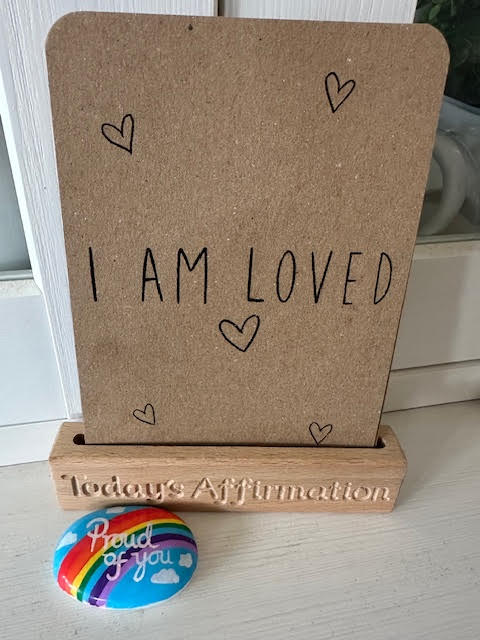
    You are enough.
    You are doing enough.
    And you are doing better than you think.

    Not because you are perfect — but because you aren’t.
    Because you care.
    Because you reflect.
    Because you love your child with a depth that guides you even on the hardest days.

    None of us have all the answers.
    None of us get it right every time.
    And none of us need to.

    Your child just needs you.
    Exactly as you are.
    Human. Loving. Trying.

    And that is more than enough. 

    Leave a comment

  • The Words We Choose: Language, Connection and Childhood

    The Words We Choose: Language, Connection and Childhood

    Not long ago, one of the children in my care was having a quietly difficult morning. There hadn’t been a dramatic outburst or any obvious signs of upset — just a certain stillness in their shoulders, a withdrawn glance, a subtle shift in their play. When I knelt beside them and gently asked how they were feeling, they paused, looked up, and with a quiet voice and simple Makaton signs, they told me: sad.

    In that moment, everything else faded. They trusted me enough to let me in — not with perfect grammar or complicated explanations, but with a small word and a few meaningful signs. And that was all we needed. I mirrored their words, offered comfort, acknowledged the feeling, and gave time. A few minutes later, after our quiet, respectful connection, they leaned in for a cuddle and told me they felt happy.

    Language in the early years is never just about words. It’s about connection, understanding, and helping children feel truly seen.

    Language as an Emotional Bridge

    From the very first gestures and babbles, communication is an emotional act. It’s how children reach out to connect — to be understood, to belong, to share their inner world. In early years settings, we are not just supporting speech and vocabulary; we’re nurturing confidence, trust, and the beginnings of self-expression.

    Whether it’s through spoken language, Makaton, body language, or imaginative play, every child deserves to be heard — in the way that makes sense for them. That means slowing down, tuning in, and remembering that listening is just as powerful as speaking.

    Supporting Early Communication

    A rich language environment isn’t one filled with endless chatter — it’s one full of meaning. Children need us to model language thoughtfully: describing what they’re doing, naming feelings, narrating the day in a gentle rhythm that helps them make sense of the world.

    In my setting, Makaton plays an important role. It gives children another way to communicate, especially when their speech is still developing or their emotions feel too big for words. It empowers them to be part of their world, not just observers of it.

    The Power of Children’s Voices

    Children are full of ideas, questions, stories, and feelings. Honouring their voices means creating space to hear them — not just when it’s convenient, but always.

    This might be pausing to really listen when a child is explaining their block tower, giving them the language to name a feeling, or simply validating their choices. Voice isn’t always verbal — sometimes it’s found in play, in art, in silence. But it’s always there.

    Respectful Narratives and the Language We Model

    Language shapes how we see others — and how they see themselves. That’s why I choose my words carefully when speaking about children, especially around them. I avoid labels, especially negative ones, and instead focus on behaviours, feelings, and needs.

    In the early years, most educators know the importance of moving away from words such as “naughty“. It’s far more constructive and respectful to focus on what a child is expressing through their behaviour — whether we’re encouraging something positive or gently guiding them away from something less helpful. Children are always more than a moment.

    Stories That Bring Us Together

    Books and stories are another powerful part of our language landscape. They build empathy, spark curiosity, and help children make sense of themselves and the world. We read every day — not just for literacy, but for connection. There is something quietly magical about a child leaning in as you read a well-loved book, their body softening as they lose themselves in story. These moments matter.

    A Final Thought

    The words we choose matter. They build connection, foster confidence, and create the emotional blueprint for how children relate to themselves and others.

    Whether we’re signing happy with a small hand gesture, whispering reassurance after a big feeling, or narrating a story in the garden, our language helps children feel safe, respected, and deeply understood.

    And that’s the beginning of everything.

    Leave a comment