Tag: early years

  • Holding On to Hope: The Reality and Resilience of Early Years Today

    Holding On to Hope: The Reality and Resilience of Early Years Today

    There is no denying it anymore: the early years sector is standing in the middle of a storm.

    Childminder numbers continue to fall at an alarming rate. Nurseries are closing their doors. Practitioners — some of the most compassionate, dedicated people you could ever hope to meet — are walking away from a job they love because the emotional weight, financial strain, and daily pressures have become simply too much.

    And yet, every morning, across thousands of homes, gardens, nurseries, and classrooms, something extraordinary still happens.

    Children are welcomed into spaces full of warmth and wonder.
    Tiny hands are held.
    Questions are answered with patience.
    Tears are soothed.
    Worries are heard.
    Play is protected.
    Magic is made out of muddy puddles, cardboard boxes, and the everyday moments most adults rush straight past.

    This is the heart of early years.
    And it beats on, even in challenging times.

    The Reality We Can’t Ignore

    And while early years is full of magic, connection, and joy, it also carries a quieter reality that deserves to be heard.

    Because behind every warm welcome in the morning, behind every smile, every moment of play and wonder, early years professionals are quietly carrying far more than most people will ever realise.

    They are navigating constant policy changes and shifting expectations, trying to keep pace with a system that often moves faster than the people working within it.

    They are stretching rising costs of food, resources, and utilities — all while funding remains painfully out of step with the true cost of quality care.

    They are pouring emotional labour into other people’s children while still holding space for their own families, their own health, and their own wellbeing — hearts stretched in every direction.

    They feel the weight of responsibility, knowing that these early years shape everything that follows. Every gesture, every moment of connection, every tiny spark of confidence matters.

    They are still, far too often, misunderstood or undervalued — mistaken for “babysitters” despite the skill, knowledge, and professional judgement woven into every day.

    They face the uncertainty of Ofsted, where inconsistency and pressure can sometimes leave dedicated professionals feeling judged rather than supported.

    This is the reality so many early years educators wake up to each morning.
    And still — they show up with love.
    With patience.
    With belief in children.
    With the quiet, steady knowledge that what they do matters.

    And yet, even with all of this, the heart of our profession still beats strong — more resilient and more needed than ever.

    For childminders especially, all of this is intensified.
    Working alone.
    Working from their own homes.

    On top of this comes the reality of inconsistent support, the loneliness and vulnerability of a home-based role, and the pressure of running a small business in a system never truly designed for them.
    It’s no wonder people feel exhausted.
    It’s no wonder numbers are falling.
    It’s no wonder so many are grieving a sector they still love.

    But even in the middle of all this… something else is happening too...

    The Difference We Make — Even When No One’s Looking

    Every single early years professional has a story.

    A child whose confidence grew because you believed in them.
    A family who felt held in their hardest moments.
    A toddler who discovered their voice, their joy, their courage, because you made space for them to shine.
    A shy child who danced for the first time.
    A little one who whispered “I did it” with pride bursting from every inch of their being.

    These aren’t small moments.
    These are life-shaping moments.

    And they happen because you show up — even when you’re exhausted, stretched, or battling your own self-doubt.

    You show up because children deserve the very best start in life.
    You show up because childhood matters.
    You show up because the work you do is love in action, learning in motion, humanity in its purest form.

    And that is something worth fighting for.

    The Shared Weight — and the Shared Hope

    One of the most powerful truths about early years is this:

    We are not alone.

    Nursery practitioners, childminders, teachers, managers, SEND specialists, support workers, forest school leaders, Nannies, wraparound care providers — we are all part of the same heartbeat. We all carry the same responsibility: to nurture, protect, and champion children.

    And yes, the pressures are real.
    Yes, the system needs change.
    Yes, passion can only carry people so far without proper recognition and support.

    But the hope?
    The hope is real too.

    It lives in every child who enters our care.
    It lives in every practitioner who refuses to give up.
    It lives in the conversations happening louder and more public than ever before.
    It lives in the advocacy, the resilience, the refusal to let early childhood become an afterthought.

    Change begins when people care enough to speak up.
    And early years professionals care more than most people will ever understand.

    A Future Worth Fighting For

    If the decline in numbers tells us anything, it is this:

    Early years needs protecting.
    It needs investing in.
    It needs valuing — not in words, but in policy, pay, support, and long-term vision.

    Because when we protect the adults who care for children, we protect childhood itself.

    And despite it all — the exhaustion, the uncertainty, the pressure — there is still something unshakeably beautiful at the heart of this work:

    Children.

    Their laughter.
    Their curiosity.
    Their tiny acts of courage.
    Their absolute belief that the world is a place worth exploring.

    They are why we’re here.
    They are why we keep going.
    They are why this sector is worth fighting for.

    And as long as children fill our homes, gardens, nurseries, and classrooms with joy and wonder…
    There will always be hope.

    Leave a comment

    Rating: 5 out of 5.

    Go back

    Your message has been sent

    Rating(required)
    Warning

  • Beyond the Snapshot 

    Beyond the Snapshot 

    How we long for you to see,
    The futures grown with love, so free.
    In settings big, in settings small,
    We nurture, guide, and give our all.

    How we wish you saw the joy,
    Shaped by patience, love, and toil.
    The endless hours, the years of play,
    The care poured in, day after day.

    But you arrive and only view,
    A fleeting snapshot — an hour or two.
    A single moment, a passing glance,
    And yet from this, you cast your stance.

    How we wish you understood,
    The sleepless nights, the endless ‘shoulds’.
    The shadow cast, the constant weight,
    Of knowing one grade can seal our fate.

    You’ll never see the whispered song,
    The gentle hand when days feel long.
    The battles fought, the fears made small,
    The love that underpins it all.

    This work is heart, it’s sweat, it’s tears,
    It’s hope invested through the years.
    And yet reduced, unfairly guessed,
    By one short visit, one-day test.

    Yes — hold us to account with care,
    But meet us with respect that’s fair.
    A system shaped to guide, not take,
    To honour all that is at stake.

    So, together we raise this hopeful plea:
    There’s so much more than what you see.
    See children thriving, futures bright,
    Held in our hands, our hearts, our light.

    ©️ – Poem by The Young Ones Childminding 

    *A poem for the Early Years and Education sector, on the unseen weight of inspection, for those who promote, protect and inspire play — written by Georgina Young (The Young Ones Childminding) 

      Leave a comment

    • The Hidden Weight We Carry in Early Years

      The Hidden Weight We Carry in Early Years

      Every morning, I open my door with a smile. No matter how little I’ve slept, no matter if my head is heavy with worry, no matter if I’m feeling run down — that first knock on the door is my moment to reset. The children arrive, and I greet them with warmth, because they deserve nothing less.

      What families see is joy, patience, energy, and love. What they don’t see is the hidden weight that sits behind the smile.


      The Many Hats We Wear

      In early years, especially as childminders, we are never just one thing. We are educators, business owners, administrators, cooks, cleaners, entertainers, counsellors, advocates, and playmates. We manage funding, keep training up to date, and complete paperwork that nobody outside our world quite understands.

      Much of this happens unseen: late-night training after our own children are in bed, Saturdays given up for first aid, evenings spent creating invitations to play. Parents don’t see the hours after dark filling in funding forms or reflecting on practice. And they shouldn’t have to — that’s not their weight to carry. But it is ours.


      The Weight That Lingers

      Ofsted is often the word that makes our hearts beat faster. Accountability matters — families deserve transparency, and children deserve the very best. But the weight isn’t only in the grade itself. It’s in the inconsistency.

      On one day, you might be told you’re outstanding. On another day, doing the exact same things, you could be told you’ve fallen short. Not because your practice changed, but because the perspective of the inspector did. That unpredictability leaves us second-guessing ourselves and questioning not only our work, but our worth.

      And even when the inspection ends, the pressure doesn’t. It lingers like a shadow — a reminder that everything we pour ourselves into can hang on the opinion of whoever walks through the door.


      The Unseen Burden

      But the weight isn’t just about inspection. It’s about the way we carry on giving, no matter what’s happening in our own lives.

      We’ve all had those mornings where life feels overwhelming. Maybe we’re exhausted from worries that kept us awake at night. Maybe family challenges are playing on our minds. Yet still, we open the door, dance around the living room, and head outdoors to hunt for conkers or splash in puddles.

      That’s the unseen reality of our role. The children don’t see our tiredness or our struggles — and they shouldn’t have to. They see our smiles, our energy, our willingness to play. We give them the best of us, even when we’re running on empty ourselves. Because that’s what they deserve.


      The Misconceptions We Battle

      And still, despite everything, our profession is often misunderstood.

      How many of us have heard: “Childcare is the easy option”? Or: “You just play all day”? Or been met with the assumption that we’re unskilled or “just babysitters”?

      The reality couldn’t be further from the truth. Play isn’t “just” anything. It is complex, powerful, and deeply rooted in how children learn. To scaffold it well takes observation, reflection, and professional knowledge. Understanding child development, recognising schemas, and following interests — that is skilled work.

      Yet so often, the weight we carry is made heavier by the lack of value placed on what we do.


      Why We Keep Showing Up

      So why do we keep showing up, despite the exhaustion, despite the undervaluing, despite the pressure?

      Because the children matter.

      Because we know the difference we make, even if the world doesn’t always recognise it.

      Because nothing compares to watching a child’s eyes light up when they discover something new, or the pride in their face when they master a skill. Nothing compares to the moment a child runs into your arms for comfort, or when a parent tells you how much their child loves being with you.

      These are the moments that outweigh the struggle.

      I’ve had mornings where I’ve been drained and heavy-hearted, only to find myself laughing uncontrollably as I chased children around the garden pretending to be a dragon. I’ve had days where I’ve questioned myself, only for a child’s hug to remind me that I am exactly what they need.

      This is why we keep showing up. Not because the job is easy — but because the children deserve the best of us, and we refuse to give them anything less.


      Accountability and Respect

      This isn’t about rejecting accountability. I believe in high standards. I believe families deserve clarity, and I believe children deserve excellence.

      But I also believe educators deserve respect.

      We need a system that recognises the heart, knowledge, and commitment we pour into this work. A system that supports us to improve, rather than leaves us fearful of falling. A system that understands the weight we already carry, rather than adding to it.

      Because accountability without respect doesn’t strengthen us — it weakens us. And when educators are depleted, children are the ones who lose out. We are watching too many incredible individuals walk away from the profession, and too many wonderful settings close their doors — not because the love has gone, but simply the pressures have become to heavy to bear.


      The Love That Wins

      The weight we carry in early years is real. The unseen hours, the hidden struggles, the emotional toll — they are all part of our story.

      But so is the love.

      Every morning, despite everything, we open the door with a smile. We choose to give children the best of ourselves, even when it costs us. We carry the weight quietly, because the joy, the learning, and the love matter more.

      The world may never fully see the unseen weight of our role. But every child who has ever felt safe, loved, and celebrated in our care has lived the truth of it.

      And at the end of the day, that’s why we keep showing up. Because the weight is heavy — but the love is heavier. And every day, the love wins. 

      Leave a comment

    • Not Built to Sit Still: Defending Childhood in an Age of Pressure

      Not Built to Sit Still: Defending Childhood in an Age of Pressure

      A Barefoot Conversation

      Why play, presence, and connection matter more than the DFE’s version of “school readiness

      A barefoot conversation with a ladybird.
      That’s what stopped me in my tracks.

      Tiny toes curled against the grass, a child crouched low and still—whispering gentle words to a ladybird resting on a leaf. No rush. No noise. Just awe. Just presence.

      And in that moment, everything made sense again. This is childhood. Not worksheets. Not school-readiness tick lists. Not quiet hands and still bottoms. But muddy feet, wonder-filled questions, and empathy blooming from the tiniest of encounters.

      We are raising little humans, not robots. And yet across the country, we’re asking four-year-olds to meet expectations built for older children. We’re asking them to sit before they’re ready, to read before they’re developmentally able — to achieve like an adult, rather than explore like a child.

      But the world doesn’t need more children who can sit still at four.
      It needs children who care.
      Children who feel.
      Children who notice the smallest creatures and imagine their stories.

      Because from these early acts of compassion — like chatting to a ladybird — come the roots of kindness, empathy, and responsibility for the world around them.


      What the Research Says

      We don’t have to guess what children need. Decades of child development research is clear: play is not a luxury—it’s a biological necessity.

      • The Harvard Center on the Developing Child highlights that young children learn best through active, joyful, and engaging experiences— not passive instruction.
      • The Alliance for Childhood and UNICEF advocate strongly for delayed formal schooling, with many European countries (like Finland and Sweden) beginning structured academic learning at age 6 or 7 — after a long foundation of play-based early years education.
      • Neurological studies show that movement, exploration, and connection are essential for developing executive function, emotional regulation, and long-term cognitive skills.

      Yet here in England, we’re still pushing four-year-olds (and younger) into formal classrooms. We’re turning play into a performance. Exploration into outcomes. And our children are paying the price.


      A Personal Reflection

      When I think of the children in my care, I think of the ones who can build entire worlds out of sticks and stones. The ones who soothe slugs and rescue worms. The ones who tell me, with complete seriousness, what the ladybirds are saying back.

      And I think of the quiet ones — the ones who thrive when they are not rushed. The ones who don’t always find sitting easy, but who can spend 40 minutes moving conkers from bowl to basket with deep, meaningful concentration.

      These aren’t children who are behind. These are children who are becoming.
      Children who are deeply engaged with their world.
      Children who will grow into compassionate, thoughtful, resilient humans — if we let them.

      And yet I see the increased pressure creeping in. From “school readiness” checklists. From misunderstood expectations. From a system that has forgotten what childhood is meant to be.


      The Bigger Picture

      This isn’t just a professional frustration — it’s a national concern. We are seeing a sharp rise in childhood mental health difficulties, and many professionals in the early years sector are sounding the alarm.

      Children today are growing up in a world that is louder, faster, and more pressured than ever before. Many are struggling with anxiety, attention difficulties, and burnout — at just four or five years old. And instead of responding with care and compassion, we are asking them to sit longer, try harder, be quieter. This is not developmentally appropriate. It is damaging.

      Every child learns in their own way. Some need movement to think clearly. Some need silence. Some learn through messy, sensory exploration, while others thrive in quiet, focused play. They are not carbon copies. They are not data points. And they are certainly not “failing” because they can’t yet conform to adult-driven expectations. If we truly care about children, then their wellbeing, mental health, and right to a childhood must become our top priority — not optional extras squeezed in between phonics and fine motor worksheets.

      Why are we ignoring the mountain of evidence? Why are we still using outdated models of achievement when the world (and the child) has changed?

      It’s time we remembered: school readiness isn’t about sitting still. It’s about being secure, curious, and emotionally equipped to handle new environments. And we build those foundations through love, play, and presence — not pressure.


      A Call to Action

      Unfortunately, we can’t wait for policymakers to catch up — because far too many of the people making decisions about children have little understanding of child development and seem unwilling to listen to those who do. The system won’t fix itself. But we can be the change, from the ground up.

      Here’s how:

      • Speak up. Share your stories, your knowledge, your child-centred practice. Help shift the narrative from achievement to wellbeing.
      • Advocate. When conversations arise about “school readiness,” bring it back to what matters: secure attachments, emotional literacy, and developmentally appropriate expectations.
      • Connect. With parents, with educators, with community leaders. The more unified our voice, the harder it is to ignore.
      • Protect play. Let children be barefoot. Let them talk to ladybirds. Let them carry sticks and ideas and questions. This is not time wasted — it is everything.

      Final Thoughts From an Educator

      One day, our children will look back on these years.

      Will they remember a world that rushed them, silenced them, and tried to make them smaller?
      Or will they remember being seen, heard, and cherished for exactly who they were?

      That gentle whisper to a ladybird might just be the first step in raising a child who will one day protect the planet, comfort a friend, or stand up for what’s right.

      And that begins not with the DFE’s current version of readiness, as described by Bridget Phillipson…
      But by people who truly understand child development and with respect for childhood.

      So, let us be the ones who slowed down.
      Who knelt beside them in the grass.
      Who made space for joy, for wonder, for messy, magnificent becoming.

      Because when we protect childhood, we protect everything that matters.

      Leave a comment

      Go back

      Your message has been sent

      Warning
      Warning
      Please rate our website(required)
      Warning
      Warning
      Warning!

    • What Inspires You?

      What Inspires You?

      Inspiration is everywhere — sometimes loud and life-changing, sometimes quiet and steady. Often, we don’t even realise we’ve been inspired until we look back and see how far we’ve come, guided by the encouragement, belief, or example of someone else.

      Throughout my life, I’ve been surrounded by people who have inspired me, lifted me up, and encouraged me to be the best I can be. My family is full of incredible individuals, and I count my lucky stars every day that they’re such a special part of both my life and my children’s lives. From them, I’ve learned about resilience, love, humour, and the value of showing up for one another — lessons that have shaped who I am, both personally and professionally.

      But my inspiration hasn’t stopped there.

      There have been special friends who’ve walked with me through life’s ups and downs. There have been brilliant teachers who saw something in me — who invited me to take additional GCSEs, who encouraged me to pursue further qualifications, who planted seeds of confidence at times I didn’t even realise I needed them. And now, as I look around at the early years community I’ve found myself part of, I’m constantly inspired by the people I meet — educators who pour their hearts into their work, creating rich, meaningful childhoods for the little ones in their care.

      When I decided to become a childminder, it was after a period of deep personal reflection — particularly following the complicated birth of my youngest. Childminding was something I had considered for many years, but life (and a good dose of self-doubt) always seemed to get in the way. After his birth, I realised that life is too short to keep waiting. I wanted to build something that worked for my family and filled my heart — so I took the leap.

      As I began exploring what childminding could look like, I stumbled across some incredible pages and profiles online. They weren’t flashy or commercial — just full of passion. You could feel it in their words, in the love behind the photos, in the intentionality of the spaces they created. I was in awe of the thoughtfulness, the warmth, and the deep care that radiated from these settings. It was inspiring.

      Since then, I’ve come across hundreds — probably thousands — of passionate, dedicated childminders and early years educators. People who give their all to ensure children feel safe, loved, and seen. People who understand that childhood isn’t just preparation for life — it is life.

      Whether it’s designing beautiful, inviting play spaces, planning meaningful, interest-led experiences, heading out on muddy adventures, or simply being that constant, trusted grown-up in a child’s world — what you do matters. You are shaping lives. You are holding space for families. You are showing up, day after day, even when it’s hard.

      I’ve had the privilege of connecting with so many of you — in person, online, in passing conversations and deep discussions. And I truly hope those connections have planted seeds of friendship too. One of the things I treasure most about this work is the way it brings kind, passionate people together — people who care not only about children, but about each other.

      So to all of my followers, to every childminder, nursery practitioner, and early years professional reading this:

      I see you.
      I see the early starts, the late finishes, the careful planning.
      I see the hours spent researching, reflecting, adjusting, and adapting.
      I see the energy you pour into your environments, the way you tailor your care to each unique child.
      I see the cuddles, the encouragement, the gentle redirections, the joyful laughter.
      And I also see the doubts. The loneliness. The financial worries. The weight of feeling unseen or undervalued in a sector that is often misunderstood.

      Please know this: you inspire others.

      Whether you’ve been doing this for decades or are just finding your feet, the love and care you give matters more than you may ever know. Someone out there is watching your work — learning from you, feeling encouraged by your example, reminded not to give up.

      So whatever — or whoever — inspires you, hold onto it. Let it be your anchor on the hard days and your spark on the good ones.

      And if no one’s told you lately:
      You are doing something incredible.
      And you are truly amazing. 

      Leave a comment

      Pages: 1 2

    • The Words We Choose: Language, Connection and Childhood

      The Words We Choose: Language, Connection and Childhood

      Not long ago, one of the children in my care was having a quietly difficult morning. There hadn’t been a dramatic outburst or any obvious signs of upset — just a certain stillness in their shoulders, a withdrawn glance, a subtle shift in their play. When I knelt beside them and gently asked how they were feeling, they paused, looked up, and with a quiet voice and simple Makaton signs, they told me: sad.

      In that moment, everything else faded. They trusted me enough to let me in — not with perfect grammar or complicated explanations, but with a small word and a few meaningful signs. And that was all we needed. I mirrored their words, offered comfort, acknowledged the feeling, and gave time. A few minutes later, after our quiet, respectful connection, they leaned in for a cuddle and told me they felt happy.

      Language in the early years is never just about words. It’s about connection, understanding, and helping children feel truly seen.

      Language as an Emotional Bridge

      From the very first gestures and babbles, communication is an emotional act. It’s how children reach out to connect — to be understood, to belong, to share their inner world. In early years settings, we are not just supporting speech and vocabulary; we’re nurturing confidence, trust, and the beginnings of self-expression.

      Whether it’s through spoken language, Makaton, body language, or imaginative play, every child deserves to be heard — in the way that makes sense for them. That means slowing down, tuning in, and remembering that listening is just as powerful as speaking.

      Supporting Early Communication

      A rich language environment isn’t one filled with endless chatter — it’s one full of meaning. Children need us to model language thoughtfully: describing what they’re doing, naming feelings, narrating the day in a gentle rhythm that helps them make sense of the world.

      In my setting, Makaton plays an important role. It gives children another way to communicate, especially when their speech is still developing or their emotions feel too big for words. It empowers them to be part of their world, not just observers of it.

      The Power of Children’s Voices

      Children are full of ideas, questions, stories, and feelings. Honouring their voices means creating space to hear them — not just when it’s convenient, but always.

      This might be pausing to really listen when a child is explaining their block tower, giving them the language to name a feeling, or simply validating their choices. Voice isn’t always verbal — sometimes it’s found in play, in art, in silence. But it’s always there.

      Respectful Narratives and the Language We Model

      Language shapes how we see others — and how they see themselves. That’s why I choose my words carefully when speaking about children, especially around them. I avoid labels, especially negative ones, and instead focus on behaviours, feelings, and needs.

      In the early years, most educators know the importance of moving away from words such as “naughty“. It’s far more constructive and respectful to focus on what a child is expressing through their behaviour — whether we’re encouraging something positive or gently guiding them away from something less helpful. Children are always more than a moment.

      Stories That Bring Us Together

      Books and stories are another powerful part of our language landscape. They build empathy, spark curiosity, and help children make sense of themselves and the world. We read every day — not just for literacy, but for connection. There is something quietly magical about a child leaning in as you read a well-loved book, their body softening as they lose themselves in story. These moments matter.
      A Final Thought

      The words we choose matter. They build connection, foster confidence, and create the emotional blueprint for how children relate to themselves and others.

      Whether we’re signing happy with a small hand gesture, whispering reassurance after a big feeling, or narrating a story in the garden, our language helps children feel safe, respected, and deeply understood.

      And that’s the beginning of everything.

      Leave a comment

    • This is More Than a Job – This is My Passion. 

      This is More Than a Job – This is My Passion. 

      Halfway through my tidy-down and reset for the next day, I was suddenly hit by a wave of emotion – an overwhelming feeling of contentment and gratitude.

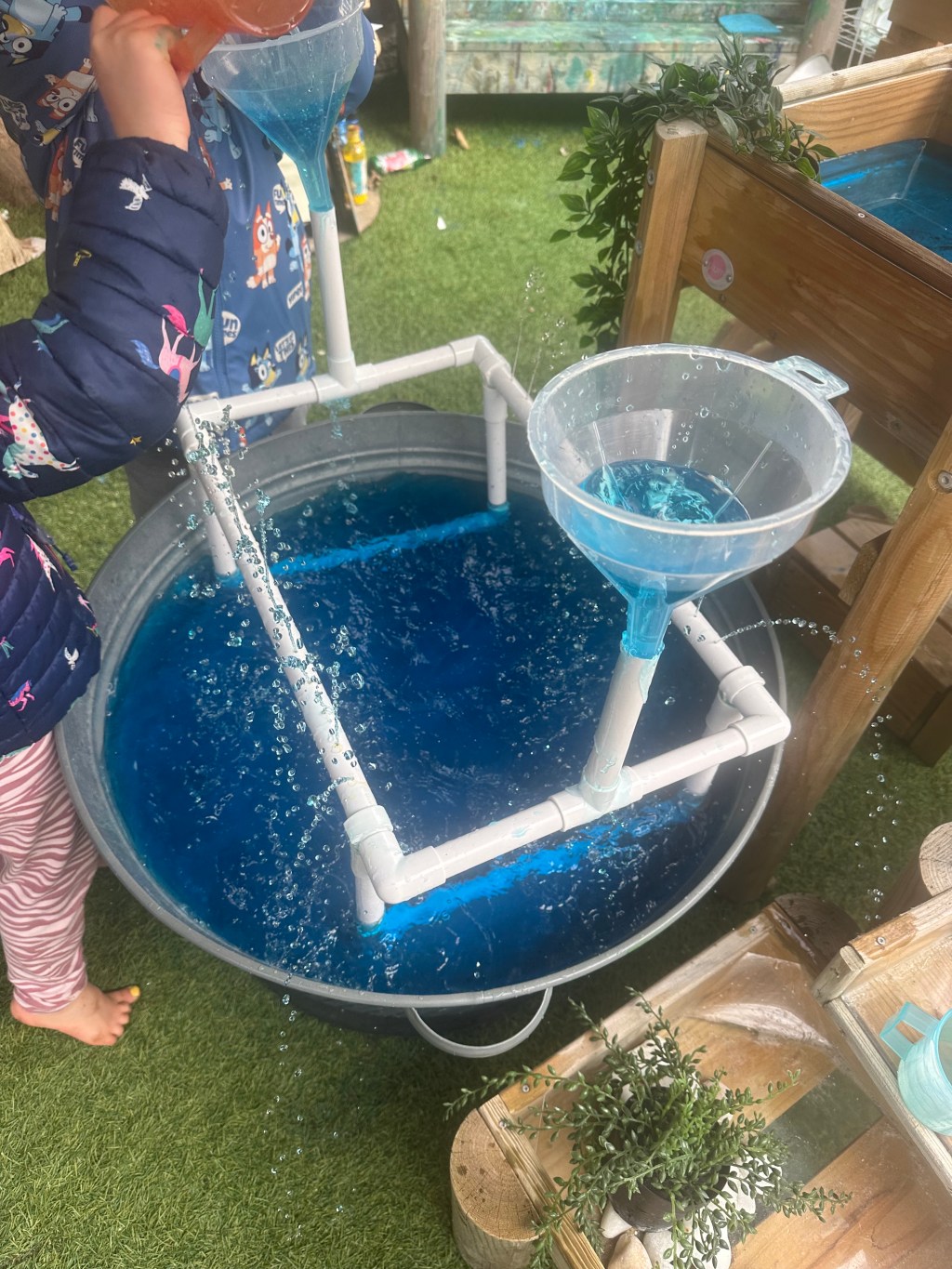
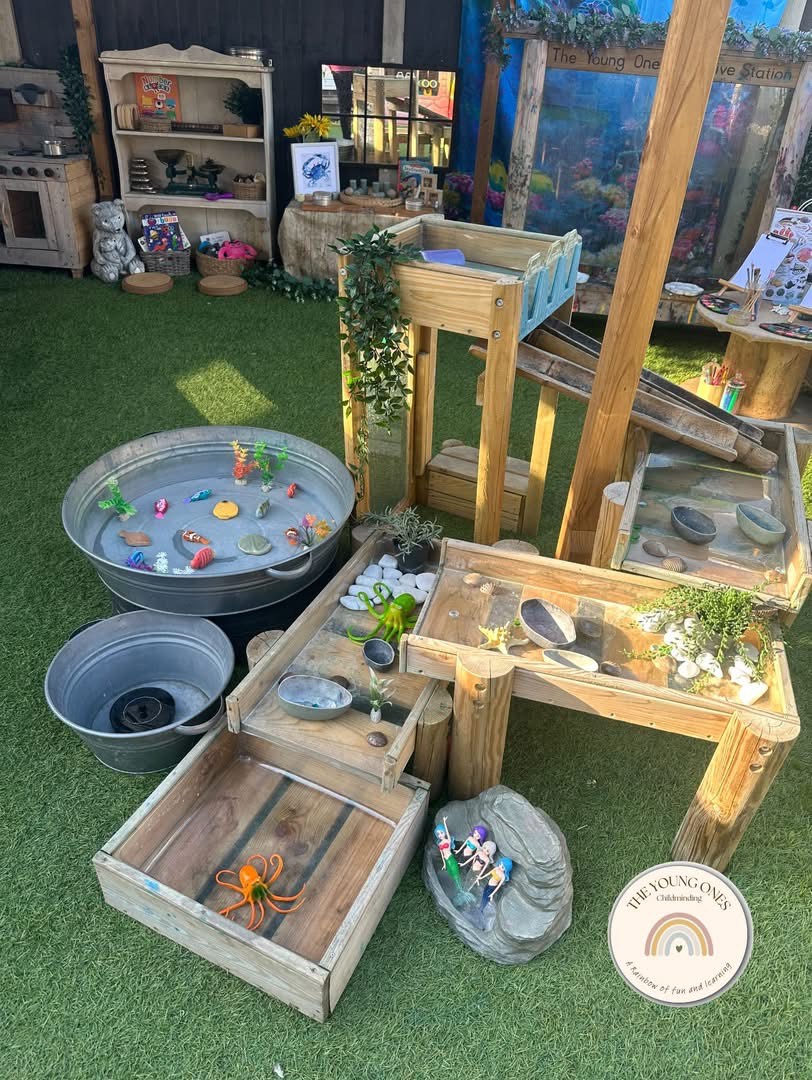
      I paused and looked around our garden learning space. All around me were the beautiful remnants of the day’s joy, exploration and learning. I had just washed the paint off the Perspex easel and restocked the creative area. I thought back to the water play, where the children had dived deep into their undersea imaginative world and the creative masterpieces made in the kitchen.

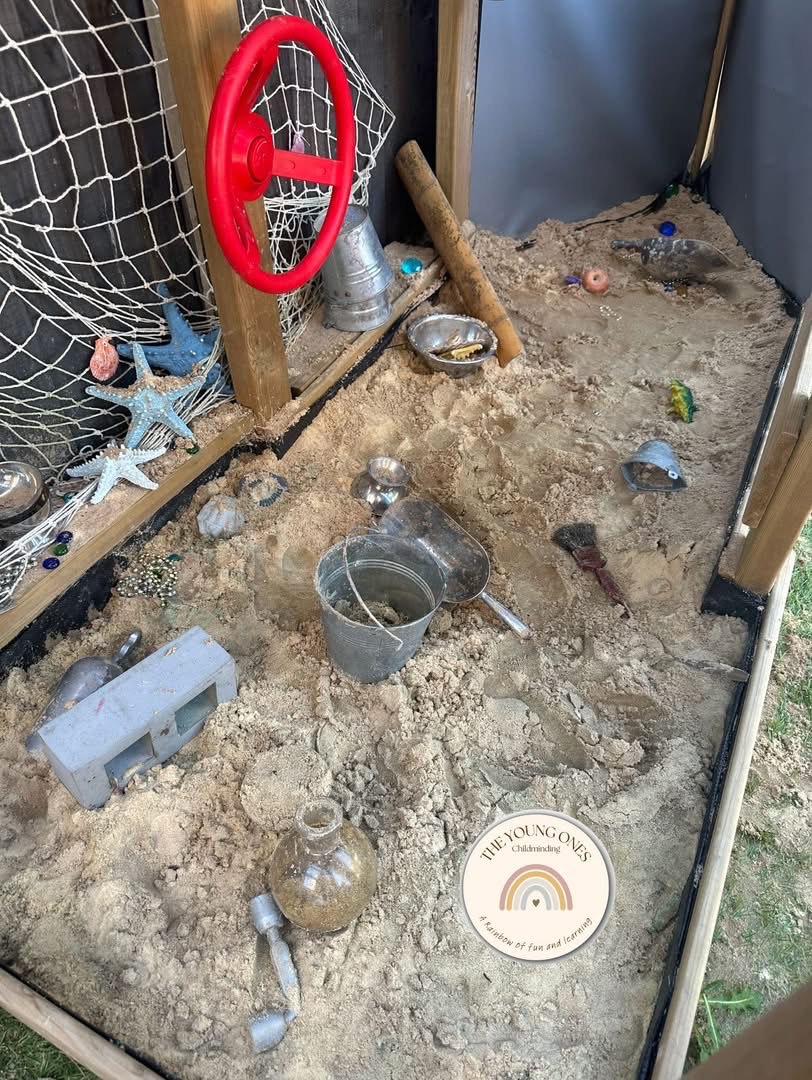
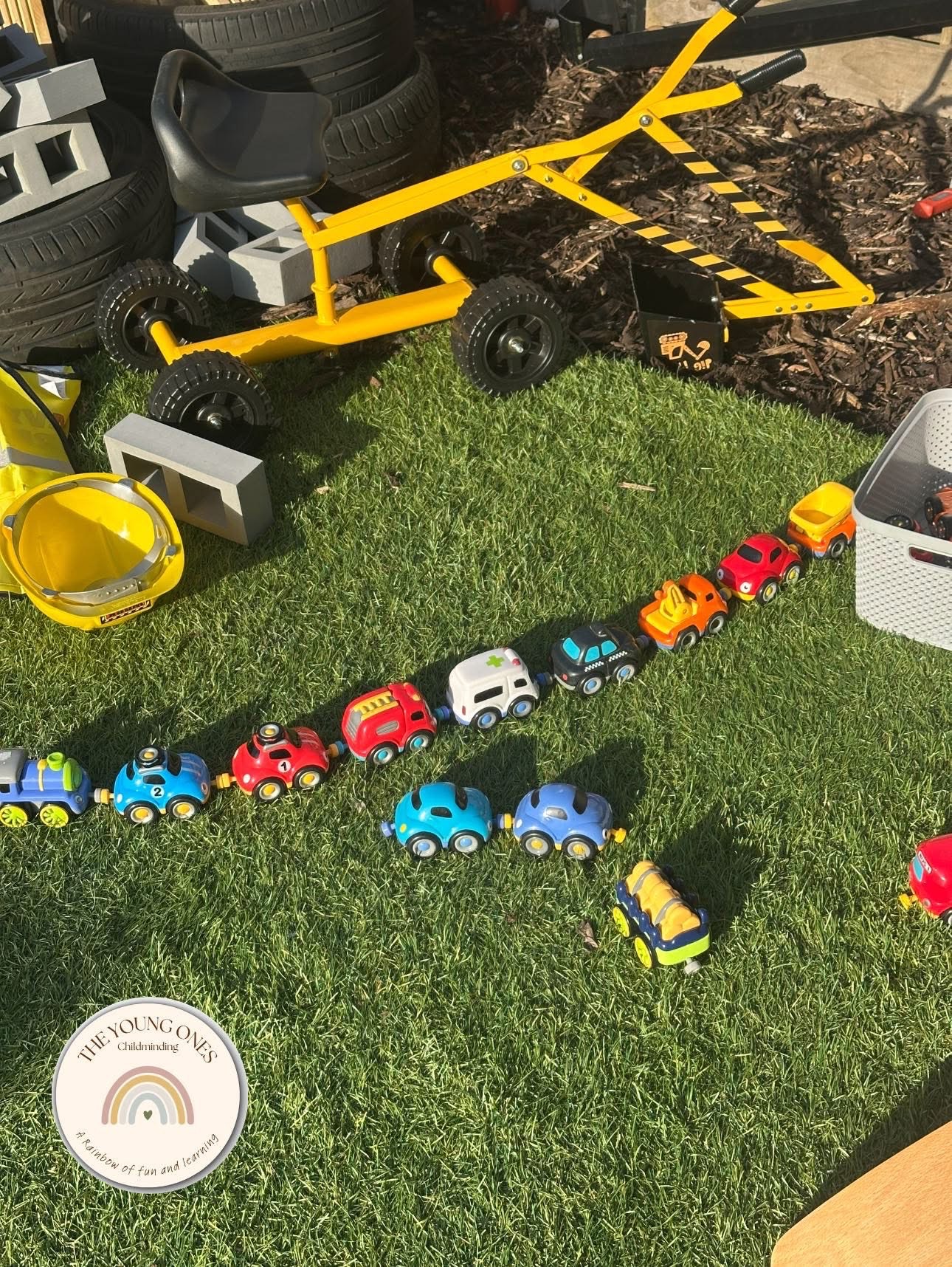
      In my mind, I could still hear their giggles as they challenged themselves to jump in and out of the paddling pool under the afternoon sun. I smiled thinking about our alfresco tea time, sharing stories and favourite moments from the day. There were still pockets of play left to sort – cars carefully lined up in the construction area, sand resources scattered across the pit, wet clothes hung to dry and watering cans left where tiny hands had helped our garden grow.

      In that moment, I felt incredibly proud. Proud of what the children had achieved and proud of myself – for the time, effort and love I pour into creating a space where they can thrive. Behind every carefully chosen resource, every thoughtful enhancement, is the deep desire to meet each child right where they are – to support their interests, nurture their development and help them become their fullest selves.

      This is more than just a job.
      This is my life.
      This is my passion.
      This is early years.

      Leave a comment

    • Magical Mirrors: Enhancing Play and Learning Through Reflection

      Magical Mirrors: Enhancing Play and Learning Through Reflection

      Some people have been asking why mirrors are often used in play and learning invitations, so I thought I’d share a few reasons why they can be such powerful additions to your provocations – both at home and in early years settings.

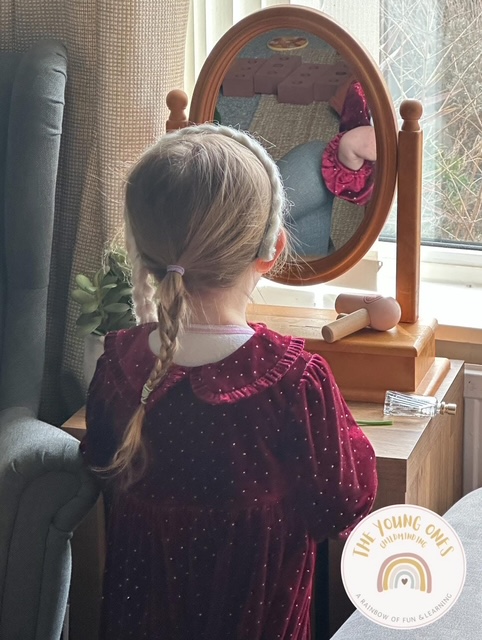
      Mirrors reflect light, creating a visually stimulating environment that supports the development of visual senses and adds a whole new dimension to play. Children are naturally drawn to their reflections – they love seeing themselves and watching their play unfold in the mirror. This not only enhances self-awareness but can also support early communication, as children begin talking to themselves, making faces and expressing emotions through their reflections.

      When observing children engaged in mirror play, you may notice moments of self-regulation, like children using what’s known as private speech – talking to themselves as they think through ideas or solve problems. In adult terms, this is like an inner monologue and it plays an important role in cognitive development.

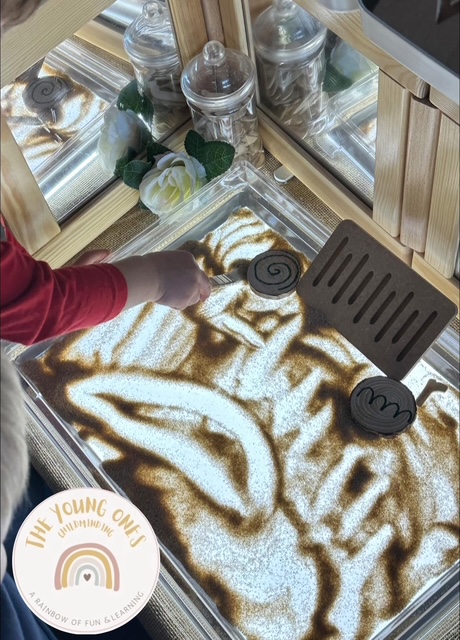
      Mirrors also present opportunities for children to explore the world from a different perspective. They can investigate symmetry, silhouettes, shadows, colours, reflection, luminosity and more. The ever-changing images offer endless possibilities for creative exploration and even the simplest materials can feel magical when mirrored.

      Beyond the sensory and cognitive benefits, mirrors provide space for identity exploration. Children can observe their own movements, increasing body awareness and developing a stronger sense of self.

      Whether placed under a light tray, alongside natural loose parts, or propped up outdoors next to leaves and petals, mirrors invite children to look closer, think deeper and imagine more boldly.

      So if you’re looking to enrich your next play setup, try adding a mirror. You might just be surprised by what reflects back!

      Leave a comment

    • Let There Be Light: Illuminating Play for Young Explorers

      Let There Be Light: Illuminating Play for Young Explorers

      Light has a magical way of capturing children’s attention – and their imagination. Whether you’re an educator setting up a provocation or a parent looking to spark curiosity at home, incorporating light into play can add wonder, warmth and endless learning opportunities.

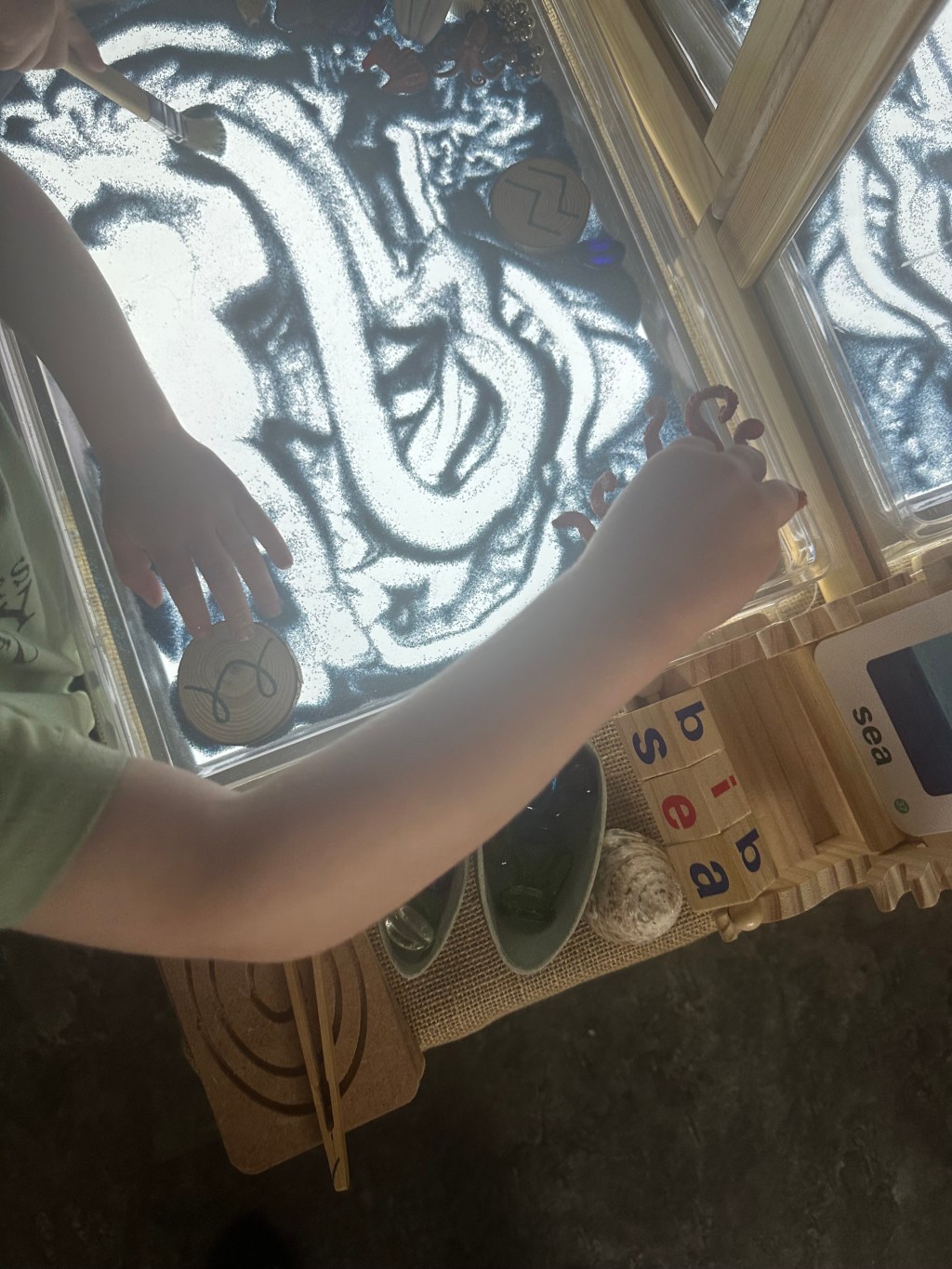
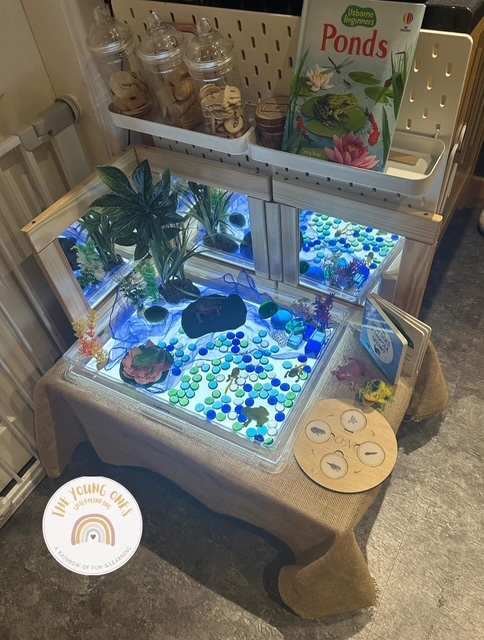
      A light tray is a brilliant place to start. It can transform even the simplest materials into something new and exciting. Try using it to highlight objects for close observation – natural treasures like leaves, shells or feathers suddenly glow with detail when lit from below. Add a topper tray, and it quickly becomes a sensory base for loose parts or sensory materials/bases – such as rice or beans. Want to mix things up? Add playdough for a whole new sensory experience with colour and shadow interplay.

      But light play doesn’t have to stop at the tray…. Fairy lights, soft lamps and rope lights can be woven into invitations to play, creating a gentle, calming atmosphere that draws children in. These additions are perfect for building a hygge-inspired learning space – cosy, inviting and rich in possibility.

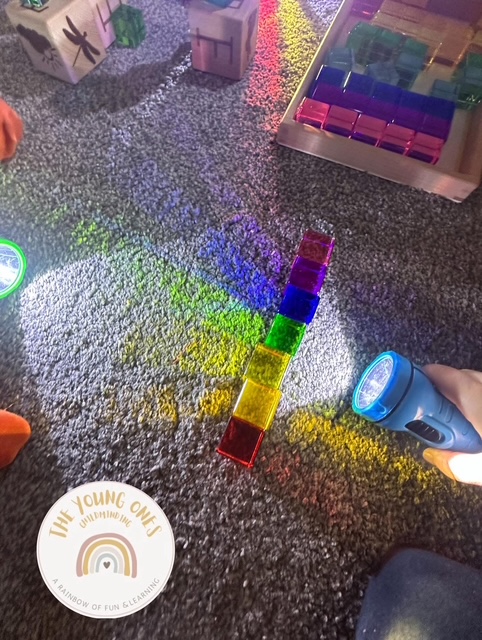
      Torches open up another world of exploration. Use them to cast shadows on the wall, explore reflection with mirrors or observe the magic of refraction through glass and water. Not only are these activities incredibly engaging but they also lay the groundwork for early science concepts in a hands-on, child-led way.

      By incorporating light into your play environments, you’re not only making spaces beautiful and inviting – you’re also inviting children to wonder, investigate and learn in meaningful, sensory-rich ways.

      So next time you’re planning a provocation, ask yourself: how could light shine a new perspective on this experience?

      Let’s light up learning – one twinkle at a time.

      Leave a comment

    • Building Strong Relationships with Young Children: The Importance of Attachment

      Building Strong Relationships with Young Children: The Importance of Attachment

      As early years educators, whether you’re a childminder or a nursery practitioner, one of the most important aspects of your role is to create a safe, nurturing and supportive environment for the children in your care. While many parents and caregivers naturally focus on physical needs like feeding, clothing and safety, the emotional needs of children are equally vital for their growth, development and wellbeing.

      At the heart of this emotional support is attachment – the deep emotional bond that forms between a child and their primary caregivers. The quality of these relationships has a significant impact on a child’s overall well-being and development. Understanding and fostering healthy attachment is essential in the early years.

      What is Attachment?

      Attachment refers to the bond that children form with their caregivers, which provides them with a sense of security and safety. This bond is formed through consistent, responsive interactions and builds the foundation for emotional regulation, trust and social development.

      In the early years, children are particularly sensitive to the quality of their relationships. Positive attachment experiences help children feel safe, loved, and understood, which is crucial for their mental, emotional and social development.

      Why Attachment Matters in Early Childhood

      1. Emotional Development: Children who have secure attachments with their caregivers tend to develop strong emotional regulation skills. They learn how to manage their feelings, cope with stress, and express emotions in healthy ways. These children are also better equipped to form positive relationships with others.

      2. Social Skills: Attachment in early childhood lays the groundwork for how children interact with others as they grow. Children with secure attachments are more likely to show empathy, engage in positive social interactions, and develop strong peer relationships.

      3. Cognitive and Language Development: Secure attachment helps create a safe base for exploration and learning. Children who feel secure are more confident in exploring their environment, trying new things, and engaging in cognitive tasks. This exploration and engagement are key drivers of language and cognitive development.

      4. Long-Term Mental Health: A strong attachment bond in the early years can set the stage for healthier mental health outcomes throughout childhood and into adulthood. Children who experience secure attachment are less likely to experience anxiety, depression or behavioural problems.

      How Can Childminders and Nursery Staff Foster Strong Attachments?

      1. Be Consistently Responsive to Children’s Needs: One of the most important ways to foster secure attachment is to be consistently responsive to a child’s physical and emotional needs. Whether it’s offering comfort when a child is upset or providing praise when they achieve something, consistency helps children feel understood and valued.

      • Practical Tip: Respond to verbal and non-verbal cues from the children. If a child reaches out for comfort or needs assistance, try to meet those needs in a calm, caring manner. Over time, this builds trust.

      2. Establish Predictable Routines: Children feel more secure when they know what to expect. Creating a predictable and consistent routine helps children feel safe and reduces anxiety. It’s important to provide structure in the daily schedule, but also to remain flexible to the children’s emotional needs.

      • Practical Tip: Create a visual schedule with pictures that children can refer to throughout the day. This helps younger children, especially those who are non-verbal, understand what’s coming next.

      3. Create a Warm and Inviting Environment: Children need to feel emotionally safe in their environment. A warm, inviting atmosphere allows children to explore and learn, knowing that there is a safe haven they can return to when they need it. Your body language, tone of voice and facial expressions play a large role in this.

      • Practical Tip: Use open body language, maintain eye contact, and speak in a soothing tone when interacting with children. A friendly and approachable demeanor invites children to come to you for support.

      4. Offer Comfort and Reassurance: When children are upset or distressed, your ability to offer comfort and reassurance plays a critical role in strengthening the attachment. Whether it’s through a gentle touch, a cuddle or words of encouragement – children need to feel supported during challenging moments.

      • Practical Tip: When a child is upset, kneel down to their level, acknowledge their feelings, and offer reassurance. Simple phrases like, “I see you’re upset, and I’m here to help” go a long way in making children feel safe.

      5. Be Present and Engage: Quality time spent with children is one of the best ways to form secure attachment. Engage in activities that foster connection, such as reading together, playing games, or simply talking and listening to them. Active engagement helps children feel valued and understood.

      • Practical Tip: Get down to the child’s level during playtime and actively participate. Whether it’s building with blocks or drawing, your involvement helps them feel secure and appreciated.

      6. Encourage Emotional Expression: Allowing children to express their emotions in a safe and supportive environment helps them understand their feelings and develop emotional regulation skills. Recognise and validate their emotions, which helps them feel understood.

      • Practical Tip: If a child is feeling sad, angry, or frustrated, encourage them to talk about their feelings. You might say, “It looks like you’re feeling cross. Can you tell me what has happened?” This encourages emotional expression and problem-solving.

      Building strong relationships with young children through attachment is one of the most powerful tools you have as a childminder or nursery practitioner. By being responsive, creating a nurturing environment and fostering emotional security, you’re helping children develop the skills they need for a lifetime of healthy relationships, resilience and emotional well-being.

      Remember, the way we connect with children in their early years has lasting effects and the bonds we create today can positively impact their future development. The children in your care need to feel safe, seen and supported in every way – and as early years educators, you are key to making that happen.

      Leave a comment

      Pages: 1 2