Tag: educators

  • Holding On to Hope: The Reality and Resilience of Early Years Today

    Holding On to Hope: The Reality and Resilience of Early Years Today

    There is no denying it anymore: the early years sector is standing in the middle of a storm.

    Childminder numbers continue to fall at an alarming rate. Nurseries are closing their doors. Practitioners — some of the most compassionate, dedicated people you could ever hope to meet — are walking away from a job they love because the emotional weight, financial strain, and daily pressures have become simply too much.

    And yet, every morning, across thousands of homes, gardens, nurseries, and classrooms, something extraordinary still happens.

    Children are welcomed into spaces full of warmth and wonder.
    Tiny hands are held.
    Questions are answered with patience.
    Tears are soothed.
    Worries are heard.
    Play is protected.
    Magic is made out of muddy puddles, cardboard boxes, and the everyday moments most adults rush straight past.

    This is the heart of early years.
    And it beats on, even in challenging times.

    The Reality We Can’t Ignore

    And while early years is full of magic, connection, and joy, it also carries a quieter reality that deserves to be heard.

    Because behind every warm welcome in the morning, behind every smile, every moment of play and wonder, early years professionals are quietly carrying far more than most people will ever realise.

    They are navigating constant policy changes and shifting expectations, trying to keep pace with a system that often moves faster than the people working within it.

    They are stretching rising costs of food, resources, and utilities — all while funding remains painfully out of step with the true cost of quality care.

    They are pouring emotional labour into other people’s children while still holding space for their own families, their own health, and their own wellbeing — hearts stretched in every direction.

    They feel the weight of responsibility, knowing that these early years shape everything that follows. Every gesture, every moment of connection, every tiny spark of confidence matters.

    They are still, far too often, misunderstood or undervalued — mistaken for “babysitters” despite the skill, knowledge, and professional judgement woven into every day.

    They face the uncertainty of Ofsted, where inconsistency and pressure can sometimes leave dedicated professionals feeling judged rather than supported.

    This is the reality so many early years educators wake up to each morning.
    And still — they show up with love.
    With patience.
    With belief in children.
    With the quiet, steady knowledge that what they do matters.

    And yet, even with all of this, the heart of our profession still beats strong — more resilient and more needed than ever.

    For childminders especially, all of this is intensified.
    Working alone.
    Working from their own homes.

    On top of this comes the reality of inconsistent support, the loneliness and vulnerability of a home-based role, and the pressure of running a small business in a system never truly designed for them.
    It’s no wonder people feel exhausted.
    It’s no wonder numbers are falling.
    It’s no wonder so many are grieving a sector they still love.

    But even in the middle of all this… something else is happening too...

    The Difference We Make — Even When No One’s Looking

    Every single early years professional has a story.

    A child whose confidence grew because you believed in them.
    A family who felt held in their hardest moments.
    A toddler who discovered their voice, their joy, their courage, because you made space for them to shine.
    A shy child who danced for the first time.
    A little one who whispered “I did it” with pride bursting from every inch of their being.

    These aren’t small moments.
    These are life-shaping moments.

    And they happen because you show up — even when you’re exhausted, stretched, or battling your own self-doubt.

    You show up because children deserve the very best start in life.
    You show up because childhood matters.
    You show up because the work you do is love in action, learning in motion, humanity in its purest form.

    And that is something worth fighting for.

    The Shared Weight — and the Shared Hope

    One of the most powerful truths about early years is this:

    We are not alone.

    Nursery practitioners, childminders, teachers, managers, SEND specialists, support workers, forest school leaders, Nannies, wraparound care providers — we are all part of the same heartbeat. We all carry the same responsibility: to nurture, protect, and champion children.

    And yes, the pressures are real.
    Yes, the system needs change.
    Yes, passion can only carry people so far without proper recognition and support.

    But the hope?
    The hope is real too.

    It lives in every child who enters our care.
    It lives in every practitioner who refuses to give up.
    It lives in the conversations happening louder and more public than ever before.
    It lives in the advocacy, the resilience, the refusal to let early childhood become an afterthought.

    Change begins when people care enough to speak up.
    And early years professionals care more than most people will ever understand.

    A Future Worth Fighting For

    If the decline in numbers tells us anything, it is this:

    Early years needs protecting.
    It needs investing in.
    It needs valuing — not in words, but in policy, pay, support, and long-term vision.

    Because when we protect the adults who care for children, we protect childhood itself.

    And despite it all — the exhaustion, the uncertainty, the pressure — there is still something unshakeably beautiful at the heart of this work:

    Children.

    Their laughter.
    Their curiosity.
    Their tiny acts of courage.
    Their absolute belief that the world is a place worth exploring.

    They are why we’re here.
    They are why we keep going.
    They are why this sector is worth fighting for.

    And as long as children fill our homes, gardens, nurseries, and classrooms with joy and wonder…
    There will always be hope.

    Leave a comment

    Rating: 5 out of 5.

    Go back

    Your message has been sent

    Rating(required)
    Warning

  • The Hidden Weight We Carry in Early Years

    The Hidden Weight We Carry in Early Years

    Every morning, I open my door with a smile. No matter how little I’ve slept, no matter if my head is heavy with worry, no matter if I’m feeling run down — that first knock on the door is my moment to reset. The children arrive, and I greet them with warmth, because they deserve nothing less.

    What families see is joy, patience, energy, and love. What they don’t see is the hidden weight that sits behind the smile.


    The Many Hats We Wear

    In early years, especially as childminders, we are never just one thing. We are educators, business owners, administrators, cooks, cleaners, entertainers, counsellors, advocates, and playmates. We manage funding, keep training up to date, and complete paperwork that nobody outside our world quite understands.

    Much of this happens unseen: late-night training after our own children are in bed, Saturdays given up for first aid, evenings spent creating invitations to play. Parents don’t see the hours after dark filling in funding forms or reflecting on practice. And they shouldn’t have to — that’s not their weight to carry. But it is ours.


    The Weight That Lingers

    Ofsted is often the word that makes our hearts beat faster. Accountability matters — families deserve transparency, and children deserve the very best. But the weight isn’t only in the grade itself. It’s in the inconsistency.

    On one day, you might be told you’re outstanding. On another day, doing the exact same things, you could be told you’ve fallen short. Not because your practice changed, but because the perspective of the inspector did. That unpredictability leaves us second-guessing ourselves and questioning not only our work, but our worth.

    And even when the inspection ends, the pressure doesn’t. It lingers like a shadow — a reminder that everything we pour ourselves into can hang on the opinion of whoever walks through the door.


    The Unseen Burden

    But the weight isn’t just about inspection. It’s about the way we carry on giving, no matter what’s happening in our own lives.

    We’ve all had those mornings where life feels overwhelming. Maybe we’re exhausted from worries that kept us awake at night. Maybe family challenges are playing on our minds. Yet still, we open the door, dance around the living room, and head outdoors to hunt for conkers or splash in puddles.

    That’s the unseen reality of our role. The children don’t see our tiredness or our struggles — and they shouldn’t have to. They see our smiles, our energy, our willingness to play. We give them the best of us, even when we’re running on empty ourselves. Because that’s what they deserve.


    The Misconceptions We Battle

    And still, despite everything, our profession is often misunderstood.

    How many of us have heard: “Childcare is the easy option”? Or: “You just play all day”? Or been met with the assumption that we’re unskilled or “just babysitters”?

    The reality couldn’t be further from the truth. Play isn’t “just” anything. It is complex, powerful, and deeply rooted in how children learn. To scaffold it well takes observation, reflection, and professional knowledge. Understanding child development, recognising schemas, and following interests — that is skilled work.

    Yet so often, the weight we carry is made heavier by the lack of value placed on what we do.


    Why We Keep Showing Up

    So why do we keep showing up, despite the exhaustion, despite the undervaluing, despite the pressure?

    Because the children matter.

    Because we know the difference we make, even if the world doesn’t always recognise it.

    Because nothing compares to watching a child’s eyes light up when they discover something new, or the pride in their face when they master a skill. Nothing compares to the moment a child runs into your arms for comfort, or when a parent tells you how much their child loves being with you.

    These are the moments that outweigh the struggle.

    I’ve had mornings where I’ve been drained and heavy-hearted, only to find myself laughing uncontrollably as I chased children around the garden pretending to be a dragon. I’ve had days where I’ve questioned myself, only for a child’s hug to remind me that I am exactly what they need.

    This is why we keep showing up. Not because the job is easy — but because the children deserve the best of us, and we refuse to give them anything less.


    Accountability and Respect

    This isn’t about rejecting accountability. I believe in high standards. I believe families deserve clarity, and I believe children deserve excellence.

    But I also believe educators deserve respect.

    We need a system that recognises the heart, knowledge, and commitment we pour into this work. A system that supports us to improve, rather than leaves us fearful of falling. A system that understands the weight we already carry, rather than adding to it.

    Because accountability without respect doesn’t strengthen us — it weakens us. And when educators are depleted, children are the ones who lose out. We are watching too many incredible individuals walk away from the profession, and too many wonderful settings close their doors — not because the love has gone, but simply the pressures have become to heavy to bear.


    The Love That Wins

    The weight we carry in early years is real. The unseen hours, the hidden struggles, the emotional toll — they are all part of our story.

    But so is the love.

    Every morning, despite everything, we open the door with a smile. We choose to give children the best of ourselves, even when it costs us. We carry the weight quietly, because the joy, the learning, and the love matter more.

    The world may never fully see the unseen weight of our role. But every child who has ever felt safe, loved, and celebrated in our care has lived the truth of it.

    And at the end of the day, that’s why we keep showing up. Because the weight is heavy — but the love is heavier. And every day, the love wins. 

    Leave a comment

  • Simple Forest School Activities for Little Explorers

    Simple Forest School Activities for Little Explorers

    There’s something magical about the forest — the way the light dances through the trees, the crunch of leaves under little feet, and the freedom children feel when they’re surrounded by nature. Forest School isn’t just about being outside — it’s about being with the outdoors. It’s about curiosity, confidence, and connection.

    Whether you’re running a Forest School session or just heading out to your local woods with little ones, here are some simple yet powerful activities to spark learning, laughter, and a love of the wild.


     1. Stick Man Story Walk

    Inspired by the beloved book Stick Man by Julia Donaldson, take a walk through the woods and encourage children to find their own “Stick Man.” Use sticks to retell the story, act out scenes, or make your own woodland puppet show.

    Extension idea: Collect sticks of different lengths and sizes — can you measure them? Sort them? Build a den?


    2. Playdough & Clay Tree Faces

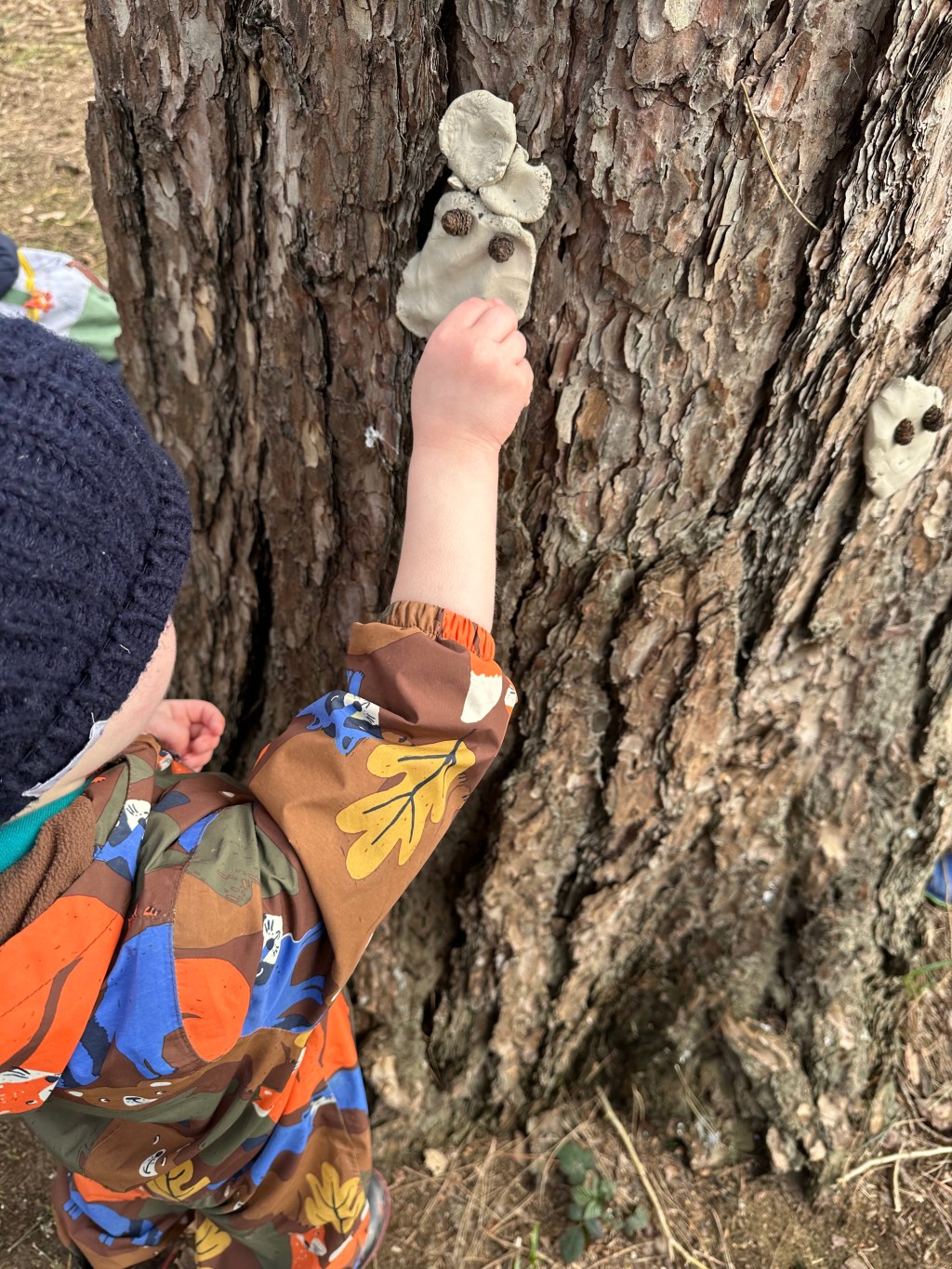
    Bring along some natural-toned playdough or forest clay and let imaginations run wild! Children can create faces on tree trunks using leaves, twigs, stones, acorns, and other natural treasures. Will it be a friendly forest spirit, a cheeky goblin, or a wise old woodland watcher?

    We’ve even made Gruffalo characters before — it’s a wonderful way to mix storytelling, fine motor skills, and sensory creativity!

    Top tip: Take photos of their creations to revisit and reflect later — especially if the weather changes them!


    3. Nature Potions

    Set up a little “potion station” using bowls, ladles, pestle and mortar, or even just open-ended containers. Encourage children to mix mud, leaves, petals, and water to create magical mixtures.

    Why it matters: This activity supports imaginative play, fine motor skills, and sensory exploration.


    4. Bird Nest Building

    Challenge children to build a nest using only natural materials — twigs, moss, grass, and leaves. Talk about where birds live, and what makes a good home. Compare your nest designs and see how well they hold an “egg” (a small stone or pinecone works well!).

    Learning link: This activity introduces early engineering, problem-solving, and empathy for animals.


     5. Listening Walk

    Slow things down with a mindful listening walk. Ask the children to close their eyes for a few seconds — what can they hear? Birds? Wind? Cracking twigs? Create a sound map by drawing or marking where each sound came from.

    This is a wonderful way to promote mindfulness, awareness, and calm.


     6. Campfire Snacks (With Safety!)

    If you have the training and setup for it, a small campfire can be an unforgettable part of Forest School. Try making chocolate baked banana, popping corn in foil, or even making dampers (twisty bread on a stick).

    REMEMBER — Always follow strict safety guidance, ratios, and permissions — and model respectful, responsible fire use.


     Forest School Is About Being, Not Just Doing

    Some of the most powerful moments in Forest School aren’t planned. They happen when a child crouches to watch an ant carry a leaf, or when they proudly balance on a fallen log for the first time. Let go of outcomes. Follow their lead. Nature is the teacher — we’re just there to walk beside them.

    Final Tip: Bring a journal or camera to document the wonder. The small moments — muddy smiles, a feather found, a whisper of “Look what I made!” — are worth remembering.

    Let’s keep nurturing a generation who loves the earth, plays with purpose, and grows with freedom. 

    Leave a comment

  • Not Built to Sit Still: Defending Childhood in an Age of Pressure

    Not Built to Sit Still: Defending Childhood in an Age of Pressure

    A Barefoot Conversation

    Why play, presence, and connection matter more than the DFE’s version of “school readiness

    A barefoot conversation with a ladybird.
    That’s what stopped me in my tracks.

    Tiny toes curled against the grass, a child crouched low and still—whispering gentle words to a ladybird resting on a leaf. No rush. No noise. Just awe. Just presence.

    And in that moment, everything made sense again. This is childhood. Not worksheets. Not school-readiness tick lists. Not quiet hands and still bottoms. But muddy feet, wonder-filled questions, and empathy blooming from the tiniest of encounters.

    We are raising little humans, not robots. And yet across the country, we’re asking four-year-olds to meet expectations built for older children. We’re asking them to sit before they’re ready, to read before they’re developmentally able — to achieve like an adult, rather than explore like a child.

    But the world doesn’t need more children who can sit still at four.
    It needs children who care.
    Children who feel.
    Children who notice the smallest creatures and imagine their stories.

    Because from these early acts of compassion — like chatting to a ladybird — come the roots of kindness, empathy, and responsibility for the world around them.


    What the Research Says

    We don’t have to guess what children need. Decades of child development research is clear: play is not a luxury—it’s a biological necessity.

    • The Harvard Center on the Developing Child highlights that young children learn best through active, joyful, and engaging experiences— not passive instruction.
    • The Alliance for Childhood and UNICEF advocate strongly for delayed formal schooling, with many European countries (like Finland and Sweden) beginning structured academic learning at age 6 or 7 — after a long foundation of play-based early years education.
    • Neurological studies show that movement, exploration, and connection are essential for developing executive function, emotional regulation, and long-term cognitive skills.

    Yet here in England, we’re still pushing four-year-olds (and younger) into formal classrooms. We’re turning play into a performance. Exploration into outcomes. And our children are paying the price.


    A Personal Reflection

    When I think of the children in my care, I think of the ones who can build entire worlds out of sticks and stones. The ones who soothe slugs and rescue worms. The ones who tell me, with complete seriousness, what the ladybirds are saying back.

    And I think of the quiet ones — the ones who thrive when they are not rushed. The ones who don’t always find sitting easy, but who can spend 40 minutes moving conkers from bowl to basket with deep, meaningful concentration.

    These aren’t children who are behind. These are children who are becoming.
    Children who are deeply engaged with their world.
    Children who will grow into compassionate, thoughtful, resilient humans — if we let them.

    And yet I see the increased pressure creeping in. From “school readiness” checklists. From misunderstood expectations. From a system that has forgotten what childhood is meant to be.


    The Bigger Picture

    This isn’t just a professional frustration — it’s a national concern. We are seeing a sharp rise in childhood mental health difficulties, and many professionals in the early years sector are sounding the alarm.

    Children today are growing up in a world that is louder, faster, and more pressured than ever before. Many are struggling with anxiety, attention difficulties, and burnout — at just four or five years old. And instead of responding with care and compassion, we are asking them to sit longer, try harder, be quieter. This is not developmentally appropriate. It is damaging.

    Every child learns in their own way. Some need movement to think clearly. Some need silence. Some learn through messy, sensory exploration, while others thrive in quiet, focused play. They are not carbon copies. They are not data points. And they are certainly not “failing” because they can’t yet conform to adult-driven expectations. If we truly care about children, then their wellbeing, mental health, and right to a childhood must become our top priority — not optional extras squeezed in between phonics and fine motor worksheets.

    Why are we ignoring the mountain of evidence? Why are we still using outdated models of achievement when the world (and the child) has changed?

    It’s time we remembered: school readiness isn’t about sitting still. It’s about being secure, curious, and emotionally equipped to handle new environments. And we build those foundations through love, play, and presence — not pressure.


    A Call to Action

    Unfortunately, we can’t wait for policymakers to catch up — because far too many of the people making decisions about children have little understanding of child development and seem unwilling to listen to those who do. The system won’t fix itself. But we can be the change, from the ground up.

    Here’s how:

    • Speak up. Share your stories, your knowledge, your child-centred practice. Help shift the narrative from achievement to wellbeing.
    • Advocate. When conversations arise about “school readiness,” bring it back to what matters: secure attachments, emotional literacy, and developmentally appropriate expectations.
    • Connect. With parents, with educators, with community leaders. The more unified our voice, the harder it is to ignore.
    • Protect play. Let children be barefoot. Let them talk to ladybirds. Let them carry sticks and ideas and questions. This is not time wasted — it is everything.

    Final Thoughts From an Educator

    One day, our children will look back on these years.

    Will they remember a world that rushed them, silenced them, and tried to make them smaller?
    Or will they remember being seen, heard, and cherished for exactly who they were?

    That gentle whisper to a ladybird might just be the first step in raising a child who will one day protect the planet, comfort a friend, or stand up for what’s right.

    And that begins not with the DFE’s current version of readiness, as described by Bridget Phillipson…
    But by people who truly understand child development and with respect for childhood.

    So, let us be the ones who slowed down.
    Who knelt beside them in the grass.
    Who made space for joy, for wonder, for messy, magnificent becoming.

    Because when we protect childhood, we protect everything that matters.

    Leave a comment

    Go back

    Your message has been sent

    Warning
    Warning
    Please rate our website(required)
    Warning
    Warning
    Warning!

  • What Inspires You?

    What Inspires You?

    Inspiration is everywhere — sometimes loud and life-changing, sometimes quiet and steady. Often, we don’t even realise we’ve been inspired until we look back and see how far we’ve come, guided by the encouragement, belief, or example of someone else.

    Throughout my life, I’ve been surrounded by people who have inspired me, lifted me up, and encouraged me to be the best I can be. My family is full of incredible individuals, and I count my lucky stars every day that they’re such a special part of both my life and my children’s lives. From them, I’ve learned about resilience, love, humour, and the value of showing up for one another — lessons that have shaped who I am, both personally and professionally.

    But my inspiration hasn’t stopped there.

    There have been special friends who’ve walked with me through life’s ups and downs. There have been brilliant teachers who saw something in me — who invited me to take additional GCSEs, who encouraged me to pursue further qualifications, who planted seeds of confidence at times I didn’t even realise I needed them. And now, as I look around at the early years community I’ve found myself part of, I’m constantly inspired by the people I meet — educators who pour their hearts into their work, creating rich, meaningful childhoods for the little ones in their care.

    When I decided to become a childminder, it was after a period of deep personal reflection — particularly following the complicated birth of my youngest. Childminding was something I had considered for many years, but life (and a good dose of self-doubt) always seemed to get in the way. After his birth, I realised that life is too short to keep waiting. I wanted to build something that worked for my family and filled my heart — so I took the leap.

    As I began exploring what childminding could look like, I stumbled across some incredible pages and profiles online. They weren’t flashy or commercial — just full of passion. You could feel it in their words, in the love behind the photos, in the intentionality of the spaces they created. I was in awe of the thoughtfulness, the warmth, and the deep care that radiated from these settings. It was inspiring.

    Since then, I’ve come across hundreds — probably thousands — of passionate, dedicated childminders and early years educators. People who give their all to ensure children feel safe, loved, and seen. People who understand that childhood isn’t just preparation for life — it is life.

    Whether it’s designing beautiful, inviting play spaces, planning meaningful, interest-led experiences, heading out on muddy adventures, or simply being that constant, trusted grown-up in a child’s world — what you do matters. You are shaping lives. You are holding space for families. You are showing up, day after day, even when it’s hard.

    I’ve had the privilege of connecting with so many of you — in person, online, in passing conversations and deep discussions. And I truly hope those connections have planted seeds of friendship too. One of the things I treasure most about this work is the way it brings kind, passionate people together — people who care not only about children, but about each other.

    So to all of my followers, to every childminder, nursery practitioner, and early years professional reading this:

    I see you.
    I see the early starts, the late finishes, the careful planning.
    I see the hours spent researching, reflecting, adjusting, and adapting.
    I see the energy you pour into your environments, the way you tailor your care to each unique child.
    I see the cuddles, the encouragement, the gentle redirections, the joyful laughter.
    And I also see the doubts. The loneliness. The financial worries. The weight of feeling unseen or undervalued in a sector that is often misunderstood.

    Please know this: you inspire others.

    Whether you’ve been doing this for decades or are just finding your feet, the love and care you give matters more than you may ever know. Someone out there is watching your work — learning from you, feeling encouraged by your example, reminded not to give up.

    So whatever — or whoever — inspires you, hold onto it. Let it be your anchor on the hard days and your spark on the good ones.

    And if no one’s told you lately:
    You are doing something incredible.
    And you are truly amazing. 

    Leave a comment

    Pages: 1 2

  • The Words We Choose: Language, Connection and Childhood

    The Words We Choose: Language, Connection and Childhood

    Not long ago, one of the children in my care was having a quietly difficult morning. There hadn’t been a dramatic outburst or any obvious signs of upset — just a certain stillness in their shoulders, a withdrawn glance, a subtle shift in their play. When I knelt beside them and gently asked how they were feeling, they paused, looked up, and with a quiet voice and simple Makaton signs, they told me: sad.

    In that moment, everything else faded. They trusted me enough to let me in — not with perfect grammar or complicated explanations, but with a small word and a few meaningful signs. And that was all we needed. I mirrored their words, offered comfort, acknowledged the feeling, and gave time. A few minutes later, after our quiet, respectful connection, they leaned in for a cuddle and told me they felt happy.

    Language in the early years is never just about words. It’s about connection, understanding, and helping children feel truly seen.

    Language as an Emotional Bridge

    From the very first gestures and babbles, communication is an emotional act. It’s how children reach out to connect — to be understood, to belong, to share their inner world. In early years settings, we are not just supporting speech and vocabulary; we’re nurturing confidence, trust, and the beginnings of self-expression.

    Whether it’s through spoken language, Makaton, body language, or imaginative play, every child deserves to be heard — in the way that makes sense for them. That means slowing down, tuning in, and remembering that listening is just as powerful as speaking.

    Supporting Early Communication

    A rich language environment isn’t one filled with endless chatter — it’s one full of meaning. Children need us to model language thoughtfully: describing what they’re doing, naming feelings, narrating the day in a gentle rhythm that helps them make sense of the world.

    In my setting, Makaton plays an important role. It gives children another way to communicate, especially when their speech is still developing or their emotions feel too big for words. It empowers them to be part of their world, not just observers of it.

    The Power of Children’s Voices

    Children are full of ideas, questions, stories, and feelings. Honouring their voices means creating space to hear them — not just when it’s convenient, but always.

    This might be pausing to really listen when a child is explaining their block tower, giving them the language to name a feeling, or simply validating their choices. Voice isn’t always verbal — sometimes it’s found in play, in art, in silence. But it’s always there.

    Respectful Narratives and the Language We Model

    Language shapes how we see others — and how they see themselves. That’s why I choose my words carefully when speaking about children, especially around them. I avoid labels, especially negative ones, and instead focus on behaviours, feelings, and needs.

    In the early years, most educators know the importance of moving away from words such as “naughty“. It’s far more constructive and respectful to focus on what a child is expressing through their behaviour — whether we’re encouraging something positive or gently guiding them away from something less helpful. Children are always more than a moment.

    Stories That Bring Us Together

    Books and stories are another powerful part of our language landscape. They build empathy, spark curiosity, and help children make sense of themselves and the world. We read every day — not just for literacy, but for connection. There is something quietly magical about a child leaning in as you read a well-loved book, their body softening as they lose themselves in story. These moments matter.

    A Final Thought

    The words we choose matter. They build connection, foster confidence, and create the emotional blueprint for how children relate to themselves and others.

    Whether we’re signing happy with a small hand gesture, whispering reassurance after a big feeling, or narrating a story in the garden, our language helps children feel safe, respected, and deeply understood.

    And that’s the beginning of everything.

    Leave a comment

  • The Things They Teach Me

    The Things They Teach Me

    Lessons from little ones — and how they’ve helped me grow, too.

    When I began my journey in early years education, I stepped into it with open arms — ready to nurture, guide, and support children as they grew. Over the years, I’ve worked across many settings, met so many little personalities, and carried countless memories in my heart.

    But what I didn’t fully realise back then was this: the greatest growth wouldn’t just happen in the children I cared for. It would happen in me.

    With every setting I’ve worked in, every child I’ve met, every parent I’ve partnered with, I’ve learned something new — not just about early childhood, but about myself.

    And just as the children have been my greatest teachers, so too have the educators I’ve walked alongside.

    I’ve had the privilege of working with passionate, inspiring professionals whose creativity, care, and commitment have left a lasting mark on me. From the quiet strength of a calm presence to the playful spark of a well-timed idea — I’ve witnessed first-hand how powerful our impact can be when we’re connected and intentional in our practice. And like all of us, I’ve had moments that reminded me what I chose not to carry forward — lessons that nudged me closer to the practice I now hold dear. And I’m constantly reminded that when we learn from one another — the good and the hard — we grow stronger as a sector and better for the children we serve. It’s this shared journey of reflection, connection, and continuous growth that makes our work so meaningful — and so worth celebrating.

    Becoming a parent changed everything again. It shifted my lens. It softened some parts of me, strengthened others. It gave me a deeper compassion, a new kind of patience, and a far greater understanding of just how much we hold — as caregivers, as humans — in the everyday.

    Children have become my everyday teachers.

    They’ve taught me to:

    • Slow down and see magic in the mundane — in the dance of leaves, the wonder of worms, or the joy of mixing mud.
    • Let go of perfection and find meaning in mess, beauty in the becoming.
    • Value emotions, not rush them away — to make space for feelings, and show up with empathy.
    • Keep growing, just like them — wobbly step by wobbly step.

    In their play, I see purpose.
    In their words, wisdom.
    In their trust, a reminder that this work we do matters deeply.

    We speak often of preparing children for the world — but the truth is, they prepare us for something, too. They awaken something in us: a gentleness, a presence, a purpose. Now, with each passing year, I realise how much I’m still learning — how much more whole I am because of the children and educators who’ve walked through my life.

    So, whether you’re a parent, an educator, or someone who shares space with children, I hope you remember this: you are shaping them, yes.
    But they are shaping you too — in the most beautiful, unseen ways.

    Leave a comment

  • Filling Their Banks: How Tiny Moments Build a Kinder World

    Filling Their Banks: How Tiny Moments Build a Kinder World

    here’s a beautiful analogy I heard recently that’s stayed with me ever since. It came from Gable House Nursery, and it goes like this:
    Every child has a bank.
    As early years educators, we are responsible for filling it — with moments, memories, first experiences, and feelings that will shape their inner world for the rest of their lives.

    And when I heard that, I thought: Yes. That’s it. That’s exactly what we do.

    We may not always realise it in the rush of routines or the mess of muddy wellies — but every time we kneel down to listen, every time we sit beside a child in their joy or frustration, every time we make space for their questions, their wonder, their play — we are making a deposit.

    And these deposits matter. Because one day, when that child grows up and the world feels hard or uncertain, they’ll have something to draw on. A sense of worth. A memory of being loved. An instinct that tells them: You are seen. You are safe. You are enough.

    That’s the kind of investment we’re making.

    And perhaps more than ever, our world needs that.
    It needs children who grow up feeling emotionally full — so they don’t spend adulthood searching for what they never received. It needs children who’ve known kindness, patience and acceptance — so they can carry those things forward into their relationships, communities, and choices.

    Because when we fill a child’s bank, we’re not just shaping one little life — we’re shaping the future.

    But it’s not just about emotional deposits. It’s also about broadening their world — offering children meaningful experiences that build their sense of identity, connection, and possibility.
    This is the heart of cultural capital — those precious moments and encounters that help children make sense of the world around them, feel part of something bigger, and grow into themselves with confidence.

    So how do we do that? How do we fill these invisible banks in ways that truly last?

    These do not always need to be found in grand gestures or expensive outings.
    But with the tiny, ordinary, everyday things — and by offering children experiences they may never have had the chance to encounter before:
    • The thrill of splashing in a muddy puddle for the very first time.
    • The wonder of holding a snail, planting a seed, or mixing a cake from scratch.
    • The discovery of new words, new stories, new rhythms — shared across cultures and generations.
    • The joy of belonging — of being part of a celebration, a tradition, a shared moment of meaning.

    These are powerful forms of cultural capital — experiences that enrich, connect, and help children feel rooted in both who they are and who they’re becoming.

    They may also be found in those moments of connection, those moments that you show a child they truly matter, how much you care, and how special they are:

    • The warm eye contact when they tell a story.
    • The unhurried time spent spotting worms or clouds.
    • The quiet “I see you” in moments of struggle.
    • The comfort of routines, the spark of curiosity, the laughter that bubbles up mid-play.
    • The way we believe in them — even when they’re still learning how to believe in themselves.

    These are also the real riches of childhood.
    These are the moments that stay.

    We may never see the full impact of our work — not in certificates, not in test scores.
    But we see it in their joy, their growth, and the beautiful, kind-hearted humans they are becoming.

    So to all of you who show up for children — educators, childminders, parents, grandparents, key workers and co-regulators — thank you.
    Thank you for every tiny deposit. For every ounce of emotional labour. For every patient pause and playful invitation.

    You are building a kinder world.
    One connection, one moment, one full little bank at a time.

    Leave a comment

  • Dandelion Sensory Playdough – Simple Play to Spark Big Magic

    Dandelion Sensory Playdough – Simple Play to Spark Big Magic

    This nature-inspired sensory activity is perfect for spring and celebrates the simple joy of playing with what the season offers. Using dandelions collected by the children, we create homemade playdough together — combining fine motor skills, sensory exploration, and a love for nature in one calming invitation to play.


    You will need:

    • Collected dandelions (Just make sure to leave some for the butterflies and bees – Dandelions are the most important first nectar and pollen sources for beneficial insects).

    (Here is a basic homemade playdough we use but there are many other simple recipes available and other methods of making it, that you may like to try or adapt)

    • 2 cups plain flour
    • 1 cup salt
    • 2 tbsp cream of tartar
    • 2 tbsp oil
    • 1.5-2 cups hot water cooked over a low heat
    • Optional: A few drops of lemon or lavender essential oil for additional scent

    How to make it:

    1. Prepare the dandelions: Let the children help gently pull apart the petals — this is a sensory experience in itself!
    2. In a bowl, mix the dry ingredients together and 1/2 of the dandelion petals.
    3. Add the oil and hot water and stir over a low heat until it forms a dough (please remember to discuss safety rules with your Young Ones if they are using the hob – there are also no cook recipes that you can use, if you are not able to safely cook your dough).
    4. Add the remaining dandelion petals and knead well (once suitably cooled).
    5. Enjoy the gentle texture and sensory experience!

    Creating an invitation to spark curiosity and excitement – Suggestion for a natural and simple invitation to play… Offer the dandelion playdough with natural loose parts (sticks, pebbles, leaves, pine cones, more dandelions, small wooden bowls and/or cutters)
    No agenda, just open-ended sensory play.


    Learning Outcomes:

    • Understanding the natural world – identifying and gathering seasonal flowers. You can also use this as an opportunity to learn more about this amazing plant… For example: did you know the whole of a dandelion is edible and it actually contains more nutrients than most common vegetables (how amazing is that)?!
    • Fine motor development – Mixing, kneading, moulding, squishing, rolling, and pinching playdough strengthens small muscles in the hands and fingers, which supports handwriting and other fine motor tasks. That’s without mentioning the hand-eye co-ordination and fine motor skills used to collect and pull apart the dandelions.
    • Sensory exploration – engaging touch, smell and sight in calming ways.
    • Language and communication – talking about textures, colours and the nature around them. Sensory play is also a great opportunity to incorporate new language and to use lots of fantastic adjectives.
    • Emotional wellbeing – using nature-based play to ground, relax and calm.
    • Creativity and Imagination – Children can create anything from insects and animals, to imaginary creatures, encouraging imaginative play and storytelling.

    This activity is as much about the process as the product. It encourages connection, mindfulness, and creativity — while nurturing a lifelong love for nature, right from the earliest years.

    🌼 Because the biggest memories are often made in the smallest, most natural moments.

    Leave a comment

  • Top Tips for Treasure Baskets: Inspiring Curious Minds Through Sensory Play

    Top Tips for Treasure Baskets: Inspiring Curious Minds Through Sensory Play

    What is a Treasure Basket?

    A treasure basket is a simple yet powerful play resource designed for babies and young children, particularly those in the sensory-motor stage of development. It’s essentially a shallow basket filled with a carefully selected variety of everyday objects, chosen to stimulate all the senses — things to touch, smell, shake, look at and even mouth.

    Rooted in heuristic play, treasure baskets allow children to explore and discover at their own pace. There are no instructions, no right or wrong ways to play — just curiosity, choice and wonder. This kind of exploration builds early cognitive development, fine motor skills, concentration and confidence.


    What to Include in a Treasure Basket

    The beauty of treasure baskets lies in their simplicity. Most of the best items are inexpensive and often already found around the home or setting. When choosing objects, think natural, sensory, household, and safe.

    Natural Materials

    • Pine cones
    • Loofahs
    • Smooth driftwood/log slices
    • Dried fruits (whole/slices)
    • Large shells

    Metal and Wooden Objects

    • Wooden spoons
    • Curtain rings
    • Measuring cups
    • Stainless steel tea strainers
    • Bangles

    Sensory & Reflective Items

    • Old CDs/DVDs
    • Sensory bottles (filled with water, beads, rice etc.)
    • Crinkly foil or emergency blankets
    • Fabric scraps (silk, velvet, cotton)

    Themed Treasure Baskets: Play with Purpose

    Treasure baskets can be adapted to suit themes or learning focuses, helping keep play fresh and relevant.

    Colour Focus

    Create a colour themed basket by collecting a number of everyday coloured objects – stimulating the child/baby’s sense of colour recognition and visual exploration. It might include:

    • sensory scarves
    • Coloured balls
    • Whole fruit/vegetables (eg. a carrot for orange)
    • Sensory bottles

    Seasonal Exploration

    An autumn basket might include:

    • Crunchy leaves
    • Conkers
    • Cinnamon sticks
    • Pine cones

    Sound Discovery

    Include objects that make interesting sounds:

    • Bells
    • Rice shakers
    • Wooden castanets
    • Maracas

    These themes can gently introduce concepts like colours, seasons, and cause and effect, all through hands-on exploration.


    Treasure Baskets for Older Early Years Children

    Treasure baskets aren’t just for babies — they can evolve with the child. For older early years Young Ones, consider transforming them into discovery baskets or story baskets, filled with open-ended, curiosity-sparking items.

    Pirate Adventure Basket

    • Mini treasure chest
    • Coins, beads and old keys
    • Maps (you could include paper and pencils to create their own too!)
    • Shells

    Nature & Discovery Basket

    • Fossils, stones or replicas
    • Pine cones and bark
    • Magnifying glasses
    • Notebooks for observations

    Texture & Pattern Basket

    • Embossed tiles or textured rollers
    • Fabric swatches
    • Natural materials for printing or rubbings
    • Play dough for imprinting

    These baskets provoke deeper thinking, storytelling, role-play, and early scientific inquiry — perfect for education settings or at-home learning.


    Incorporating Books: A Literacy Boost

    Pairing a themed basket with a book adds a rich literacy element, connecting language and sensory play.

    Example Pairings:

    • Pirate basket“Ten Little Pirates” or “We’re Going on a Treasure Hunt”
    • Nature basket“A Rock is Lively” or “Peep Inside the Forest”
    • Colour basket“Brown Bear, Brown Bear, What Do You See?” or “Wow! Said the Owl”

    Read the book first, or explore the basket and then dive into the story and allow the children to look at the books independently too. This dual-sensory experience helps children link language, ideas, and objects — and encourages storytelling and comprehension.


    Sustainability in Play: Treasure the Earth, Too

    Treasure baskets are not only child-friendly — they can be planet-friendly, too. Instead of buying plastic toys, re-use and repurpose household items, making your basket both sustainable and affordable.

    • Old kitchen tools like whisks, pastry brushes, and silicone muffin cases make great sensory items
    • Reuse fabric scraps, ribbons or natural finds like pebbles and shells
    • Visit charity shops or car boot sales for unusual treasures

    This not only helps reduce waste but also teaches children the value of sustainability and the creativity of reusing.


    Final Tip

    Rotate items every week or two to keep interest fresh. Observe how children engage — what they’re drawn to, what they ignore — and adapt accordingly. The best treasure baskets respond to the child’s curiosity, not the other way around.

    Treasure baskets celebrate curiosity, nurture development, and remind us that the simplest things often bring the greatest joy. Whether you’re a parent at home or an educator, these little collections of wonder offer endless opportunities for learning, connection, and discovery.

    DISCOUNT OFFER – The Little Coach House has kindly offered our blog readers a discount off their amazing resources (including the beautiful mindfulness heart board pictured in the treasure basket)! QUOTE: YO10 at checkout to receive your fabulous discount.

    Leave a comment