Tag: educators

  • Magical Mirrors: Enhancing Play and Learning Through Reflection

    Magical Mirrors: Enhancing Play and Learning Through Reflection

    Some people have been asking why mirrors are often used in play and learning invitations, so I thought I’d share a few reasons why they can be such powerful additions to your provocations – both at home and in early years settings.

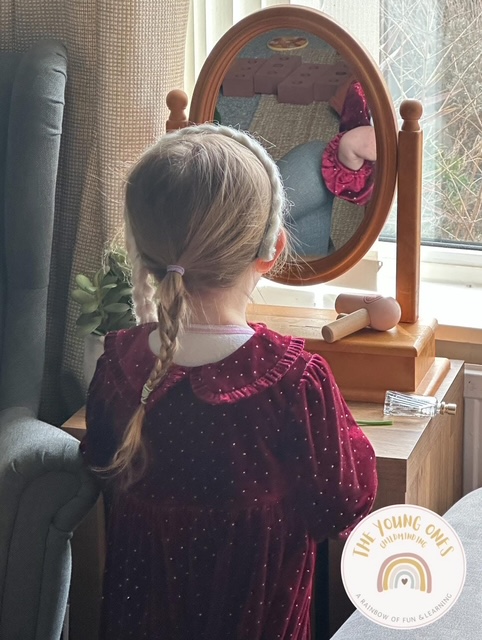
    Mirrors reflect light, creating a visually stimulating environment that supports the development of visual senses and adds a whole new dimension to play. Children are naturally drawn to their reflections – they love seeing themselves and watching their play unfold in the mirror. This not only enhances self-awareness but can also support early communication, as children begin talking to themselves, making faces and expressing emotions through their reflections.

    When observing children engaged in mirror play, you may notice moments of self-regulation, like children using what’s known as private speech – talking to themselves as they think through ideas or solve problems. In adult terms, this is like an inner monologue and it plays an important role in cognitive development.

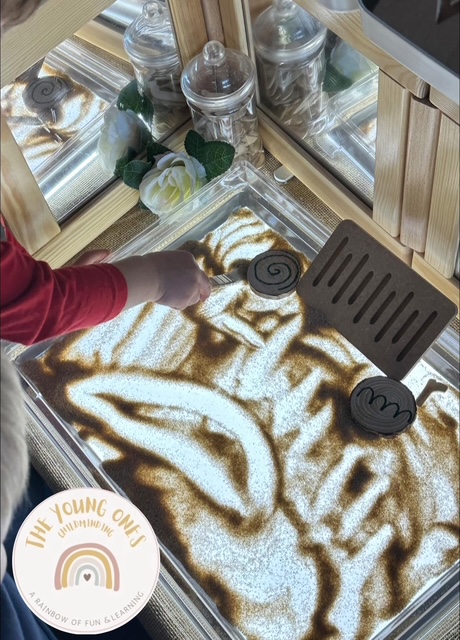
    Mirrors also present opportunities for children to explore the world from a different perspective. They can investigate symmetry, silhouettes, shadows, colours, reflection, luminosity and more. The ever-changing images offer endless possibilities for creative exploration and even the simplest materials can feel magical when mirrored.

    Beyond the sensory and cognitive benefits, mirrors provide space for identity exploration. Children can observe their own movements, increasing body awareness and developing a stronger sense of self.

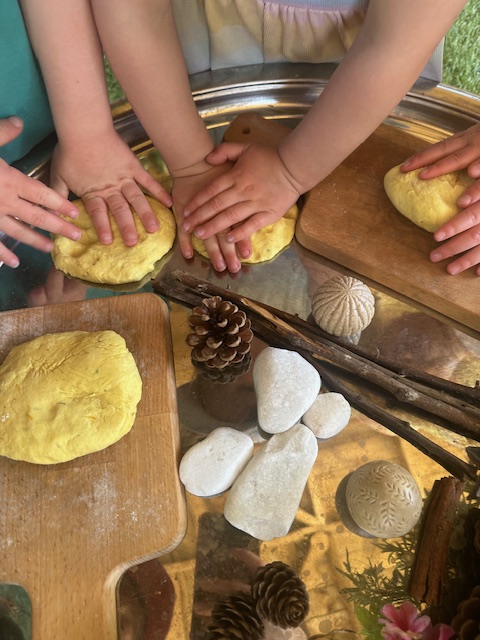
    Whether placed under a light tray, alongside natural loose parts, or propped up outdoors next to leaves and petals, mirrors invite children to look closer, think deeper and imagine more boldly.

    So if you’re looking to enrich your next play setup, try adding a mirror. You might just be surprised by what reflects back!

    Leave a comment

  • Let There Be Light: Illuminating Play for Young Explorers

    Let There Be Light: Illuminating Play for Young Explorers

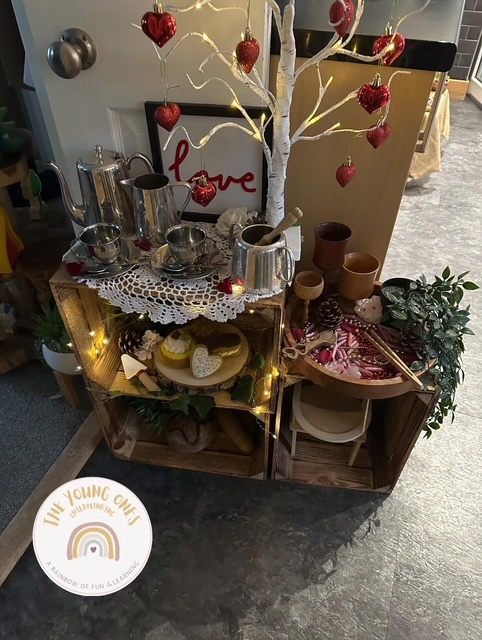
    Light has a magical way of capturing children’s attention – and their imagination. Whether you’re an educator setting up a provocation or a parent looking to spark curiosity at home, incorporating light into play can add wonder, warmth and endless learning opportunities.

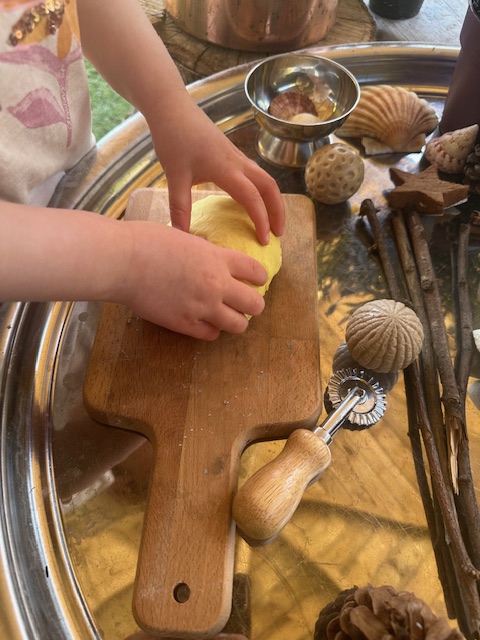
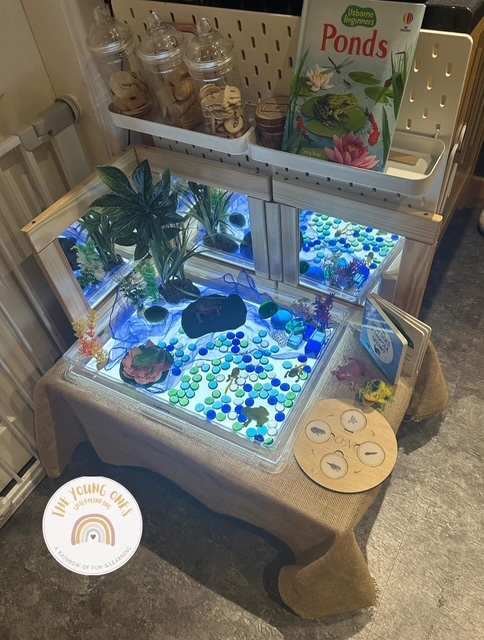
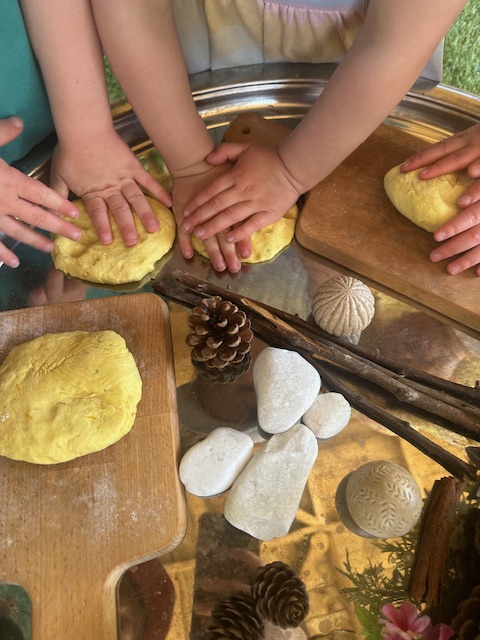
    A light tray is a brilliant place to start. It can transform even the simplest materials into something new and exciting. Try using it to highlight objects for close observation – natural treasures like leaves, shells or feathers suddenly glow with detail when lit from below. Add a topper tray, and it quickly becomes a sensory base for loose parts or sensory materials/bases – such as rice or beans. Want to mix things up? Add playdough for a whole new sensory experience with colour and shadow interplay.

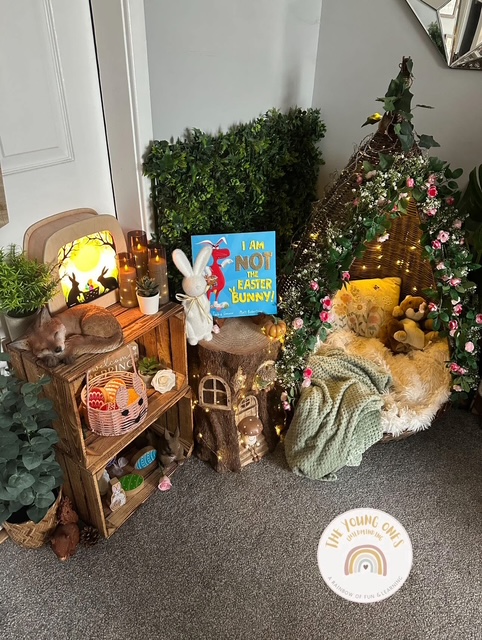
    But light play doesn’t have to stop at the tray…. Fairy lights, soft lamps and rope lights can be woven into invitations to play, creating a gentle, calming atmosphere that draws children in. These additions are perfect for building a hygge-inspired learning space – cosy, inviting and rich in possibility.

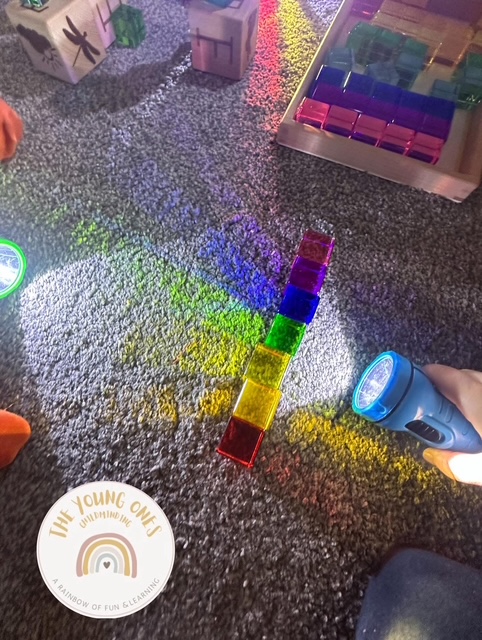
    Torches open up another world of exploration. Use them to cast shadows on the wall, explore reflection with mirrors or observe the magic of refraction through glass and water. Not only are these activities incredibly engaging but they also lay the groundwork for early science concepts in a hands-on, child-led way.

    By incorporating light into your play environments, you’re not only making spaces beautiful and inviting – you’re also inviting children to wonder, investigate and learn in meaningful, sensory-rich ways.

    So next time you’re planning a provocation, ask yourself: how could light shine a new perspective on this experience?

    Let’s light up learning – one twinkle at a time.

    Leave a comment

  • Let’s Talk About – Domestic Violence and Abuse: Support, Information and Reassurance

    Let’s Talk About – Domestic Violence and Abuse: Support, Information and Reassurance

    Domestic violence or abuse can affect anyone, regardless of age, gender, or background. If you’re worried that someone might notice or check on the pages you’ve visited, the Women’s Aid website offers guidance on how to cover your tracks online to protect your privacy.

    What is Domestic Violence and Abuse?

    Domestic violence, also referred to as domestic abuse, encompasses physical, emotional and sexual abuse that occurs in intimate partner relationships or between family members. It can happen to anyone and unfortunately, anyone can be an abuser.


    Getting Help and Support for Domestic Violence

    You do not have to wait for an emergency situation to reach out for help. If you’re experiencing domestic abuse, it’s important to talk to someone and remember that you are not alone.

    Information and Support Resources:

    • For women: Call the Freephone National Domestic Abuse Helpline run by Refuge at 0808 2000 247, available 24/7, offering confidential, non-judgemental information and support.
    • For men: Call Men’s Advice Line at 0808 8010 327 (Mon-Fri 10am-8pm) or visit their webchat (Wed 10am-11:30am & 2:30pm-4pm) for information and support.
    • For LGBT+ individuals: Call Galop at 0800 999 5428 for emotional and practical support.
    • For forced marriage or honour crimes: Call Karma Nirvana at 0800 5999 247 (Mon-Fri 9am-5pm) or GOV.UK Forced Marriage Unit at 020 7008 0151.

    In emergencies, always call 999. You can also email for support. When emailing, please specify when and how it is safe to respond:

    The Survivor’s Handbook from Women’s Aid is a free resource that provides essential information about housing, money, children’s support, and legal rights.

    If you’re concerned about your own behaviour, the Respect Helpline can provide support. Call 0808 802 4040 for confidential, free advice.


    Signs of Domestic Violence and Abuse

    Domestic violence is fundamentally about power and control. There are different forms of abuse, and it can be hard to recognise, especially when the abuser acts differently around others. Here are some questions to help you identify potential abuse:

    Emotional Abuse:

    • Does your partner belittle or put you down?
    • Do they blame you for arguments or abuse?
    • Do they isolate you from family or friends?
    • Do they control your access to money or essential items?
    • Do they monitor your social media or invade your privacy?

    Threats and Intimidation:

    • Are you ever threatened with harm or death?
    • Do they destroy your belongings or intimidate you physically?
    • Are you ever made to feel fearful of their actions?

    Physical Abuse:

    • Has your partner slapped, punched, kicked, or physically harmed you?
    • Have they ever burned or choked you, or thrown things at you?

    Sexual Abuse:

    • Have they touched you in ways you didn’t want?
    • Are you pressured into unsafe or unwanted sexual activity?
    • Are you made to have sex when you don’t want to, even with a partner?

    General Signs of Abuse:

    • Have you ever felt afraid of your partner?
    • Have you changed your behavior out of fear of what they might do?

    If you answered “yes” to any of these, you might be in an abusive relationship. Help is available, and you don’t have to face this alone.


    Domestic Abuse During Pregnancy

    Unfortunately, domestic abuse often increases during pregnancy. If you are pregnant and facing abuse, it can get worse as the relationship dynamics change. It’s essential to seek support, both for your safety and the safety of your unborn child.


    If You Decide to Leave

    The first step in escaping an abusive situation is realizing that you are not alone, and it’s not your fault. Before leaving, it’s important to get advice and create a safety plan. Some organizations that can help with safety planning are:

    • Women’s Aid (for women)
    • Men’s Advice Line (for men)
    • Galop (for LGBT+)

    If you plan to leave, be careful who you tell, and make sure the person abusing you does not find out where you’re going. Women’s Aid provides practical advice on making a safety plan for both men and women.


    Signs of Domestic Abuse on Children

    Domestic abuse often impacts children who witness it. It’s important to be aware of the signs that a child may be affected:

    • Aggression, bullying, or anti-social behavior
    • Anxiety, depression, or suicidal thoughts
    • Bed-wetting, nightmares, or insomnia
    • Frequent sickness or unexplained health issues
    • Eating disorders or substance use
    • Problems in school or learning difficulties
    • Withdrawal or isolation

    If you notice any of these signs, it’s important to seek support for both you and your children.


    Effects of Domestic Abuse on Children

    Children who live in homes with domestic abuse may experience long-term effects on their mental, emotional, and physical wellbeing. These impacts can last into adulthood if left unaddressed.

    What’s crucial is ensuring that the abuse stops and that children are provided with a safe, stable environment where they can heal.


    Support for Adults and Families Affected by Domestic Abuse

    There are several support services available:

    • Relate: Call 0300 003 0396 for support with relationship issues, including domestic abuse.
    • National Domestic Violence Helpline: Call 0808 2000 247 (24/7).
    • Men’s Advice Line: Call 0808 801 0327 for men experiencing domestic abuse.
    • National LGBT+ Domestic Abuse Helpline: Call 0800 999 5428 for LGBT+ individuals.

    Help for Those Worried About Their Behaviour

    If you think you may be abusive, or are concerned about your behaviour, help is available.

    You can call NSPCC at 0808 800 5000 or email help@nspcc.org.uk for advice and support.

    You can also reach out to Respect at 0808 802 4040 (Mon-Fri 9am-5pm) for confidential help. Their webchat service is available on Tuesdays and Thursdays.


    Remember, you are not alone, and help is available. There are professionals who care and can support you through the difficult journey of healing, whether you are experiencing abuse, have witnessed it, or are concerned about your own behaviour.

    Take the first step – reach out, ask for help, and know that there is a path to safety, peace and healing.

    Leave a comment

    Pages: 1 2

  • Let’s Talk About – Car Seat Safety

    Let’s Talk About – Car Seat Safety

    Cold Weather and Car Seat Safety

    Winter means we need to keep our little ones warm, but did you know that babies and children should not wear coats or snowsuits in the car? ❌

    While it’s important to keep children warm, a coat or snowsuit can compress under the car seat harness by up to 4 inches! This can prevent the harness from fitting securely and safely, creating a dangerous situation in the event of a crash. Items like hoods, thin puddle suits, and anoraks can also impact how well the seat fits.

    Car seat specialist guidance recommends that children wear thin, non-slippy layers (such as fleece or a thin jumper) when in the car seat, ensuring the harness fits properly. You can keep blankets in the car to place over the harness to keep your child warm, but remember: car seats trap heat, so avoid over-wrapping your child to prevent overheating.


    Car Seat Safety and Extended Rear-Facing

    As parents, we’re all constantly learning – just like our children are. I’ll admit, before I had children, I wasn’t always as knowledgeable about car seat safety as I am now. Even now, I’m still learning! Car seat safety isn’t something that’s often taught to us, and even health visitors and midwives might not give the best advice or sometimes, car seat retailers provide incorrect information. So, how do we know what’s best?

    Sadly, many car seats are tested to meet the bare minimum safety standards, typically tested for a 30mph impact, which is only equivalent to two cars traveling at 15mph! After that, the seats often crumple. 😵

    In Sweden, however, children have been traveling rear-facing for over 50 years—and studies have shown that rear-facing seats are at least 5 times safer than forward-facing seats. In fact, children should rear-face until at least 5 years old for optimal safety (and beyond where possible).

    Why is Rear-Facing Safer?

    Frontal collisions are the most dangerous type of car accidents, where the highest speeds and forces are involved. In these situations, if a child is forward-facing, they are flung forward and the harness pins them back. This causes stress on the neck, spine and internal organs. Since children’s bones and spines aren’t fully fused yet, they are at a much higher risk during such an impact.

    To put it into perspective, a baby’s head makes up 25% of their body weight, compared to an adult’s head, which is only 6%. Rear-facing seats help counteract this forward movement, distributing the force more evenly across the child’s back and reducing stress on their developing body.

    What About Legroom?

    A common question parents ask about rear-facing seats is, “Where will their legs go?” The answer is that children are more flexible than we often think. They tend to find comfortable positions, such as sitting cross-legged or with their legs resting against the seat. In fact, many children find rear-facing seats more comfortable because their legs aren’t dangling without support.

    There are also rear-facing seats with extended legroom options – these allow the seat to be adjusted to create more space for your growing child.

    Making Informed Decisions for Safety

    As parents and caregivers, our number one job is to keep our children safe. With the right information, we can make informed choices to protect them. If you want more guidance on extended rear-facing car seats, car seat safety, or car seat fit checks, I highly recommend visiting these Facebook pages that offer professional, independent advice from trained car seat specialists:

    • Extended Rear Facing (ERF) Car Seat Safety
    • Car Seat Safety UK

    Videos and Additional Resources:

    Check out these videos to learn more about car seat safety and rear-facing benefits:

    And read this helpful article from Axkid about rear-facing myths and how rear-facing seats actually protect your child’s legs: Axkid – Rear-Facing Myths


    Team Tex Seats and Other Brands

    Unfortunately, a company called Team Tex, known for producing low-quality, budget car seats, is commonly bought by parents who may not be aware of the risks. These seats often fail crash tests and are unable to withstand even minor impacts. Some Team Tex seats are sold with cheap materials and poor construction, and they have failed crash testing multiple times.

    Other well-known car seat brands may also fall short in terms of safety testing. While some brands claim to do additional tests, these may only focus on individual aspects like material strength, not on the seat’s overall performance in a crash.

    Swedish Plus-tested seats are the best option when it comes to safety. These seats have undergone the toughest testing in the world. Some brands with Swedish Plus-tested seats include:

    • Axkid
    • Avionaut
    • Britax
    • BeSafe

    Some other brands like Joie and Graco also offer some Swedish Plus-tested options and seats with high safety ratings.


    At the end of the day, it’s important that we, as parents and carers, make decisions that are best for our children. With proper knowledge and expert advice, we can ensure our children are as safe as possible while traveling.

    Let’s keep our little ones as protected as we can – always.

    Leave a comment

    Pages: 1 2

  • How Long Should You Keep Out Learning Invitations and Provocations?

    How Long Should You Keep Out Learning Invitations and Provocations?

    The answer to this question isn’t set in stone, as there is no “one-size-fits-all” timeline. How long you choose to keep specific resources or materials available will depend on several factors, such as the children’s ages, abilities, interests, and how much they are engaging with the resources. It’s important to assess how much more learning can happen with these materials and if there’s room for deeper exploration.

    At The Young Ones Childminding, we ensure that our core provision – resources that are always available – is in place. However, we also enhance this provision by rotating materials and adjusting them based on the children’s current interests, developmental needs and how best to engage and challenge them. For example, books are always accessible. While some key favourites remain, we rotate others to support the children’s learning and evolving interests.

    An important aspect of using learning invitations and provocations is the continuous observation and reflection on the children’s responses. By carefully observing how children engage with materials, we can determine when they may be ready for a change or when they need more time to explore. Sometimes, children may revisit a provocation after a break, leading to fresh insights or deeper understanding. This process creates a dynamic learning cycle, where provocations are not only used once, but can be returned to at different times, allowing children to build on previous experiences. This ongoing cycle of exploration, observation, and reflection ensures that learning remains meaningful and responsive to each child’s developmental needs.

    It’s crucial to remember that there’s no rush to move on from provocations or invitations. If children are deeply involved and engaged in an activity, consider leaving it out for a longer period of time. Let their play evolve naturally. You never know where it might lead! Sometimes, children may need that extra time to fully explore or question the materials before they’re ready to move on. You can even add, remove or rotate some resources to deepen their curiosity and challenge them further.

    On the flip side, if you notice that children are showing little interest or their engagement begins to wane, it’s completely okay to switch things up. You might discover that children take the learning in directions you hadn’t imagined. This could be because they are following their own interests or schematic urges and that’s wonderful! They are constructing knowledge in their own unique way, which is always worth celebrating.

    Leave a comment

    Pages: 1 2

  • The Essential Sector – a Poem to the DFE

    The Essential Sector – a Poem to the DFE

    They once called us key workers,

    And they said our roles were vital.

    But suddenly our voice doesn’t matter, 

    They were quick to take our title. 

    They say “join teaching early years, 

    It’s a meaningful, rewarding career”.

    But they take away with the other hand, 

    And for the future, we all fear. 

    At the moment early years,  

    Is getting pushed right off the rails.

    Please know our country will crumble,

    If our essential sector fails!

    So what do we do when there’s nothing left,

    So many are running on empty…

    Trying to keep our settings alive, 

    Yet your advertising campaign’s got plenty.

    Retention crisis, settings closing down,

    How will we stop from sinking?!

    Yet they reduce our ways to make ends meet,

    We all scream “what were they thinking”?!

    Changing goalposts, more admin, 

    Yet no increase in pay.

    Soon new-borns will be forced in schools,

    If they keep getting their way. 

    Despite the fact that research shows,

    Through play, young children thrive. 

    Child-led, freedom, love and nature, 

    No – the classroom is the DFE drive. 

    “Self employed, well not anymore”,

    The childminders all cry!

    But no holiday pay, no benefits,

    And no pension, we all sigh. 

    The nurseries need to pay their staff,

    Funding is not enough!

    “We are becoming unsustainable”,

    But the government says it’s ‘tough’. 

    The parents need more childcare, 

    “Our jobs require us in”.

    But settings are all closing down, 

    “No one can fit us in”.

    Every single child needs quality,

    Education, nurture and care.

    But so many practitioners are leaving,

    There will soon be no one there. 

    No, our job is not a 9-5, 

    We work more than a 10hr day.

    We’ve built our provisions with time and love,

    Yet now we have no say.

    Despite love and passion, 

    These choices are stealing that drive, 

    Without change our essential sector,  

    Will never be able to survive. 

    ©️ – Poem by Georgina Young – Guiding The Young Ones

    Leave a comment

    Pages: 1 2

  • Top Tips for Supporting Emotional Regulation

    Top Tips for Supporting Emotional Regulation

    1. Name Your Feelings
      Help children identify and express their emotions by using mirrors to explore facial expressions and discussing what different feelings look like. This builds emotional intelligence and awareness.
    2. Separate “I Am” from “I Feel”
      Encourage children to say “I feel angry” instead of “I am angry,” reminding them that emotions are temporary and don’t define who they are.
    3. Use Makaton
      Makaton sign language helps children express emotions. Even for those who usually have a good vocabulary, in moments of emotional distress and dysregulation, children can struggle to express themselves. This supports both emotional and verbal communication, when children don’t have or cant find the words.
    4. Read Books About Emotions
      Explore stories like The Colour Monster and The Lion Inside, using story props and puppets to dive deeper into characters’ feelings and situations.
    5. Calm Down Bottles & Basket
      Provide sensory bottles or a calming basket with emotion books, fidget toys, and other calming resources to help children de-escalate when feeling overwhelmed.
    6. Practice Dragon Breaths
      Teach mindful breathing with fun techniques like “Dragon Breaths” (deep breaths) or “Smell the Flowers, Blow Out the Candles” to calm the body and mind.
    7. Mindful Body Scan
      Encourage children to relax by tensing and releasing different body parts, helping them become more aware of their body and emotions.
    8. Daily Yoga
      Incorporate simple yoga poses to release pent-up emotions, reduce stress and boost emotional resilience.
    9. Music & Movement
      Use songs and physical activities (like jumping or running) to help children release energy and regulate their emotions in a fun, active way.
    10. Cooperative Games
      Promote self-regulation through games that encourage patience, turn-taking and impulse control – great for developing social-emotional skills.
    11. Sensory Play
      Offer a variety of sensory activities, from messy play to sensory tents, to help children connect with their bodies and explore emotions through their senses.
    12. Imaginative Play
      Encourage pretend play, allowing children to act out real-life scenarios and explore different emotions, which helps build empathy and emotional understanding.
    13. Singing
      Use songs to help children express and regulate their emotions. (Bonus – Singing also supports language development and memory).
    14. The Power of Play
      All types of play – whether physical, imaginative, or symbolic – are essential in building early self-regulation skills and supporting expression. Through play, children practice planning, problem-solving and emotional control.

    Supporting emotional regulation in children is a continuous, nurturing process that builds over time. By offering simple, effective strategies like these, we can help children develop the tools they need to understand and manage their feelings in healthy ways. Whether it’s through play, breathing exercises, or expressive activities, every moment is an opportunity to guide them towards emotional resilience.

    For more tips and ideas on fostering emotional growth, be sure to keep an eye on our other resources in the Top Tips category. Together, we can help our little ones grow into confident, self-aware individuals.

    Leave a comment

    Pages: 1 2

  • Let’s Talk about – Self regulation and emotional resilience 

    Let’s Talk about – Self regulation and emotional resilience 

    Supporting Young Children in Developing Emotional Regulation

    Emotional regulation isn’t a skill we’re born with—it’s something we learn over time. In the early years, children’s moods can swing and change massively. Because of this, helping each child learn to self-regulate across a wide range of emotions is one of our most important responsibilities as educators, caregivers or parents.

    The foundations of emotional and cognitive self-regulation are deeply interconnected in the early years and both are essential for behavioural regulation. For young children, this learning process begins with co-regulation—a supportive partnership between child and adult that has both emotional and cognitive aspects.

    Emotionally, co-regulation involves adults modelling calming strategies, naming and talking about feelings and introducing ways to manage them. This helps children begin to recognise their own emotional states and builds their understanding of how to reduce or cope with intense emotions.

    Cognitively, adults can scaffold self-regulation by talking with children about their thinking and learning – helping them pause, reflect and become aware of their thought processes. This early support helps build skills like impulse control, attention, and flexible thinking. It’s also important that adults can model their own thinking processes such as; “I feel sad because” and then what they can do to help themselves “I am going to go for a run because that helps me feel better”, allowing children opportunities to see positive reactions to negative feelings.

    When emotions run very high, they can interfere with a child’s ability to use these cognitive tools. A child overwhelmed by strong feelings may struggle to focus, regulate impulses or think clearly. This is because heightened emotional arousal can overpower the brain’s capacity for logical thought and problem-solving. In these moments, emotional co-regulation must come first – supporting the child in calming down – before they’re ready to reflect or respond thoughtfully to a situation.

    Key Strategies for Co-Regulation

    Researchers have identified three foundational strategies that support effective co-regulation in early childhood. These approaches work together to create the conditions in which children can begin developing their own self-regulation skills.

    1. Positive Relationships
    At the heart of co-regulation is a warm, responsive relationship. When children feel respected, comforted and supported – especially during times of stress – they are more likely to feel safe and understood. Knowing that a trusted adult is consistently there for them builds the emotional security needed to begin regulating their feelings and behaviours.

    2. Enabling Environments
    Children thrive in environments that feel both physically and emotionally safe. A predictable, well-structured space helps reduce unnecessary stress and provides the consistency that young children need. These environments offer space to explore, take risks and try out self-regulation strategies without fear of harsh consequences or confusion.

    3. Learning and Development
    Self-regulation can be taught and strengthened over time. Adults play a key role by modelling calm behaviour, suggesting practical strategies and offering children regular opportunities to practice these skills. Through gentle guidance and scaffolding, children gradually become more confident and capable in managing their emotions, attention and behaviours.

    In Summary

    Supporting emotional regulation in young children is not only about responding to moments of emotional intensity, but also about laying a strong foundation through relationships, environments and daily learning experiences. With consistent, compassionate support, children begin to build the lifelong skills they need to understand, express, and manage their emotions in positive and healthy ways.

    If you’re looking for practical ideas to get started, be sure to check out our Top Tips category – where I have shared simple, effective ways to support emotional regulation every day.

    Leave a comment

    Pages: 1 2

  • Top Tips for Using Everyday Language to Build Resilience

    Top Tips for Using Everyday Language to Build Resilience

    Small words. Big impact.

    In early years, the way we speak to children shapes how they speak to themselves. Resilience doesn’t come from perfection – it grows from trying, failing, feeling and trying again… with adult-led support.

    Here are a few everyday phrases that plant those seeds:

    1. “I can see you’re finding this tricky – and that’s okay.”
    This validates their experience while keeping the door open for growth.

    2. “Let’s try together first.”
    Support before independence shows we’re on their team.

    3. “You don’t have to get it right the first time.”
    Normalise struggle – it’s where the learning lives (where possible, be relatable e.g. “I couldn’t do my zip at first either”

    4. “I saw how hard you tried” – not just focusing on the outcome.
    Praising effort teaches children to value the process, not just the product, as well as building confidence and motivation.

    5. “You’re safe. I’m here.”
    Because when big feelings come, safety is the first step.

    It’s not about getting it perfect – none of us are! However, it’s about being intentional, consistent and kind because Young Ones deserve the patience, care and respect that helps them feel seen and safe every day.

    Leave a comment

    Pages: 1 2

  • Top Tips for Calming those chaotic moments

    Top Tips for Calming those chaotic moments

    Because sometimes, we all need a little more exhale than hustle.

    Whether it’s the buzz of a full moon, a sugar-fuelled celebration or just one of those mornings – it’s okay, we are only human. the beauty of early years is in the messiness of it all. However, there are simple and gentle ways you can bring calm, connection and focus back into your space.

    Here are a few tips to help you reset, even on the busiest of days:

    1. Lower your voice (and your body)
    Children often mirror our energy. Speaking softly and crouching to their level can instantly shift the dynamic and draw their attention without demanding it.

    2. Use a predictable phrase or sound
    A gentle bell, a familiar rhyme or a calming phrase like “Let’s take our deep breaths” can become a signal for settling. Keep it consistent and calm – not sharp or rushed.

    3. Try a ‘still moment’ together
    Invite everyone to freeze for five seconds. Then breathe in… and out… together (Dragon breaths are our personal favourite). It’s a tiny reset button that works surprisingly well.

    4. Create a cosy corner/space (and make it okay to use)
    A soft, safe space with books, cushions and sensory objects gives Young Ones somewhere to regulate. Frame it positively: “This is a space to help your body feel calm” and calm baskets are also a wonderful way to support regulation and moments of calm. However, ensure to make time to use and utilise the space regularly, not only during times of emotional dysregulation.

    5. Go outdoors in nature

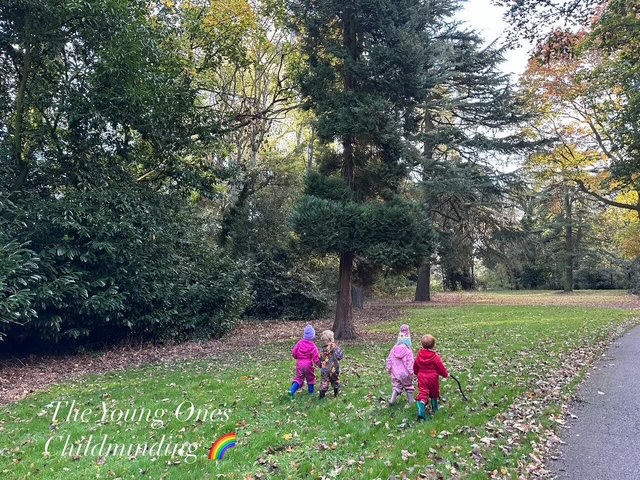
    It’s amazing how much going outdoors can help in those busy moments! Nature has countless benefits for physical and emotional wellbeing, as well as offering moments of calm and connection. It also allows Young Ones more space and freedom to let out bursts of energy and more freedom to move and express themselves. So whether you go out in the garden/play space, go on a woodland walk or go to the park – you are bound to see positives!

    6. Don’t forget your calm
    Take three slow breaths for you before stepping into a challenging and/or noisy moment. Your steadiness is one of the most powerful tools in the room.

    Some days will still be wild and chaotic – and that’s okay, but a few calm cues, used consistently and kindly, can make all the difference. So here’s to all the wonderful grown ups out there, braving the wild days with heart and patience. You’re doing amazing – even on the busiest and loudest days. Keep going and remember: the calm moments you create today, will grow into something meaningful tomorrow.

    Because sometimes, we all need a little more exhale than hustle.

    Whether it’s the buzz of a full moon, a sugar-fuelled celebration or just one of those mornings – it’s okay, we are only human. the beauty of early years is in the messiness of it all. However, there are simple and gentle ways you can bring calm, connection and focus back into your space.

    Here are a few tips to help you reset, even on the busiest of days:

    1. Lower your voice (and your body)
    Children often mirror our energy. Speaking softly and crouching to their level can instantly shift the dynamic and draw their attention without demanding it.

    2. Use a predictable phrase or sound
    A gentle bell, a familiar rhyme or a calming phrase like “Let’s take our deep breaths” can become a signal for settling. Keep it consistent and calm – not sharp or rushed.

    3. Try a ‘still moment’ together
    Invite everyone to freeze for five seconds. Then breathe in… and out… together (Dragon breaths are our personal favourite). It’s a tiny reset button that works surprisingly well.

    4. Create a cosy corner/space (and make it okay to use)
    A soft, safe space with books, cushions and sensory objects gives Young Ones somewhere to regulate. Frame it positively: “This is a space to help your body feel calm” and calm baskets are also a wonderful way to support regulation and moments of calm. However, ensure to make time to use and utilise the space regularly, not only during times of emotional dysregulation.

    5. Go outdoors in nature

    It’s amazing how much going outdoors can help in those busy moments! Nature has countless benefits for physical and emotional wellbeing, as well as offering moments of calm and connection. It also allows Young Ones more space and freedom to let out bursts of energy and more freedom to move and express themselves. So whether you go out in the garden/play space, go on a woodland walk or go to the park – you are bound to see positives!

    6. Don’t forget your calm
    Take three slow breaths for you before stepping into a challenging and/or noisy moment. Your steadiness is one of the most powerful tools in the room.

    Some days will still be wild and chaotic – and that’s okay, but a few calm cues, used consistently and kindly, can make all the difference. So here’s to all the wonderful grown ups out there, braving the wild days with heart and patience. You’re doing amazing – even on the busiest and loudest days. Keep going and remember: the calm moments you create today, will grow into something meaningful tomorrow.

    Leave a comment

    Pages: 1 2