Tag: families

  • Top Tips for Supporting Emotional Regulation

    Top Tips for Supporting Emotional Regulation

    1. Name Your Feelings
      Help children identify and express their emotions by using mirrors to explore facial expressions and discussing what different feelings look like. This builds emotional intelligence and awareness.
    2. Separate “I Am” from “I Feel”
      Encourage children to say “I feel angry” instead of “I am angry,” reminding them that emotions are temporary and don’t define who they are.
    3. Use Makaton
      Makaton sign language helps children express emotions. Even for those who usually have a good vocabulary, in moments of emotional distress and dysregulation, children can struggle to express themselves. This supports both emotional and verbal communication, when children don’t have or cant find the words.
    4. Read Books About Emotions
      Explore stories like The Colour Monster and The Lion Inside, using story props and puppets to dive deeper into characters’ feelings and situations.
    5. Calm Down Bottles & Basket
      Provide sensory bottles or a calming basket with emotion books, fidget toys, and other calming resources to help children de-escalate when feeling overwhelmed.
    6. Practice Dragon Breaths
      Teach mindful breathing with fun techniques like “Dragon Breaths” (deep breaths) or “Smell the Flowers, Blow Out the Candles” to calm the body and mind.
    7. Mindful Body Scan
      Encourage children to relax by tensing and releasing different body parts, helping them become more aware of their body and emotions.
    8. Daily Yoga
      Incorporate simple yoga poses to release pent-up emotions, reduce stress and boost emotional resilience.
    9. Music & Movement
      Use songs and physical activities (like jumping or running) to help children release energy and regulate their emotions in a fun, active way.
    10. Cooperative Games
      Promote self-regulation through games that encourage patience, turn-taking and impulse control – great for developing social-emotional skills.
    11. Sensory Play
      Offer a variety of sensory activities, from messy play to sensory tents, to help children connect with their bodies and explore emotions through their senses.
    12. Imaginative Play
      Encourage pretend play, allowing children to act out real-life scenarios and explore different emotions, which helps build empathy and emotional understanding.
    13. Singing
      Use songs to help children express and regulate their emotions. (Bonus – Singing also supports language development and memory).
    14. The Power of Play
      All types of play – whether physical, imaginative, or symbolic – are essential in building early self-regulation skills and supporting expression. Through play, children practice planning, problem-solving and emotional control.

    Supporting emotional regulation in children is a continuous, nurturing process that builds over time. By offering simple, effective strategies like these, we can help children develop the tools they need to understand and manage their feelings in healthy ways. Whether it’s through play, breathing exercises, or expressive activities, every moment is an opportunity to guide them towards emotional resilience.

    For more tips and ideas on fostering emotional growth, be sure to keep an eye on our other resources in the Top Tips category. Together, we can help our little ones grow into confident, self-aware individuals.

    Leave a comment

    Pages: 1 2

  • Let’s Talk about – Self regulation and emotional resilience 

    Let’s Talk about – Self regulation and emotional resilience 

    Supporting Young Children in Developing Emotional Regulation

    Emotional regulation isn’t a skill we’re born with—it’s something we learn over time. In the early years, children’s moods can swing and change massively. Because of this, helping each child learn to self-regulate across a wide range of emotions is one of our most important responsibilities as educators, caregivers or parents.

    The foundations of emotional and cognitive self-regulation are deeply interconnected in the early years and both are essential for behavioural regulation. For young children, this learning process begins with co-regulation—a supportive partnership between child and adult that has both emotional and cognitive aspects.

    Emotionally, co-regulation involves adults modelling calming strategies, naming and talking about feelings and introducing ways to manage them. This helps children begin to recognise their own emotional states and builds their understanding of how to reduce or cope with intense emotions.

    Cognitively, adults can scaffold self-regulation by talking with children about their thinking and learning – helping them pause, reflect and become aware of their thought processes. This early support helps build skills like impulse control, attention, and flexible thinking. It’s also important that adults can model their own thinking processes such as; “I feel sad because” and then what they can do to help themselves “I am going to go for a run because that helps me feel better”, allowing children opportunities to see positive reactions to negative feelings.

    When emotions run very high, they can interfere with a child’s ability to use these cognitive tools. A child overwhelmed by strong feelings may struggle to focus, regulate impulses or think clearly. This is because heightened emotional arousal can overpower the brain’s capacity for logical thought and problem-solving. In these moments, emotional co-regulation must come first – supporting the child in calming down – before they’re ready to reflect or respond thoughtfully to a situation.

    Key Strategies for Co-Regulation

    Researchers have identified three foundational strategies that support effective co-regulation in early childhood. These approaches work together to create the conditions in which children can begin developing their own self-regulation skills.

    1. Positive Relationships
    At the heart of co-regulation is a warm, responsive relationship. When children feel respected, comforted and supported – especially during times of stress – they are more likely to feel safe and understood. Knowing that a trusted adult is consistently there for them builds the emotional security needed to begin regulating their feelings and behaviours.

    2. Enabling Environments
    Children thrive in environments that feel both physically and emotionally safe. A predictable, well-structured space helps reduce unnecessary stress and provides the consistency that young children need. These environments offer space to explore, take risks and try out self-regulation strategies without fear of harsh consequences or confusion.

    3. Learning and Development
    Self-regulation can be taught and strengthened over time. Adults play a key role by modelling calm behaviour, suggesting practical strategies and offering children regular opportunities to practice these skills. Through gentle guidance and scaffolding, children gradually become more confident and capable in managing their emotions, attention and behaviours.

    In Summary

    Supporting emotional regulation in young children is not only about responding to moments of emotional intensity, but also about laying a strong foundation through relationships, environments and daily learning experiences. With consistent, compassionate support, children begin to build the lifelong skills they need to understand, express, and manage their emotions in positive and healthy ways.

    If you’re looking for practical ideas to get started, be sure to check out our Top Tips category – where I have shared simple, effective ways to support emotional regulation every day.

    Leave a comment

    Pages: 1 2

  • Top Tips for Using Everyday Language to Build Resilience

    Top Tips for Using Everyday Language to Build Resilience

    Small words. Big impact.

    In early years, the way we speak to children shapes how they speak to themselves. Resilience doesn’t come from perfection – it grows from trying, failing, feeling and trying again… with adult-led support.

    Here are a few everyday phrases that plant those seeds:

    1. “I can see you’re finding this tricky – and that’s okay.”
    This validates their experience while keeping the door open for growth.

    2. “Let’s try together first.”
    Support before independence shows we’re on their team.

    3. “You don’t have to get it right the first time.”
    Normalise struggle – it’s where the learning lives (where possible, be relatable e.g. “I couldn’t do my zip at first either”

    4. “I saw how hard you tried” – not just focusing on the outcome.
    Praising effort teaches children to value the process, not just the product, as well as building confidence and motivation.

    5. “You’re safe. I’m here.”
    Because when big feelings come, safety is the first step.

    It’s not about getting it perfect – none of us are! However, it’s about being intentional, consistent and kind because Young Ones deserve the patience, care and respect that helps them feel seen and safe every day.

    Leave a comment

    Pages: 1 2

  • Top Tips for Calming those chaotic moments

    Top Tips for Calming those chaotic moments

    Because sometimes, we all need a little more exhale than hustle.

    Whether it’s the buzz of a full moon, a sugar-fuelled celebration or just one of those mornings – it’s okay, we are only human. the beauty of early years is in the messiness of it all. However, there are simple and gentle ways you can bring calm, connection and focus back into your space.

    Here are a few tips to help you reset, even on the busiest of days:

    1. Lower your voice (and your body)
    Children often mirror our energy. Speaking softly and crouching to their level can instantly shift the dynamic and draw their attention without demanding it.

    2. Use a predictable phrase or sound
    A gentle bell, a familiar rhyme or a calming phrase like “Let’s take our deep breaths” can become a signal for settling. Keep it consistent and calm – not sharp or rushed.

    3. Try a ‘still moment’ together
    Invite everyone to freeze for five seconds. Then breathe in… and out… together (Dragon breaths are our personal favourite). It’s a tiny reset button that works surprisingly well.

    4. Create a cosy corner/space (and make it okay to use)
    A soft, safe space with books, cushions and sensory objects gives Young Ones somewhere to regulate. Frame it positively: “This is a space to help your body feel calm” and calm baskets are also a wonderful way to support regulation and moments of calm. However, ensure to make time to use and utilise the space regularly, not only during times of emotional dysregulation.

    5. Go outdoors in nature

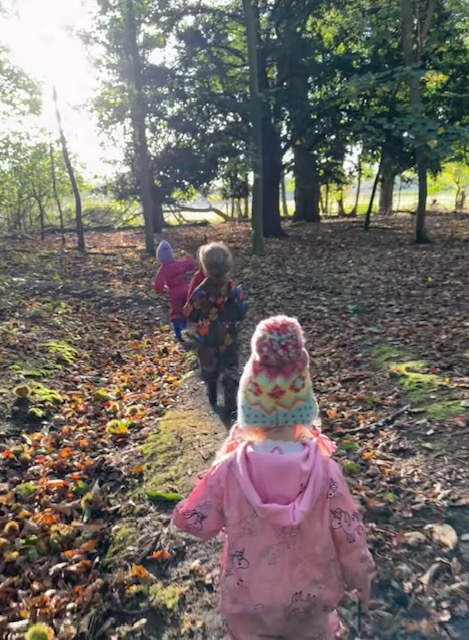
    It’s amazing how much going outdoors can help in those busy moments! Nature has countless benefits for physical and emotional wellbeing, as well as offering moments of calm and connection. It also allows Young Ones more space and freedom to let out bursts of energy and more freedom to move and express themselves. So whether you go out in the garden/play space, go on a woodland walk or go to the park – you are bound to see positives!

    6. Don’t forget your calm
    Take three slow breaths for you before stepping into a challenging and/or noisy moment. Your steadiness is one of the most powerful tools in the room.

    Some days will still be wild and chaotic – and that’s okay, but a few calm cues, used consistently and kindly, can make all the difference. So here’s to all the wonderful grown ups out there, braving the wild days with heart and patience. You’re doing amazing – even on the busiest and loudest days. Keep going and remember: the calm moments you create today, will grow into something meaningful tomorrow.

    Because sometimes, we all need a little more exhale than hustle.

    Whether it’s the buzz of a full moon, a sugar-fuelled celebration or just one of those mornings – it’s okay, we are only human. the beauty of early years is in the messiness of it all. However, there are simple and gentle ways you can bring calm, connection and focus back into your space.

    Here are a few tips to help you reset, even on the busiest of days:

    1. Lower your voice (and your body)
    Children often mirror our energy. Speaking softly and crouching to their level can instantly shift the dynamic and draw their attention without demanding it.

    2. Use a predictable phrase or sound
    A gentle bell, a familiar rhyme or a calming phrase like “Let’s take our deep breaths” can become a signal for settling. Keep it consistent and calm – not sharp or rushed.

    3. Try a ‘still moment’ together
    Invite everyone to freeze for five seconds. Then breathe in… and out… together (Dragon breaths are our personal favourite). It’s a tiny reset button that works surprisingly well.

    4. Create a cosy corner/space (and make it okay to use)
    A soft, safe space with books, cushions and sensory objects gives Young Ones somewhere to regulate. Frame it positively: “This is a space to help your body feel calm” and calm baskets are also a wonderful way to support regulation and moments of calm. However, ensure to make time to use and utilise the space regularly, not only during times of emotional dysregulation.

    5. Go outdoors in nature

    It’s amazing how much going outdoors can help in those busy moments! Nature has countless benefits for physical and emotional wellbeing, as well as offering moments of calm and connection. It also allows Young Ones more space and freedom to let out bursts of energy and more freedom to move and express themselves. So whether you go out in the garden/play space, go on a woodland walk or go to the park – you are bound to see positives!

    6. Don’t forget your calm
    Take three slow breaths for you before stepping into a challenging and/or noisy moment. Your steadiness is one of the most powerful tools in the room.

    Some days will still be wild and chaotic – and that’s okay, but a few calm cues, used consistently and kindly, can make all the difference. So here’s to all the wonderful grown ups out there, braving the wild days with heart and patience. You’re doing amazing – even on the busiest and loudest days. Keep going and remember: the calm moments you create today, will grow into something meaningful tomorrow.

    Leave a comment

    Pages: 1 2