Tag: learning through play

  • The Power of Child-Led Play: Why Following Children’s Interests Matters

    The Power of Child-Led Play: Why Following Children’s Interests Matters

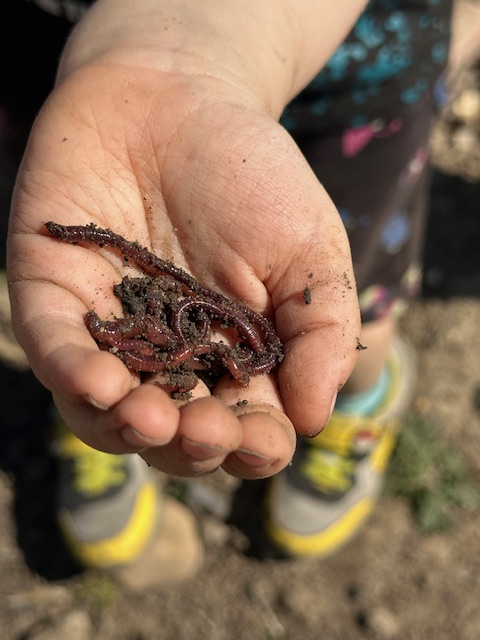
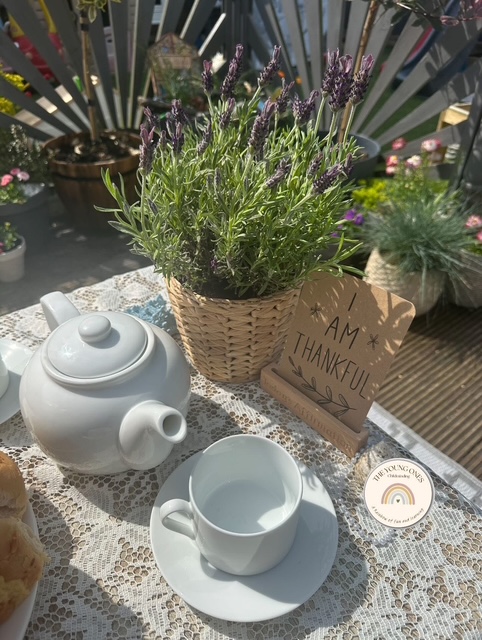
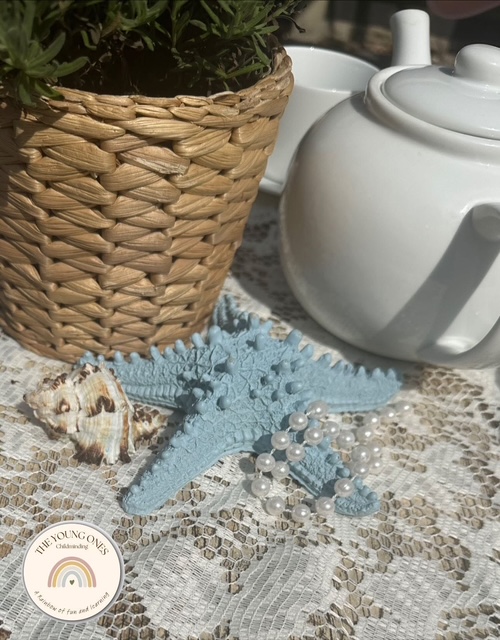
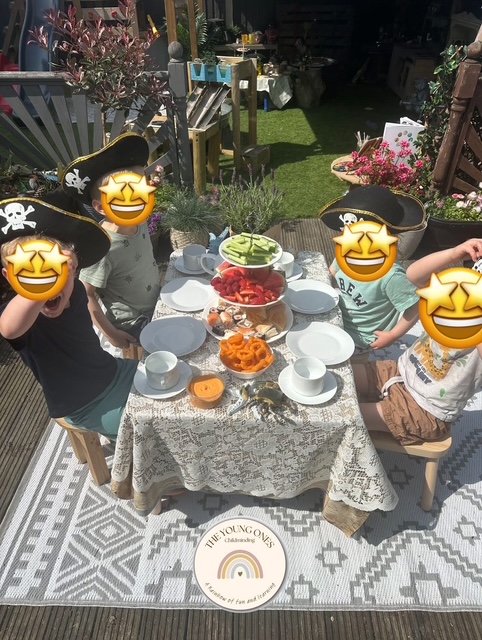
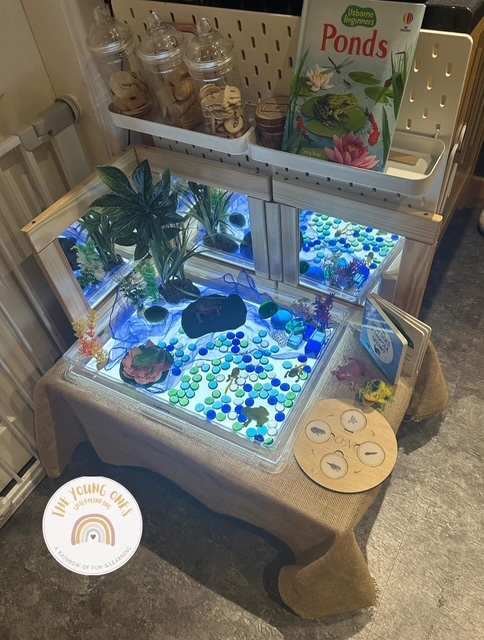
    This week in our setting, we’ve journeyed through all kinds of learning adventures. Our Young Ones discussed worms and, before long, the children had sparked a full-on nature investigation adventure and helped create their very own wormery. Meanwhile, our interest-led under-the-sea inspired learning invitations flowed into joyful pirate play — which, in true child-led spirit, ended in a self-declared “pirate tea party.” We walked to the local shop, where the children proudly chose sushi because, in their words, “pirates like fish.”

    These moments weren’t adult-designed or prescribed — they were born from the children’s imaginations, curiosities, and play. And as an early years educator, there’s nothing better than knowing that their learning is not only deep and meaningful, but also incredibly fun and relevant to them.

    After all, when children are engaged in play that excites and interests them, they don’t just learn — they thrive.


    What Is Child-Led Play?
    Child-led play is exactly what it sounds like: play that is initiated, directed, and sustained by the child. As educators, our role is to tune in — to notice what interests them, what stage they’re at, and what they need in order to extend their ideas further.

    Rather than taking the reins, we become thoughtful observers, gentle guides, and curious co-learners. We provide the environment, the materials and the emotional safety — but the learning path? That’s theirs to walk.


    Why Is It So Important?

    • It meets children where they are. Instead of pushing concepts they’re not ready for, we support the learning they’re naturally driven toward — making it more meaningful and developmentally appropriate.
    • It builds intrinsic motivation. When children are in control of their play, they’re more likely to stay focused, engaged and joyful in their learning.
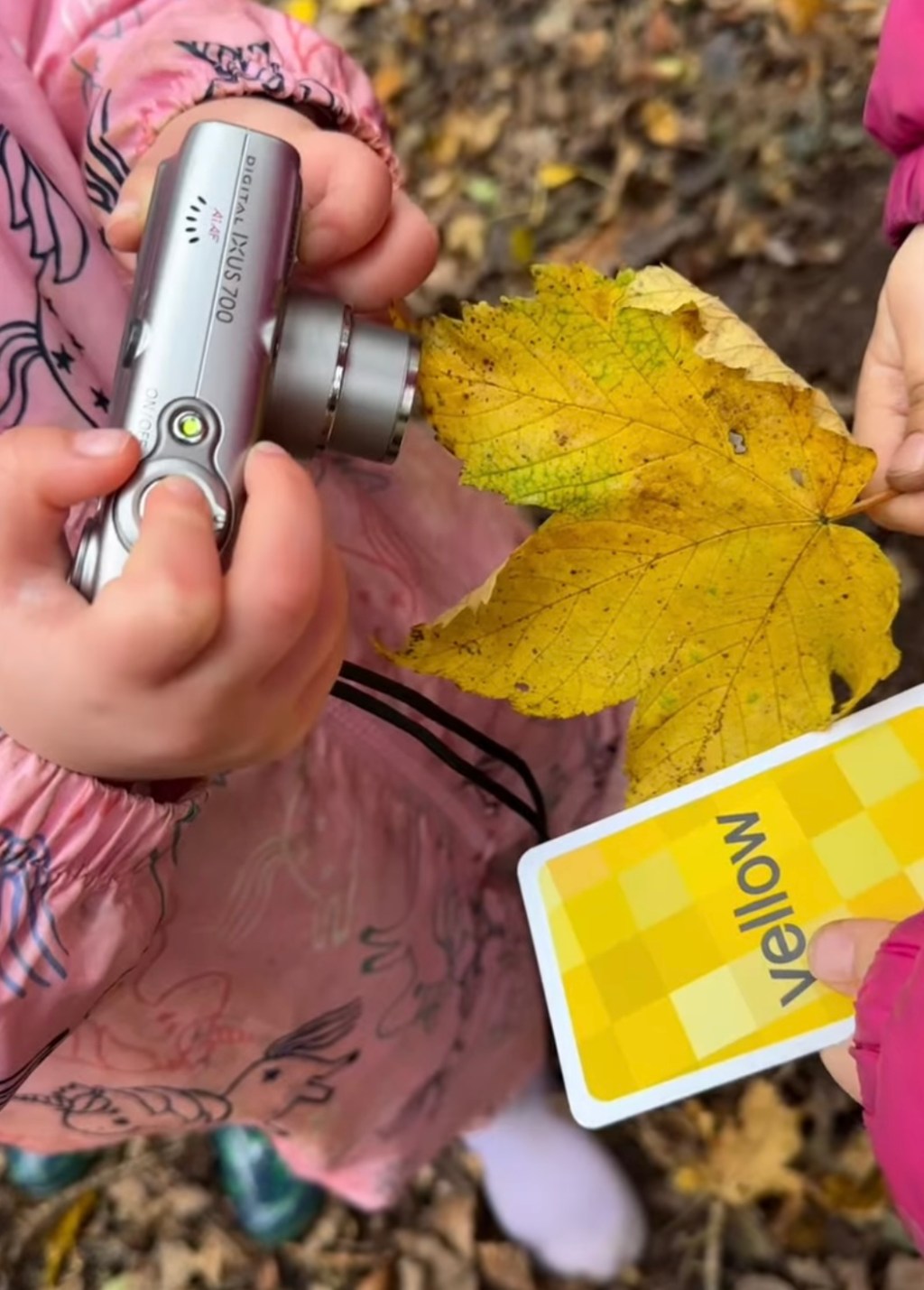
    • It supports deeper learning. Real connections happen when children are truly interested — whether they’re twiddling a leaf, building a den or role-playing life as they see it. These aren’t just ‘games’. They’re opportunities to process emotions, explore new concepts and grow essential life skills.
    • It nurtures confidence and autonomy. Children learn that their ideas matter. That they can lead, decide, and explore at their own pace — and be respected for it.

    Our Role as Educators
    Child-led play doesn’t mean stepping back entirely. It means stepping in at the right moments — offering vocabulary, extending ideas, providing a new material at just the right time, or reflecting later with the child.

    It’s about understanding that the child is the curriculum — and trusting in their ability to learn through play when given the time, space and support.


    A Gentle Reminder
    Every setting is different, but in ours, child-led learning is at the heart of everything we do. We meet children exactly where they are and we build from there — gently, respectfully and with curiosity.

    Because when learning is joyful, meaningful and rooted in play, it doesn’t just stick — it sings.

    Leave a comment

  • Magical Mirrors: Enhancing Play and Learning Through Reflection

    Magical Mirrors: Enhancing Play and Learning Through Reflection

    Some people have been asking why mirrors are often used in play and learning invitations, so I thought I’d share a few reasons why they can be such powerful additions to your provocations – both at home and in early years settings.

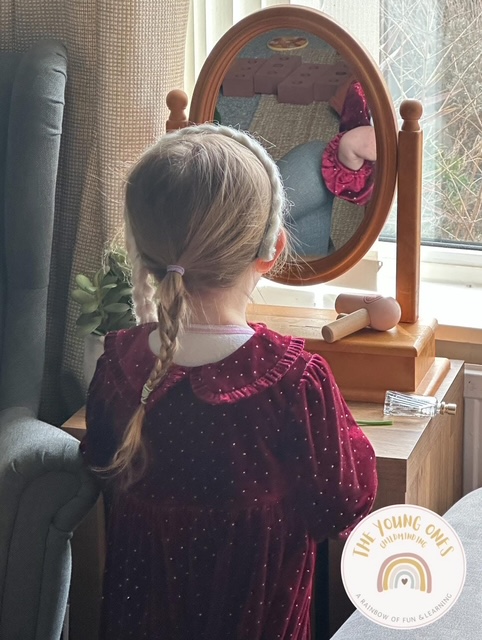
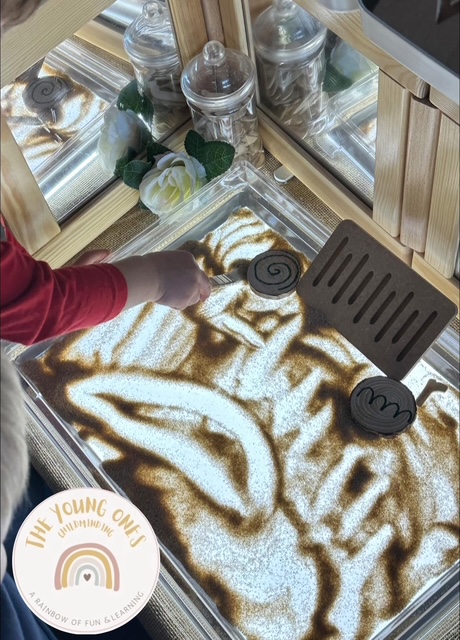
    Mirrors reflect light, creating a visually stimulating environment that supports the development of visual senses and adds a whole new dimension to play. Children are naturally drawn to their reflections – they love seeing themselves and watching their play unfold in the mirror. This not only enhances self-awareness but can also support early communication, as children begin talking to themselves, making faces and expressing emotions through their reflections.

    When observing children engaged in mirror play, you may notice moments of self-regulation, like children using what’s known as private speech – talking to themselves as they think through ideas or solve problems. In adult terms, this is like an inner monologue and it plays an important role in cognitive development.

    Mirrors also present opportunities for children to explore the world from a different perspective. They can investigate symmetry, silhouettes, shadows, colours, reflection, luminosity and more. The ever-changing images offer endless possibilities for creative exploration and even the simplest materials can feel magical when mirrored.

    Beyond the sensory and cognitive benefits, mirrors provide space for identity exploration. Children can observe their own movements, increasing body awareness and developing a stronger sense of self.

    Whether placed under a light tray, alongside natural loose parts, or propped up outdoors next to leaves and petals, mirrors invite children to look closer, think deeper and imagine more boldly.

    So if you’re looking to enrich your next play setup, try adding a mirror. You might just be surprised by what reflects back!

    Leave a comment

  • Let There Be Light: Illuminating Play for Young Explorers

    Let There Be Light: Illuminating Play for Young Explorers

    Light has a magical way of capturing children’s attention – and their imagination. Whether you’re an educator setting up a provocation or a parent looking to spark curiosity at home, incorporating light into play can add wonder, warmth and endless learning opportunities.

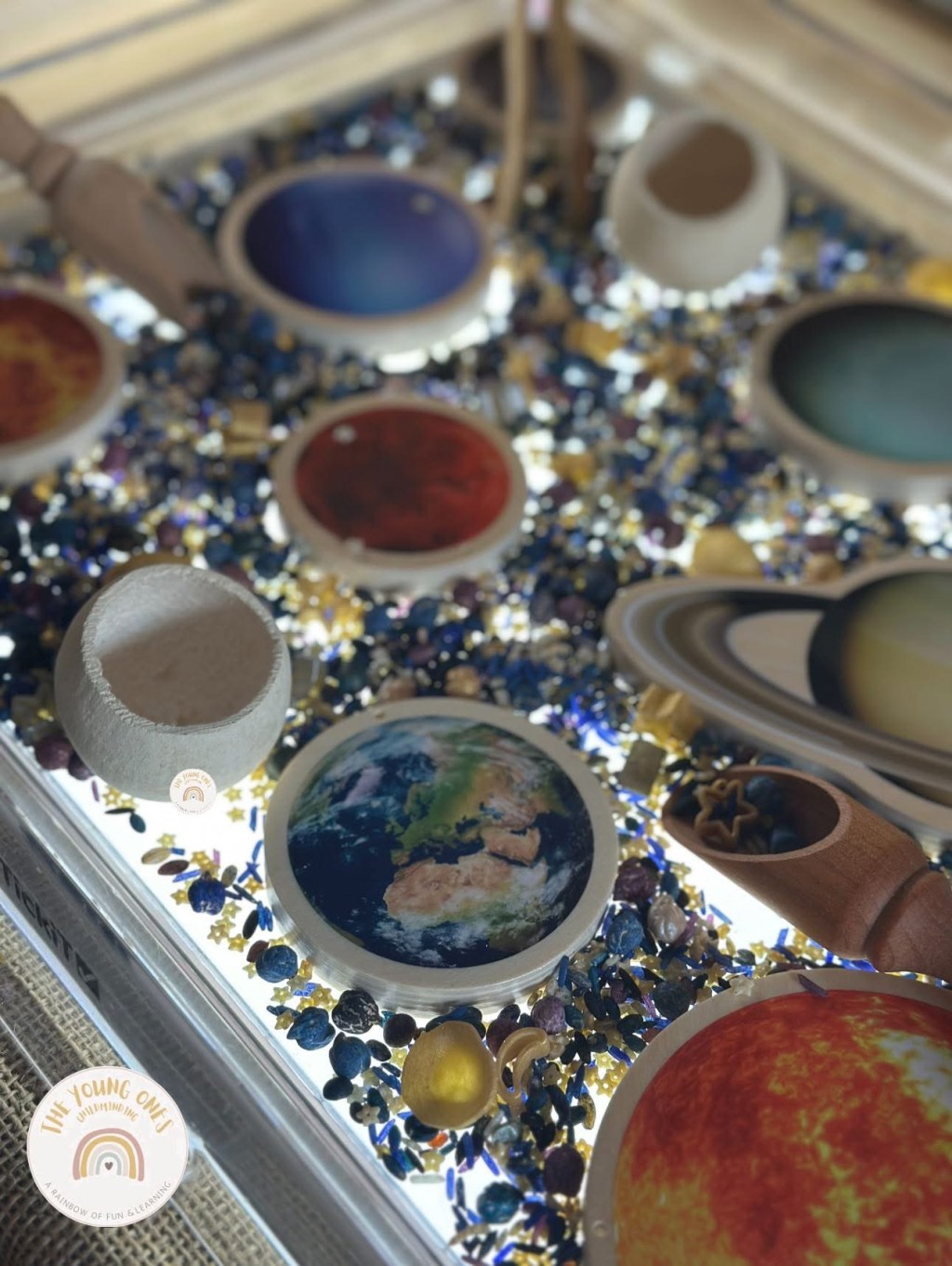
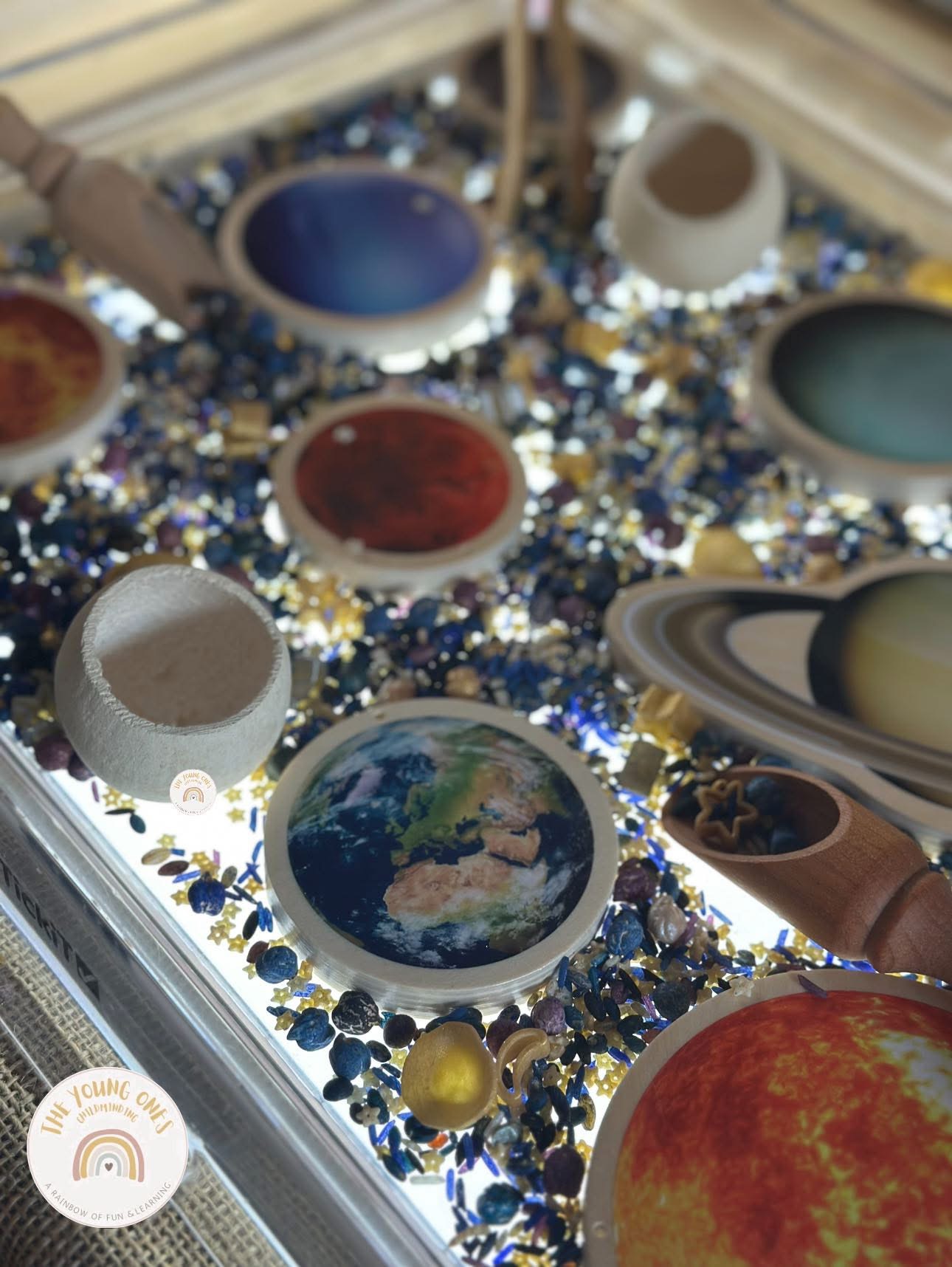
    A light tray is a brilliant place to start. It can transform even the simplest materials into something new and exciting. Try using it to highlight objects for close observation – natural treasures like leaves, shells or feathers suddenly glow with detail when lit from below. Add a topper tray, and it quickly becomes a sensory base for loose parts or sensory materials/bases – such as rice or beans. Want to mix things up? Add playdough for a whole new sensory experience with colour and shadow interplay.

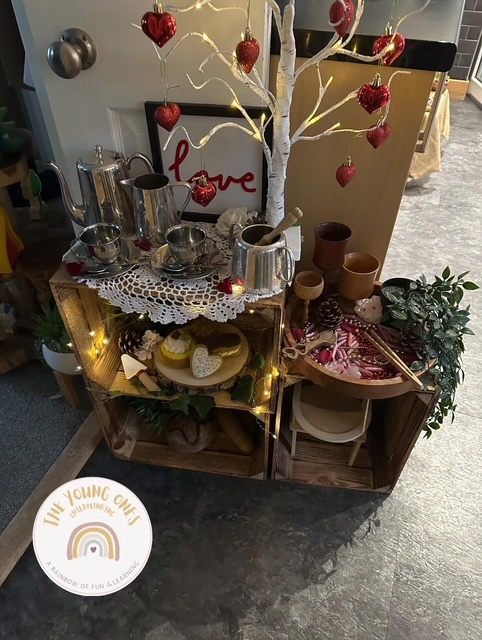
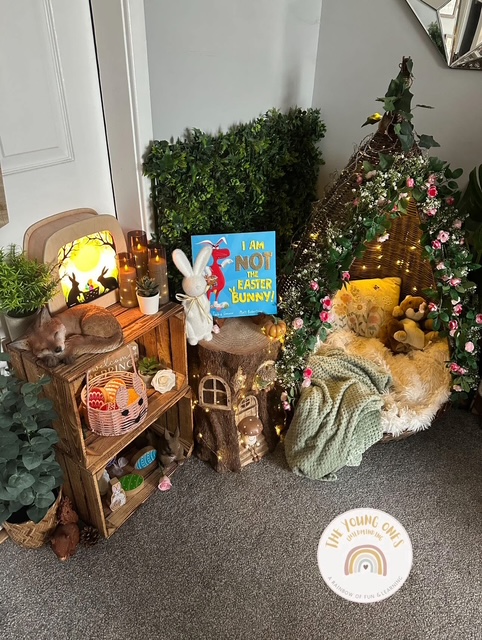
    But light play doesn’t have to stop at the tray…. Fairy lights, soft lamps and rope lights can be woven into invitations to play, creating a gentle, calming atmosphere that draws children in. These additions are perfect for building a hygge-inspired learning space – cosy, inviting and rich in possibility.

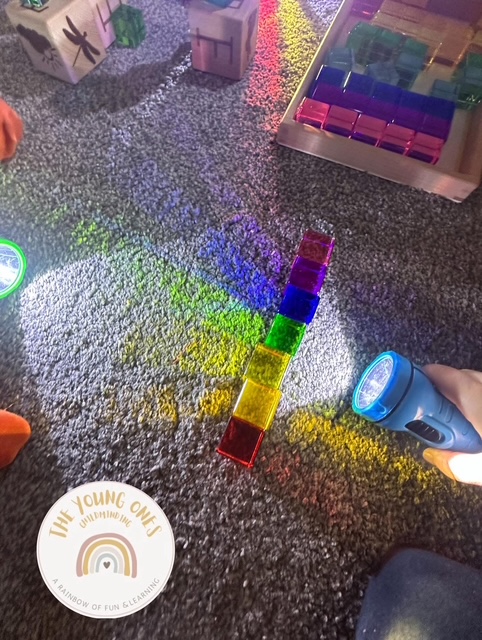
    Torches open up another world of exploration. Use them to cast shadows on the wall, explore reflection with mirrors or observe the magic of refraction through glass and water. Not only are these activities incredibly engaging but they also lay the groundwork for early science concepts in a hands-on, child-led way.

    By incorporating light into your play environments, you’re not only making spaces beautiful and inviting – you’re also inviting children to wonder, investigate and learn in meaningful, sensory-rich ways.

    So next time you’re planning a provocation, ask yourself: how could light shine a new perspective on this experience?

    Let’s light up learning – one twinkle at a time.

    Leave a comment

  • Let’s Talk About – Schematic Play

    Let’s Talk About – Schematic Play

    Understanding Schematic Play: Supporting Children’s Development Through Repeated Actions

    Watching children at play is truly fascinating! Some children seem to have a clear vision of what they want to achieve, while others may appear to be doing the same thing repeatedly, seemingly without an end goal. However, both types of play are an essential part of children’s learning journey.

    Children experience schemas of play as strong urges, which is why they can find it very difficult to stop doing something and in which they seem unable to control and compelled to complete. However, it is important that children are allowed to satisfy, channel and enhance these urges, to support and develop children’s thinking and understanding. When children are exploring their schematic play interests, they are usually highly engaged and absorbed in their task which can spark new ideas, consolidate learning and aid critical thinking skills. These “schemas” are not random; they reflect the child’s urge to understand and explore their world.

    What is Schematic Play?

    Schematic play refers to the repeated actions children engage in, which help them understand concepts like how things work, how objects interact, or the world around them. It can often be seen as children follow urges or patterns in their play, driven by their own curiosity and brain development. Each child may explore different schemas based on their interests, abilities, and developmental stage. Understanding these schemas and observing them in action allows adults – whether parents or educators – to better support children in their learning.

    Common Schemas in Early Years Play

    Here’s an overview of some key schemas and how you can support them in your setting:

    1. Transporting Schema

    Children who are exploring this schema love to move things from one place to another. You might see them filling bags, baskets, or pushing toy cars or prams around. This action helps them develop an understanding of distance, location, and object permanence. To support this schema, provide a variety of transportation tools like baskets, trolleys, trucks, and even wheelbarrows for outdoor play. Sand and water play with containers, funnels, and trays can also be great ways to explore this schema.

    2. Trajectory Schema

    This schema is often one of the earliest observed. Children are fascinated by how things move, whether it’s dropping objects, rolling balls, or simply watching things fly through the air. This schema supports their understanding of movement, force, and cause and effect. To support this, provide water or sand play with funnels and pipes, ball play, or simple experiments involving rolling and dropping objects. Streamers, bubbles, and blowing activities can also spark interest.

    3. Enveloping Schema

    When children are exploring the enveloping schema, they are interested in whether something exists when it’s hidden. This often involves wrapping, covering, or concealing objects. You might see children wrapping themselves in blankets or exploring materials like scarves or hats. To support this, offer materials like dressing-up clothes, blankets for building dens, or nesting toys such as Russian dolls. Activities like wrapping presents or creating dens will help children explore this schema.

    4. Enclosing Schema

    This schema is focused on containing or enclosing objects within boundaries. Children will enjoy placing objects inside boxes, pens, or other enclosures. It’s different from the enveloping schema in that it focuses on containment rather than hiding or wrapping. To support this, provide construction materials like blocks, fences, and track sets, or even simple creative materials for making enclosures. You might also provide materials to create borders or walls for their structures.

    5. Transforming Schema

    Children who explore the transforming schema are interested in how things change, whether in appearance, shape, or consistency. You might observe them mixing paints, changing materials, or disassembling objects. They are experimenting with cause and effect. To support this schema, offer materials like playdough, mud, sand, or gloop. Scientific experiments like mixing vinegar and baking powder can also fascinate children with this schema.

    6. Rotational Schema

    Children interested in the rotational schema are drawn to objects that spin, twist, or turn. This could include exploring wheels, spinning tops, or even spinning themselves around. This is a great way for children to develop coordination, balance, and spatial awareness. To support rotational play, provide toys with spinning components, such as windmills or cogs. You can also take children outside to roll down a hill or visit a roundabout at the park.

    7. Positioning Schema

    Positioning involves arranging, ordering, and lining things up. Children love to create patterns or group objects in a specific way. This schema is crucial for laying the groundwork for future mathematical learning. It helps children explore classification, symmetry, and sequencing. You can support this schema by providing loose parts like sticks, stones, or wooden pieces for creating patterns, as well as toys for arranging and organizing (like animals, cars, or small figures).

    8. Connecting Schema

    The connecting schema is all about linking objects together. Children may enjoy building train tracks, connecting Lego pieces, or threading beads. This schema helps children understand relationships, force, and the concept of joining and separating. To support this schema, provide construction toys, string, glue, and other materials for creating connections, such as threading beads or making junk models.

    9. Orientation Schema

    Children exploring the orientation schema are keen to understand how objects look from different perspectives. They may enjoy activities like lying on the floor or climbing to see things from above. This schema helps children develop physical confidence and spatial awareness. Encourage this schema by providing space for climbing, rolling, and swinging. Mirrors, magnifying glasses, and yoga activities can further support their exploration.

    How to Support Schematic Play

    When supporting schematic play, it’s important to observe the child’s interest and provide resources that align with their schema. Ask yourself:

    • What action is the child carrying out?
    • Have I seen the child doing this somewhere else?
    • What resources or activities could enhance or extend this play?

    Encourage their exploration by introducing new materials, tools, or challenges related to their interests. Allowing children to follow their own urges helps them learn at their own pace and strengthens their problem-solving and critical thinking skills.

    Conclusion

    Schematic play is an essential part of children’s learning and development. By understanding the various schemas, you can create an environment that fosters curiosity, engagement and deep thinking. The key is to observe children closely, identify their schema and provide resources and opportunities for further exploration. This will not only satisfy their current interests but will also help them build the skills they need for future learning.

    Leave a comment

    Pages: 1 2

  • What Did They Learn? 

    What Did They Learn? 

    You know you love your children 

    And want them to have fun and play, 

    But in your thoughts you’re wondering 

    What they have learnt today?

    They said they found a butterfly 

    And it flew up to the sky,

    But they gained a curiosity 

    And got them asking why? 

    They said they drew a picture 

    You saw some scribbles on a page,

    But they were developing their muscles 

    For that later writing stage. 

    They said they climbed a tricky tree 

    Though they then got a high five,

    But they really learnt to keep going 

    And continue giving it a try. 

    They said they played dressing up 

    And became a dragon big and red,

    But they were building imagination 

    And creativity in their head. 

    They said they played hide and seek

    And it was so much fun to play,

    But it taught them many social skills 

    And they made a friend today. 

    They said they read a story

    And it had a funny rhyme, 

    But they gained a special love for books 

    To last ‘til the end of time. 

    So when you’re worried they’re just playing 

    And they might fall way behind,

    Know they’re busy learning oh so much 

    In their body, soul and mind. 

    ©️ – Poem by Georgina Young – Guiding The Young Ones

    Leave a comment

    Pages: 1 2

  • Play Is Not Just Playing

    Play Is Not Just Playing

    “Just playing.”
    It’s a phrase that’s said without meaning to dismiss, but it does… Because when we say a child is just playing, we’re overlooking the fact that play is actually their most important form of learning.

    As adults, we often associate learning with sitting still, listening, or holding a pencil. But for young children – especially toddlers and pre-schoolers – play is how they explore, express, imagine, question and problem-solve. It’s how they figure out the world and their place in it. Those who already know me, know that I am a massive advocate for learning through play and the endless proven benefits it provides. Hopefully you will be too, by the end of this piece…

    The Magic of Open-Ended Play

    Building blocks. Mud kitchens. Dressing up. Dancing around the kitchen in a superhero cape. It may sometimes look like chaos – but to your child, it’s a world of possibility.

    Open-ended play (where there’s no fixed outcome or “right” answer) encourages creativity, independence and deep thinking. There are no instructions to follow – just imagination to lead.

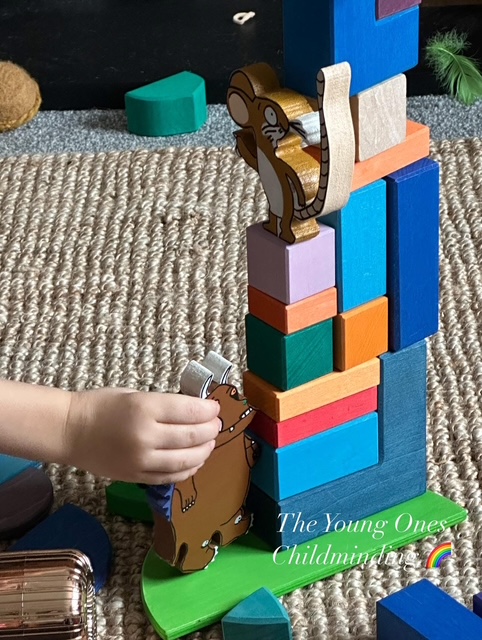
    When a child builds a tower, they’re not only playing – they’re learning balance, spatial awareness, and perseverance when it falls.
    When they make you “dinner” from leaves and mud in the garden, they’re developing social skills, sequencing and role play.
    When they paint with their hands or squish playdough, they’re strengthening fine motor skills and processing sensory input.

    You Don’t Need Fancy Toys or Perfect Pinterest Setups

    We live in a world of curated crafts and colour-coordinated toy rooms, but let’s get this straight: you do not need to be a play expert or have a Montessori-certified space to support your child’s development.

    Some of the best play happens with the simplest things:

    • Pots and pans and a wooden spoon
    • A cardboard box (a spaceship! a shop! a den! The possibilities are endless!)
    • Scarves to twirl, animals to line up, pegs to sort
    • A puddle and some wellies

    You don’t need more stuff – you just need space for imagination.

    “But I’m Not Good at Playing…”

    You don’t have to be!
    You don’t need to be on the floor all day long pretending to be a dinosaur or customer at the café. Your role is to offer the environment, encourage curiosity, and sometimes join in—but it’s okay to step back too. Independent play is healthy and important.

    One powerful way to connect is by noticing what your child’s doing and commenting, not directing.

    “Wow, you used all the blue blocks!”
    “I can see you’re working so carefully on that tower.”
    “That dragon looks fierce!”

    This shows them you value their play – and their thinking.

    Play Builds Brains and Confidence

    Through play, children:

    • Build emotional resilience (taking turns, trying again, expressing feelings)
    • Develop language (narrating, naming, story-making)
    • Strengthen their bodies (running, climbing, balancing)
    • Learn how to be with others (cooperation, empathy, self-resilience, self-confidence and self-control)

    We don’t need to rush them to academics and formal classroom education. All of that learning? It’s already happening – in the block corner, at the water tray, in the back garden.

    Let Them Lead

    One of the greatest gifts we can give children is time to explore their interests, even if it means getting a little messy or noisy. Let them follow their curiosity. Ask open-ended questions. Offer time and space, not pressure.

    When we protect play, we protect joy and joy is where real learning begins.

    Leave a comment

    Pages: 1 2

  • Building Strong Family Bonds Through Play: Simple, Fun Activities for Early Years

    Building Strong Family Bonds Through Play: Simple, Fun Activities for Early Years

    Spending quality time with your child doesn’t have to be complicated or costly. In fact, some of the best ways to connect with your Young Ones are through simple, creative activities that spark joy, imagination and learning. Here are some fun, early years-friendly ideas that families can enjoy together, fostering stronger bonds, while encouraging growth in essential skills like problem-solving, communication and cooperation.

    1. Bake Together: Gruffalo Crumble

    What better way to bond than by baking together? Making a delicious treat is a great way to spend time together, practice following instructions, and introduce early math skills like counting and measuring. If you’re familiar with The Gruffalo by Julia Donaldson, why not make a Gruffalo Crumble? It’s easy to prepare and provides a fun, themed way to introduce your child to the joys of baking. Have your little one help you measure out ingredients, mix, and maybe even make some “Gruffalo footprints” in the flour!

    Tip: Let them help wherever possible with tasks like stirring, pouring and sprinkling toppings and encourage them to talk about the colours and textures of the ingredients. If you don’t have the book, you could always tell the story of The Gruffalo while baking or make up your own stories and recipes!

    2. Playdough Fun: Creative and Sensory Play

    Playdough is a fantastic tool for creative play, fine motor development, and sensory exploration. You can buy it or make your own at home with basic ingredients like flour, salt, oil and water (I also recommend cream of tartar if you have some, although it’s not essential). Either way, it’s a hit! Children can roll, squish, cut and mould playdough into shapes, animals, or anything their imagination dreams up. It’s also a great opportunity to practice colour recognition, counting and even simple math as they divide the dough into pieces or build different shapes.

    Tip: Use cookie cutters or your own homemade stamps to create themed shapes, like animals or letters. You can also introduce more sensory elements by adding dried petals, child safe essential oils or food essence, herbs or spices to your playdough.

    3. Woodland Walks: A Story Adventure

    Going on a walk in nature is not only great for physical health, but it’s also the perfect opportunity to use your imagination. If you’re near a wooded area or park, take a walk inspired by a story like We’re Going on a Bear Hunt by Michael Rosen. Have your child pretend to be a bear, explore different “landscapes” like rivers, tall grass, or mud and use their senses to “find” the bear. You could even create a fun scavenger hunt where you both look for animal tracks, leaves or flowers along the way.

    Tip: Collect leaves, sticks, and stones during your walk to create a woodland collage or nature-inspired art project at home!

    4. Imaginative Play: Hairdressers and Other Adventures

    Children love to engage in imaginative play, and it’s one of the best ways for them to learn social skills, practice empathy, and develop their creativity. Set up a “Hairdresser’s Salon” at home where they can give you or their toys a pretend hairstyle. You can also try out other role-playing games, like playing “doctor,” “chef,” or even “shopkeeper” with simple props you already have at home.

    Tip: Set up a little “waiting area” with toy magazines or a pretend cash register, and encourage your child to “act out” customer service scenarios. This helps with communication skills and empathy as they learn to take care of others.

    5. Ready, Steady, Cook! (Early Years Style)

    I am showing my age now but do you remember the TV show Ready Steady Cook? Well, you can bring this concept to life in your kitchen! Get your child involved in helping you cook simple meals. Let them choose some ingredients and create their own “cooking challenge,” mixing flavours, and experimenting with different food textures and colours. You could even make it a themed activity—perhaps a “rainbow salad” or a “fruit salad challenge”. OR use is as a base for imaginative play magic and create your own meals at the play kitchen or mud kitchen.

    Tip: Encourage your child to taste-test different ingredients and describe their flavours. If you are engaging in imaginative play but don’t have a pretend play kitchen, use household objects like pots and pans and you can incorporate natural objects like sticks and pinecones.

    6. Create Your Own Show: Sing, Dance and Perform

    Does your child love to sing and dance? Creating a family performance is a fantastic way to let out energy and share some fun. Put on a talent show where everyone can perform, sing a favourite song or even do a dance routine. Use props (like scarves, hats, or toy instruments) to make the performance more exciting, or put on a play together using costumes and simple backdrops like a sheet.

    Tip: Record the performance so you can watch it together later or send a video to grandparents and friends to share the fun!

    7. Recreate Stories: Bring Books to Life

    Story time is a cherished part of childhood, and you can take it a step further by acting out the stories you read. Whether it’s The Three Little Pigs, Goldilocks and the Three Bears, or any familiar or favourite tale- use props like hats, stuffed animals and costumes to bring characters to life. You can even make your own props – craft a wolf mask or some simple animal ears to wear while you play.

    Tip: After reading, ask your child to tell the story in their own words and encourage them to add their own twists to the plot. This sparks creativity and storytelling skills!

    These simple, early years-friendly activities are a great way for families to spend quality time together, support learning through play, and create memories that last a lifetime. Whether you’re baking together, exploring nature, or putting on a performance, the possibilities for bonding through play are endless. The most important thing is that your child feels loved, engaged and supported in their growth and development.

    For more fun and simple ideas, keep checking out our other blog posts in the Families section. Guiding The Young Ones is here to help you make the most of every moment with your little ones!

    Leave a comment

    Pages: 1 2