Tag: parenting

  • A Love Letter to the Parents on the Hard and Beautiful Days

    A Love Letter to the Parents on the Hard and Beautiful Days

    Whether you have a newborn curled into your chest, a toddler exploring the world with determined little footsteps, an older child who seems to grow and change by the hour, or even one who now towers above you… this is for you.

    For the parent who is doing their best — even on the days where their best feels messy, tired, or not quite enough.

    Parenting is stunning in its beauty and staggering in its intensity. It fills you up and stretches you thin, sometimes in the very same breath. And no matter how much you read, how much experience you have, or how deeply you love your child… there are still moments that knock you sideways.

    There are days where your heart feels full and your patience feels thin.
    Where the love is overwhelming… and so is the noise.
    Where you find yourself wondering how something so magical can also feel so unbelievably hard.

    There are nights where you lie awake replaying the moments you wish had gone differently.
    The raised voice.
    The deep sigh.
    The “I should have handled that better.”
    The quiet ache of wanting to be the calm, patient version of yourself that felt out of reach that day.

    And there are the invisible moments too — the ones no one else sees.
    The tears you blink away.
    The responsibility you carry silently.
    The way you keep showing up, again and again, even when you feel depleted.

    I won’t pretend I don’t feel this too. Parenting has brought me some of my most beautiful moments… and some of my hardest. I’ve had days where I’m proud of the mother I am, and days where I sit with guilt and wish I could go back and redo things. But I’ve learned this truth along the way: even the most patient, loving, knowledgeable parents have moments they aren’t proud of. None of us are perfect. And none of us need to be.

    Here is a truth worth holding onto:
    Every parent feels this way sometimes.

    Doctors.
    Teachers.
    Child psychologists.
    Early years professionals.
    Parents with decades of experience.
    Parents with none.

    No one has it all figured out. No one gets it right every time. And every parent — every single one — has moments they wish they could redo. Because caring deeply will always come with a shadow of self-doubt.

    But your child doesn’t see any of that. They don’t measure you by the moments you replay in your mind. They don’t have a checklist of perfect responses or flawless days.

    In their eyes, you are enough.
    More than enough.
    You are their safe place.
    Their comfort.
    Their certainty in an unpredictable world.

    Your child won’t remember every toy you bought, every activity you planned, or whether the day went smoothly.
    But they will remember how it felt to be loved by you.

    The warmth of your arms.
    The softness of your voice.
    The way you return to them, again and again, even after a hard moment.

    Perfection has never been the goal of parenthood — connection is.
    Presence is.
    Trying again tomorrow is.

    So if you are reading this with a heavy heart, or a tired mind, or a quiet question of, “Am I doing enough?”

    Please hear this clearly:

    You are enough.
    You are doing enough.
    And you are doing better than you think.

    Not because you are perfect — but because you aren’t.
    Because you care.
    Because you reflect.
    Because you love your child with a depth that guides you even on the hardest days.

    None of us have all the answers.
    None of us get it right every time.
    And none of us need to.

    Your child just needs you.
    Exactly as you are.
    Human. Loving. Trying.

    And that is more than enough. 

    Leave a comment

  • Not Built to Sit Still: Defending Childhood in an Age of Pressure

    Not Built to Sit Still: Defending Childhood in an Age of Pressure

    A Barefoot Conversation

    Why play, presence, and connection matter more than the DFE’s version of “school readiness

    A barefoot conversation with a ladybird.
    That’s what stopped me in my tracks.

    Tiny toes curled against the grass, a child crouched low and still—whispering gentle words to a ladybird resting on a leaf. No rush. No noise. Just awe. Just presence.

    And in that moment, everything made sense again. This is childhood. Not worksheets. Not school-readiness tick lists. Not quiet hands and still bottoms. But muddy feet, wonder-filled questions, and empathy blooming from the tiniest of encounters.

    We are raising little humans, not robots. And yet across the country, we’re asking four-year-olds to meet expectations built for older children. We’re asking them to sit before they’re ready, to read before they’re developmentally able — to achieve like an adult, rather than explore like a child.

    But the world doesn’t need more children who can sit still at four.
    It needs children who care.
    Children who feel.
    Children who notice the smallest creatures and imagine their stories.

    Because from these early acts of compassion — like chatting to a ladybird — come the roots of kindness, empathy, and responsibility for the world around them.


    What the Research Says

    We don’t have to guess what children need. Decades of child development research is clear: play is not a luxury—it’s a biological necessity.

    • The Harvard Center on the Developing Child highlights that young children learn best through active, joyful, and engaging experiences— not passive instruction.
    • The Alliance for Childhood and UNICEF advocate strongly for delayed formal schooling, with many European countries (like Finland and Sweden) beginning structured academic learning at age 6 or 7 — after a long foundation of play-based early years education.
    • Neurological studies show that movement, exploration, and connection are essential for developing executive function, emotional regulation, and long-term cognitive skills.

    Yet here in England, we’re still pushing four-year-olds (and younger) into formal classrooms. We’re turning play into a performance. Exploration into outcomes. And our children are paying the price.


    A Personal Reflection

    When I think of the children in my care, I think of the ones who can build entire worlds out of sticks and stones. The ones who soothe slugs and rescue worms. The ones who tell me, with complete seriousness, what the ladybirds are saying back.

    And I think of the quiet ones — the ones who thrive when they are not rushed. The ones who don’t always find sitting easy, but who can spend 40 minutes moving conkers from bowl to basket with deep, meaningful concentration.

    These aren’t children who are behind. These are children who are becoming.
    Children who are deeply engaged with their world.
    Children who will grow into compassionate, thoughtful, resilient humans — if we let them.

    And yet I see the increased pressure creeping in. From “school readiness” checklists. From misunderstood expectations. From a system that has forgotten what childhood is meant to be.


    The Bigger Picture

    This isn’t just a professional frustration — it’s a national concern. We are seeing a sharp rise in childhood mental health difficulties, and many professionals in the early years sector are sounding the alarm.

    Children today are growing up in a world that is louder, faster, and more pressured than ever before. Many are struggling with anxiety, attention difficulties, and burnout — at just four or five years old. And instead of responding with care and compassion, we are asking them to sit longer, try harder, be quieter. This is not developmentally appropriate. It is damaging.

    Every child learns in their own way. Some need movement to think clearly. Some need silence. Some learn through messy, sensory exploration, while others thrive in quiet, focused play. They are not carbon copies. They are not data points. And they are certainly not “failing” because they can’t yet conform to adult-driven expectations. If we truly care about children, then their wellbeing, mental health, and right to a childhood must become our top priority — not optional extras squeezed in between phonics and fine motor worksheets.

    Why are we ignoring the mountain of evidence? Why are we still using outdated models of achievement when the world (and the child) has changed?

    It’s time we remembered: school readiness isn’t about sitting still. It’s about being secure, curious, and emotionally equipped to handle new environments. And we build those foundations through love, play, and presence — not pressure.


    A Call to Action

    Unfortunately, we can’t wait for policymakers to catch up — because far too many of the people making decisions about children have little understanding of child development and seem unwilling to listen to those who do. The system won’t fix itself. But we can be the change, from the ground up.

    Here’s how:

    • Speak up. Share your stories, your knowledge, your child-centred practice. Help shift the narrative from achievement to wellbeing.
    • Advocate. When conversations arise about “school readiness,” bring it back to what matters: secure attachments, emotional literacy, and developmentally appropriate expectations.
    • Connect. With parents, with educators, with community leaders. The more unified our voice, the harder it is to ignore.
    • Protect play. Let children be barefoot. Let them talk to ladybirds. Let them carry sticks and ideas and questions. This is not time wasted — it is everything.

    Final Thoughts From an Educator

    One day, our children will look back on these years.

    Will they remember a world that rushed them, silenced them, and tried to make them smaller?
    Or will they remember being seen, heard, and cherished for exactly who they were?

    That gentle whisper to a ladybird might just be the first step in raising a child who will one day protect the planet, comfort a friend, or stand up for what’s right.

    And that begins not with the DFE’s current version of readiness, as described by Bridget Phillipson…
    But by people who truly understand child development and with respect for childhood.

    So, let us be the ones who slowed down.
    Who knelt beside them in the grass.
    Who made space for joy, for wonder, for messy, magnificent becoming.

    Because when we protect childhood, we protect everything that matters.

    Leave a comment

    ← Back

    Thank you for your response. ✨

    Please rate our website(required)

  • The Words We Choose: Language, Connection and Childhood

    The Words We Choose: Language, Connection and Childhood

    Not long ago, one of the children in my care was having a quietly difficult morning. There hadn’t been a dramatic outburst or any obvious signs of upset — just a certain stillness in their shoulders, a withdrawn glance, a subtle shift in their play. When I knelt beside them and gently asked how they were feeling, they paused, looked up, and with a quiet voice and simple Makaton signs, they told me: sad.

    In that moment, everything else faded. They trusted me enough to let me in — not with perfect grammar or complicated explanations, but with a small word and a few meaningful signs. And that was all we needed. I mirrored their words, offered comfort, acknowledged the feeling, and gave time. A few minutes later, after our quiet, respectful connection, they leaned in for a cuddle and told me they felt happy.

    Language in the early years is never just about words. It’s about connection, understanding, and helping children feel truly seen.

    Language as an Emotional Bridge

    From the very first gestures and babbles, communication is an emotional act. It’s how children reach out to connect — to be understood, to belong, to share their inner world. In early years settings, we are not just supporting speech and vocabulary; we’re nurturing confidence, trust, and the beginnings of self-expression.

    Whether it’s through spoken language, Makaton, body language, or imaginative play, every child deserves to be heard — in the way that makes sense for them. That means slowing down, tuning in, and remembering that listening is just as powerful as speaking.

    Supporting Early Communication

    A rich language environment isn’t one filled with endless chatter — it’s one full of meaning. Children need us to model language thoughtfully: describing what they’re doing, naming feelings, narrating the day in a gentle rhythm that helps them make sense of the world.

    In my setting, Makaton plays an important role. It gives children another way to communicate, especially when their speech is still developing or their emotions feel too big for words. It empowers them to be part of their world, not just observers of it.

    The Power of Children’s Voices

    Children are full of ideas, questions, stories, and feelings. Honouring their voices means creating space to hear them — not just when it’s convenient, but always.

    This might be pausing to really listen when a child is explaining their block tower, giving them the language to name a feeling, or simply validating their choices. Voice isn’t always verbal — sometimes it’s found in play, in art, in silence. But it’s always there.

    Respectful Narratives and the Language We Model

    Language shapes how we see others — and how they see themselves. That’s why I choose my words carefully when speaking about children, especially around them. I avoid labels, especially negative ones, and instead focus on behaviours, feelings, and needs.

    In the early years, most educators know the importance of moving away from words such as “naughty“. It’s far more constructive and respectful to focus on what a child is expressing through their behaviour — whether we’re encouraging something positive or gently guiding them away from something less helpful. Children are always more than a moment.

    Stories That Bring Us Together

    Books and stories are another powerful part of our language landscape. They build empathy, spark curiosity, and help children make sense of themselves and the world. We read every day — not just for literacy, but for connection. There is something quietly magical about a child leaning in as you read a well-loved book, their body softening as they lose themselves in story. These moments matter.

    A Final Thought

    The words we choose matter. They build connection, foster confidence, and create the emotional blueprint for how children relate to themselves and others.

    Whether we’re signing happy with a small hand gesture, whispering reassurance after a big feeling, or narrating a story in the garden, our language helps children feel safe, respected, and deeply understood.

    And that’s the beginning of everything.

    Leave a comment

  • The Things They Teach Me

    The Things They Teach Me

    Lessons from little ones — and how they’ve helped me grow, too.

    When I began my journey in early years education, I stepped into it with open arms — ready to nurture, guide, and support children as they grew. Over the years, I’ve worked across many settings, met so many little personalities, and carried countless memories in my heart.

    But what I didn’t fully realise back then was this: the greatest growth wouldn’t just happen in the children I cared for. It would happen in me.

    With every setting I’ve worked in, every child I’ve met, every parent I’ve partnered with, I’ve learned something new — not just about early childhood, but about myself.

    And just as the children have been my greatest teachers, so too have the educators I’ve walked alongside.

    I’ve had the privilege of working with passionate, inspiring professionals whose creativity, care, and commitment have left a lasting mark on me. From the quiet strength of a calm presence to the playful spark of a well-timed idea — I’ve witnessed first-hand how powerful our impact can be when we’re connected and intentional in our practice. And like all of us, I’ve had moments that reminded me what I chose not to carry forward — lessons that nudged me closer to the practice I now hold dear. And I’m constantly reminded that when we learn from one another — the good and the hard — we grow stronger as a sector and better for the children we serve. It’s this shared journey of reflection, connection, and continuous growth that makes our work so meaningful — and so worth celebrating.

    Becoming a parent changed everything again. It shifted my lens. It softened some parts of me, strengthened others. It gave me a deeper compassion, a new kind of patience, and a far greater understanding of just how much we hold — as caregivers, as humans — in the everyday.

    Children have become my everyday teachers.

    They’ve taught me to:

    • Slow down and see magic in the mundane — in the dance of leaves, the wonder of worms, or the joy of mixing mud.
    • Let go of perfection and find meaning in mess, beauty in the becoming.
    • Value emotions, not rush them away — to make space for feelings, and show up with empathy.
    • Keep growing, just like them — wobbly step by wobbly step.

    In their play, I see purpose.
    In their words, wisdom.
    In their trust, a reminder that this work we do matters deeply.

    We speak often of preparing children for the world — but the truth is, they prepare us for something, too. They awaken something in us: a gentleness, a presence, a purpose. Now, with each passing year, I realise how much I’m still learning — how much more whole I am because of the children and educators who’ve walked through my life.

    So, whether you’re a parent, an educator, or someone who shares space with children, I hope you remember this: you are shaping them, yes.
    But they are shaping you too — in the most beautiful, unseen ways.

    Leave a comment

  • Filling Their Banks: How Tiny Moments Build a Kinder World

    Filling Their Banks: How Tiny Moments Build a Kinder World

    here’s a beautiful analogy I heard recently that’s stayed with me ever since. It came from Gable House Nursery, and it goes like this:
    Every child has a bank.
    As early years educators, we are responsible for filling it — with moments, memories, first experiences, and feelings that will shape their inner world for the rest of their lives.

    And when I heard that, I thought: Yes. That’s it. That’s exactly what we do.

    We may not always realise it in the rush of routines or the mess of muddy wellies — but every time we kneel down to listen, every time we sit beside a child in their joy or frustration, every time we make space for their questions, their wonder, their play — we are making a deposit.

    And these deposits matter. Because one day, when that child grows up and the world feels hard or uncertain, they’ll have something to draw on. A sense of worth. A memory of being loved. An instinct that tells them: You are seen. You are safe. You are enough.

    That’s the kind of investment we’re making.

    And perhaps more than ever, our world needs that.
    It needs children who grow up feeling emotionally full — so they don’t spend adulthood searching for what they never received. It needs children who’ve known kindness, patience and acceptance — so they can carry those things forward into their relationships, communities, and choices.

    Because when we fill a child’s bank, we’re not just shaping one little life — we’re shaping the future.

    But it’s not just about emotional deposits. It’s also about broadening their world — offering children meaningful experiences that build their sense of identity, connection, and possibility.
    This is the heart of cultural capital — those precious moments and encounters that help children make sense of the world around them, feel part of something bigger, and grow into themselves with confidence.

    So how do we do that? How do we fill these invisible banks in ways that truly last?

    These do not always need to be found in grand gestures or expensive outings.
    But with the tiny, ordinary, everyday things — and by offering children experiences they may never have had the chance to encounter before:
    • The thrill of splashing in a muddy puddle for the very first time.
    • The wonder of holding a snail, planting a seed, or mixing a cake from scratch.
    • The discovery of new words, new stories, new rhythms — shared across cultures and generations.
    • The joy of belonging — of being part of a celebration, a tradition, a shared moment of meaning.

    These are powerful forms of cultural capital — experiences that enrich, connect, and help children feel rooted in both who they are and who they’re becoming.

    They may also be found in those moments of connection, those moments that you show a child they truly matter, how much you care, and how special they are:

    • The warm eye contact when they tell a story.
    • The unhurried time spent spotting worms or clouds.
    • The quiet “I see you” in moments of struggle.
    • The comfort of routines, the spark of curiosity, the laughter that bubbles up mid-play.
    • The way we believe in them — even when they’re still learning how to believe in themselves.

    These are also the real riches of childhood.
    These are the moments that stay.

    We may never see the full impact of our work — not in certificates, not in test scores.
    But we see it in their joy, their growth, and the beautiful, kind-hearted humans they are becoming.

    So to all of you who show up for children — educators, childminders, parents, grandparents, key workers and co-regulators — thank you.
    Thank you for every tiny deposit. For every ounce of emotional labour. For every patient pause and playful invitation.

    You are building a kinder world.
    One connection, one moment, one full little bank at a time.

    Leave a comment

  • Dandelion Sensory Playdough – Simple Play to Spark Big Magic

    Dandelion Sensory Playdough – Simple Play to Spark Big Magic

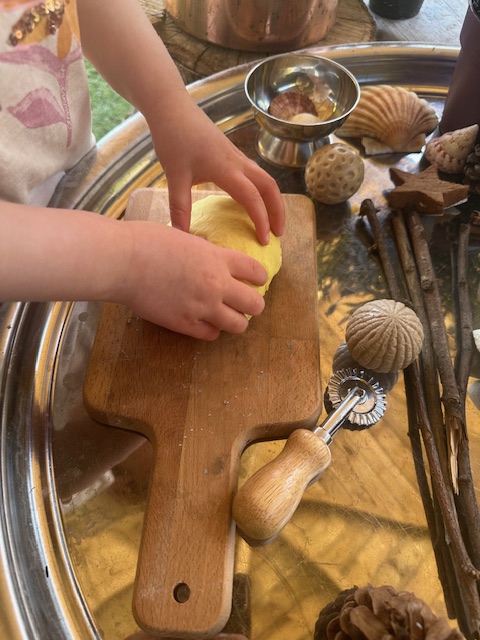
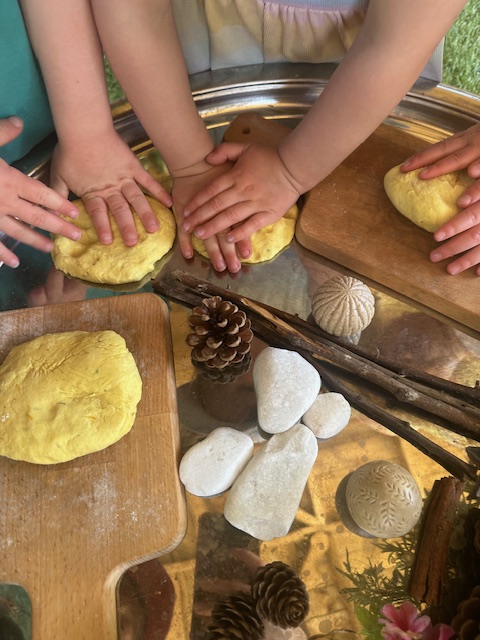
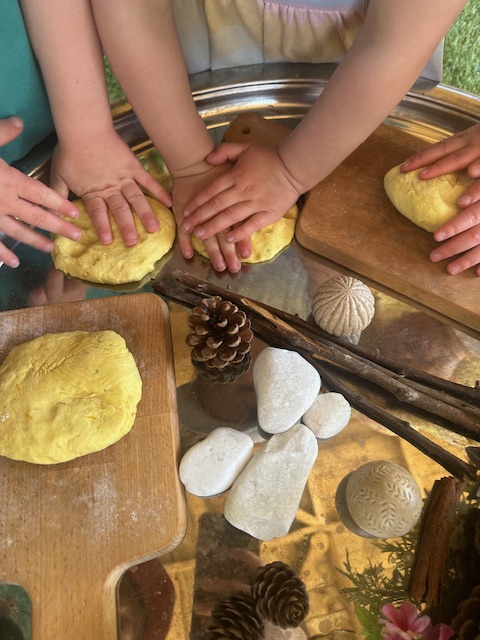
    This nature-inspired sensory activity is perfect for spring and celebrates the simple joy of playing with what the season offers. Using dandelions collected by the children, we create homemade playdough together — combining fine motor skills, sensory exploration, and a love for nature in one calming invitation to play.


    You will need:

    • Collected dandelions (Just make sure to leave some for the butterflies and bees – Dandelions are the most important first nectar and pollen sources for beneficial insects).

    (Here is a basic homemade playdough we use but there are many other simple recipes available and other methods of making it, that you may like to try or adapt)

    • 2 cups plain flour
    • 1 cup salt
    • 2 tbsp cream of tartar
    • 2 tbsp oil
    • 1.5-2 cups hot water cooked over a low heat
    • Optional: A few drops of lemon or lavender essential oil for additional scent

    How to make it:

    1. Prepare the dandelions: Let the children help gently pull apart the petals — this is a sensory experience in itself!
    2. In a bowl, mix the dry ingredients together and 1/2 of the dandelion petals.
    3. Add the oil and hot water and stir over a low heat until it forms a dough (please remember to discuss safety rules with your Young Ones if they are using the hob – there are also no cook recipes that you can use, if you are not able to safely cook your dough).
    4. Add the remaining dandelion petals and knead well (once suitably cooled).
    5. Enjoy the gentle texture and sensory experience!

    Creating an invitation to spark curiosity and excitement – Suggestion for a natural and simple invitation to play… Offer the dandelion playdough with natural loose parts (sticks, pebbles, leaves, pine cones, more dandelions, small wooden bowls and/or cutters)
    No agenda, just open-ended sensory play.


    Learning Outcomes:

    • Understanding the natural world – identifying and gathering seasonal flowers. You can also use this as an opportunity to learn more about this amazing plant… For example: did you know the whole of a dandelion is edible and it actually contains more nutrients than most common vegetables (how amazing is that)?!
    • Fine motor development – Mixing, kneading, moulding, squishing, rolling, and pinching playdough strengthens small muscles in the hands and fingers, which supports handwriting and other fine motor tasks. That’s without mentioning the hand-eye co-ordination and fine motor skills used to collect and pull apart the dandelions.
    • Sensory exploration – engaging touch, smell and sight in calming ways.
    • Language and communication – talking about textures, colours and the nature around them. Sensory play is also a great opportunity to incorporate new language and to use lots of fantastic adjectives.
    • Emotional wellbeing – using nature-based play to ground, relax and calm.
    • Creativity and Imagination – Children can create anything from insects and animals, to imaginary creatures, encouraging imaginative play and storytelling.

    This activity is as much about the process as the product. It encourages connection, mindfulness, and creativity — while nurturing a lifelong love for nature, right from the earliest years.

    🌼 Because the biggest memories are often made in the smallest, most natural moments.

    Leave a comment

  • Let’s Talk About – Car Seat Safety

    Let’s Talk About – Car Seat Safety

    Cold Weather and Car Seat Safety

    Winter means we need to keep our little ones warm, but did you know that babies and children should not wear coats or snowsuits in the car? ❌

    While it’s important to keep children warm, a coat or snowsuit can compress under the car seat harness by up to 4 inches! This can prevent the harness from fitting securely and safely, creating a dangerous situation in the event of a crash. Items like hoods, thin puddle suits, and anoraks can also impact how well the seat fits.

    Car seat specialist guidance recommends that children wear thin, non-slippy layers (such as fleece or a thin jumper) when in the car seat, ensuring the harness fits properly. You can keep blankets in the car to place over the harness to keep your child warm, but remember: car seats trap heat, so avoid over-wrapping your child to prevent overheating.


    Car Seat Safety and Extended Rear-Facing

    As parents, we’re all constantly learning – just like our children are. I’ll admit, before I had children, I wasn’t always as knowledgeable about car seat safety as I am now. Even now, I’m still learning! Car seat safety isn’t something that’s often taught to us, and even health visitors and midwives might not give the best advice or sometimes, car seat retailers provide incorrect information. So, how do we know what’s best?

    Sadly, many car seats are tested to meet the bare minimum safety standards, typically tested for a 30mph impact, which is only equivalent to two cars traveling at 15mph! After that, the seats often crumple. 😵

    In Sweden, however, children have been traveling rear-facing for over 50 years—and studies have shown that rear-facing seats are at least 5 times safer than forward-facing seats. In fact, children should rear-face until at least 5 years old for optimal safety (and beyond where possible).

    Why is Rear-Facing Safer?

    Frontal collisions are the most dangerous type of car accidents, where the highest speeds and forces are involved. In these situations, if a child is forward-facing, they are flung forward and the harness pins them back. This causes stress on the neck, spine and internal organs. Since children’s bones and spines aren’t fully fused yet, they are at a much higher risk during such an impact.

    To put it into perspective, a baby’s head makes up 25% of their body weight, compared to an adult’s head, which is only 6%. Rear-facing seats help counteract this forward movement, distributing the force more evenly across the child’s back and reducing stress on their developing body.

    What About Legroom?

    A common question parents ask about rear-facing seats is, “Where will their legs go?” The answer is that children are more flexible than we often think. They tend to find comfortable positions, such as sitting cross-legged or with their legs resting against the seat. In fact, many children find rear-facing seats more comfortable because their legs aren’t dangling without support.

    There are also rear-facing seats with extended legroom options – these allow the seat to be adjusted to create more space for your growing child.

    Making Informed Decisions for Safety

    As parents and caregivers, our number one job is to keep our children safe. With the right information, we can make informed choices to protect them. If you want more guidance on extended rear-facing car seats, car seat safety, or car seat fit checks, I highly recommend visiting these Facebook pages that offer professional, independent advice from trained car seat specialists:

    • Extended Rear Facing (ERF) Car Seat Safety
    • Car Seat Safety UK

    Videos and Additional Resources:

    Check out these videos to learn more about car seat safety and rear-facing benefits:

    And read this helpful article from Axkid about rear-facing myths and how rear-facing seats actually protect your child’s legs: Axkid – Rear-Facing Myths


    Team Tex Seats and Other Brands

    Unfortunately, a company called Team Tex, known for producing low-quality, budget car seats, is commonly bought by parents who may not be aware of the risks. These seats often fail crash tests and are unable to withstand even minor impacts. Some Team Tex seats are sold with cheap materials and poor construction, and they have failed crash testing multiple times.

    Other well-known car seat brands may also fall short in terms of safety testing. While some brands claim to do additional tests, these may only focus on individual aspects like material strength, not on the seat’s overall performance in a crash.

    Swedish Plus-tested seats are the best option when it comes to safety. These seats have undergone the toughest testing in the world. Some brands with Swedish Plus-tested seats include:

    • Axkid
    • Avionaut
    • Britax
    • BeSafe

    Some other brands like Joie and Graco also offer some Swedish Plus-tested options and seats with high safety ratings.


    At the end of the day, it’s important that we, as parents and carers, make decisions that are best for our children. With proper knowledge and expert advice, we can ensure our children are as safe as possible while traveling.

    Let’s keep our little ones as protected as we can – always.

    Leave a comment

    Pages: 1 2

  • Calm Down Box/Basket

    Calm Down Box/Basket

    What is a Calm Down Basket/Box?

    We all experience moments when we feel stressed, overwhelmed or dysregulated – these feelings are completely normal, all be them unpleasant! A calm down box is a wonderful tool designed to help children (or even adults) manage their emotions, regulate their bodies and minds and build resilience in moments of stress.

    A calm down box is a special place that holds your child’s (or your own) favourite items, specifically chosen to aid in self-regulation. These items help to restore balance by grounding the senses – whether through touch, smell, sight, sound or practicing breathing techniques.

    The Golden Rules of a Calm Down Box:

    • Choose items that are liked and age-appropriate: Make sure the contents are things your child (or you) will enjoy using.
    • Avoid screen-time items: Calm down boxes should not include screens like iPads or gaming devices.
    • Encourage independent play: The purpose of a calm down box is to (eventually) help children self-regulate on their own, so it’s important that the contents promote independent interaction.
    • Model how to use it: If your child is new to using a calm down box, you may need to show them how to engage with the items inside, especially during moments of big emotions (some children will need a longer period of time co-regulating and it is important we support them, so they can eventually self-regulate).

    What to Include in a Calm Down Box:

    If you’re wondering what to add, consider items that encourage repetitive motions or sensory experiences, such as spinning, clicking or rolling. These activities can help children focus and calm their minds. Toys with different textures, sounds and scents can be particularly effective in distracting from overwhelming emotions, helping children refocus and regain a sense of calm.

    What is a Sensory Break?

    A sensory break is a short, intentional pause from regular activities to engage in calming sensory experiences. These breaks are not just for times of stress; they can also be used when a child is feeling calm or happy. The purpose is to teach children valuable self-regulation tools that they can later use during moments of frustration or upset.

    The Benefits of a Calm Down Box and Sensory Breaks:

    A calm down box and sensory breaks offer many benefits, such as:

    • Increased mindfulness: Helping children become more aware of their emotional and physical states.
    • Reduced stress and anxiety: Sensory activities can reduce the impact of stress and encourage relaxation.
    • Improved emotional regulation: Children learn to better manage their emotions, even in challenging situations.
    • Enhanced self-awareness: Through regular practice, children become more in tune with their emotions and how to manage them.

    When we engage with our senses, such as through touch or smell, we activate the parasympathetic nervous system (PNS) – the body’s natural calming response. This response counteracts the “fight or flight” instinct, reducing heart rate, blood pressure and muscle tension. Sensory breaks also help distract the brain from anxious thoughts, redirecting focus to more calming and restorative experiences.

    A Reminder:

    Younger children may need support and guidance from adults to effectively use their calm down boxes, especially during moments of strong emotions, distress, or dysregulation. It’s important to be patient, offer gentle guidance and make it a practice that encourages emotional growth and resilience.

    Leave a comment

    Pages: 1 2

  • A Message of Love for All the Tired Mums, Dads, Carers and Guardians Out There…

    A Message of Love for All the Tired Mums, Dads, Carers and Guardians Out There…

    Parenting is tough. There’s no denying it. Yes, there are so many beautiful, joyful moments, but let’s be honest – there are also some really hard ones. Our little ones don’t come with a manual (how amazing would that be?), and it’s okay to just be doing your best.

    It’s okay if you gave the children cereal for dinner because you were too exhausted to cook a full meal. You’re not failing; your little ones are fed and loved. It’s okay to put the TV on for a bit so you can rest, even if just for a moment. It’s okay to ask for help when you need it. It’s okay to take a break. It’s okay to take things one day at a time.

    Please, don’t forget that self-care is essential. You can’t pour from an empty cup! You’re doing your best, and that is more than enough. You will make mistakes – that’s part of being human. There are no perfect children and there are no perfect parents. We are all learning, all the time. Every single day.
    Feeling guilty sometimes is completely normal. Embrace that feeling and then let it go. The fact that you worry even a little bit shows you’re doing an amazing job! So give yourself a break, trust yourself more, and remember: you are wonderful.

    To your child, you are their world. Your love and care mean everything to them. Keep going – you are doing so much better than you think.

      Leave a comment

      Pages: 1 2

    • Let’s Talk About Food, Food Aversions, and Picky Eaters

      Let’s Talk About Food, Food Aversions, and Picky Eaters

      Some children eat everything put in front of them, while others require a bit more encouragement. It’s completely normal for children to go through phases of being picky about what they eat but I understand how frustrating picky eating can be for parents and carers. If your child is only eating certain foods, there are several strategies you can try to help form new, healthier habits. Here are some tips to help your child try more foods and cooperate at mealtimes.

      (If your child isn’t eating at all, this could be linked to illness or additional needs, and you may need to approach it differently. Please refer to the last section for more guidance.)

      Create a Positive Environment

      The setting where you eat can make a big difference. Consider these tips to create a positive atmosphere at mealtimes:

      • Sit together as a family and role model the behaviors you’d like to see. Mealtime is a great opportunity to spend time together and create positive associations with food.
      • Avoid distractions like TV during mealtimes. Distractions can interfere with your child’s ability to recognise their hunger and fullness cues.
      • Set realistic expectations for how long your child should sit at the table, keeping their age and developmental stage in mind.
      • Encourage self-feeding, which helps foster independence and positive food relationships.
      • Make sure your child feels comfortable and included at the table, and avoid rushing them.

      Don’t Force Food

      It’s important not to force food on children. While you may want them to try new things, pressuring them can have the opposite effect, causing distress and creating negative associations with eating. As long as your pediatrician says your child is healthy and eating a variety of foods, try not to worry too much about their current food preferences.

      Gently Expand the Menu

      You can be a great role model by being an adventurous eater yourself and showing your child how to have a positive food relationship. Try creating a list of new foods to try as a family and make it fun—ask, “What new food should we try tonight?” You can even turn it into a game, like Food Bingo, to make exploring new foods exciting.

      Offer Foods More Than Once

      If your child refuses a new food, try offering it again another day. Repeated exposure can help them become more comfortable with unfamiliar foods. It may take multiple attempts (often over ten tries) for a child to accept a new food. You can also encourage your child by showing them that you’re eating the food yourself. This can help normalise it.

      Provide Lots of Praise (Without Pressure)

      Avoid pressuring or bribing your child to eat a certain food, as this can create negative feelings and associations about/around food. Instead, offer new foods in a relaxed, low-pressure way. Praise your child when they’re brave enough to try something new. Some children may also appreciate knowing what they’re eating, so showing them the whole food before chopping or cooking it can help them understand what’s on their plate.

      Avoid Using Food as a Reward

      Using food as a reward can inadvertently create a negative association between certain foods and rewards. For example, children may start to see sweets as “good” and vegetables as “bad.” Instead, try rewarding them with activities such as a trip to the park or playing a game together. It’s also helpful to avoid referring to foods as “treats” for the same reasons.

      Don’t Make a Second Meal

      Rather than preparing a separate meal for your child, always try incorporating “safe foods” alongside new or unfamiliar ones. For example, if your child enjoys certain fruits or vegetables, include those on the plate along with new foods like pasta or chicken. This can make the meal more appealing and less overwhelming.

      Stay Calm with Unwanted Food

      If your child refuses to eat something, try not to react with frustration. Children can pick up on your anxiety, which could make the situation worse. Instead, calmly remove the plate without comment. Teach your child that just because they don’t like a particular food doesn’t mean the whole meal is ruined. For example, if they don’t like a pickle on their burger, encourage them to push it to the side.

      Get Little Ones Involved and Make Food Fun

      Involving children in food preparation can make them more open to trying new foods. Let them help make the shopping list, and turn food shopping into a game- perhaps trying to find certain colours or creating a “rainbow” of foods. Exploring new varieties of foods may also help your child discover preferences they didn’t know they had. For example, they might find they enjoy foods with smoky flavours or prefer sour apples over sweet ones.

      Reading stories that include food or engaging in role-playing cooking games can also help children feel more comfortable with food. Cooking together is another great way to get children interested in new foods. Look through family-friendly recipes and pick one that excites both you and your child, then prepare it together.

      What is a Food Aversion and ARFID?

      A food aversion is a strong dislike or fear of a particular food. The sight, smell, or taste of the food may cause a child to feel nauseous, gag, or even vomit. Food aversions can affect both children and adults.

      Avoidant Restrictive Food Intake Disorder (ARFID) is an eating disorder characterized by the avoidance of certain foods or food groups. Children with ARFID may restrict their food intake due to sensitivities to taste, texture, smell, or appearance. This condition can develop after a distressing experience, such as choking or vomiting, which affects their relationship with food. ARFID is also common among children with Autism Spectrum Disorder due to sensory sensitivities.

      When to Seek Professional Support

      If you’re struggling to get your child to eat a more varied diet or if you’re concerned about their health, it may be helpful to seek support from healthcare professionals such as a GP, health visitor or early intervention team. If your child is losing weight, feeling weak or lethargic or exhibiting other concerning symptoms, contact your doctor immediately. Remember, my door is always open to offer support and guidance, so don’t hesitate to reach out if you have any questions or need additional help.

      Here is the NHS link for further information and guidance –

      https://www.nhs.uk/conditions/baby/weaning-and-feeding/fussy-eaters/

      Leave a comment

      Pages: 1 2