Tag: parents

  • A Love Letter to the Parents on the Hard and Beautiful Days

    A Love Letter to the Parents on the Hard and Beautiful Days

    Whether you have a newborn curled into your chest, a toddler exploring the world with determined little footsteps, an older child who seems to grow and change by the hour, or even one who now towers above you… this is for you.

    For the parent who is doing their best — even on the days where their best feels messy, tired, or not quite enough.

    Parenting is stunning in its beauty and staggering in its intensity. It fills you up and stretches you thin, sometimes in the very same breath. And no matter how much you read, how much experience you have, or how deeply you love your child… there are still moments that knock you sideways.

    There are days where your heart feels full and your patience feels thin.
    Where the love is overwhelming… and so is the noise.
    Where you find yourself wondering how something so magical can also feel so unbelievably hard.

    There are nights where you lie awake replaying the moments you wish had gone differently.
    The raised voice.
    The deep sigh.
    The “I should have handled that better.”
    The quiet ache of wanting to be the calm, patient version of yourself that felt out of reach that day.

    And there are the invisible moments too — the ones no one else sees.
    The tears you blink away.
    The responsibility you carry silently.
    The way you keep showing up, again and again, even when you feel depleted.

    I won’t pretend I don’t feel this too. Parenting has brought me some of my most beautiful moments… and some of my hardest. I’ve had days where I’m proud of the mother I am, and days where I sit with guilt and wish I could go back and redo things. But I’ve learned this truth along the way: even the most patient, loving, knowledgeable parents have moments they aren’t proud of. None of us are perfect. And none of us need to be.

    Here is a truth worth holding onto:
    Every parent feels this way sometimes.

    Doctors.
    Teachers.
    Child psychologists.
    Early years professionals.
    Parents with decades of experience.
    Parents with none.

    No one has it all figured out. No one gets it right every time. And every parent — every single one — has moments they wish they could redo. Because caring deeply will always come with a shadow of self-doubt.

    But your child doesn’t see any of that. They don’t measure you by the moments you replay in your mind. They don’t have a checklist of perfect responses or flawless days.

    In their eyes, you are enough.
    More than enough.
    You are their safe place.
    Their comfort.
    Their certainty in an unpredictable world.

    Your child won’t remember every toy you bought, every activity you planned, or whether the day went smoothly.
    But they will remember how it felt to be loved by you.

    The warmth of your arms.
    The softness of your voice.
    The way you return to them, again and again, even after a hard moment.

    Perfection has never been the goal of parenthood — connection is.
    Presence is.
    Trying again tomorrow is.

    So if you are reading this with a heavy heart, or a tired mind, or a quiet question of, “Am I doing enough?”

    Please hear this clearly:

    You are enough.
    You are doing enough.
    And you are doing better than you think.

    Not because you are perfect — but because you aren’t.
    Because you care.
    Because you reflect.
    Because you love your child with a depth that guides you even on the hardest days.

    None of us have all the answers.
    None of us get it right every time.
    And none of us need to.

    Your child just needs you.
    Exactly as you are.
    Human. Loving. Trying.

    And that is more than enough. 

    Leave a comment

  • The Things They Teach Me

    The Things They Teach Me

    Lessons from little ones — and how they’ve helped me grow, too.

    When I began my journey in early years education, I stepped into it with open arms — ready to nurture, guide, and support children as they grew. Over the years, I’ve worked across many settings, met so many little personalities, and carried countless memories in my heart.

    But what I didn’t fully realise back then was this: the greatest growth wouldn’t just happen in the children I cared for. It would happen in me.

    With every setting I’ve worked in, every child I’ve met, every parent I’ve partnered with, I’ve learned something new — not just about early childhood, but about myself.

    And just as the children have been my greatest teachers, so too have the educators I’ve walked alongside.

    I’ve had the privilege of working with passionate, inspiring professionals whose creativity, care, and commitment have left a lasting mark on me. From the quiet strength of a calm presence to the playful spark of a well-timed idea — I’ve witnessed first-hand how powerful our impact can be when we’re connected and intentional in our practice. And like all of us, I’ve had moments that reminded me what I chose not to carry forward — lessons that nudged me closer to the practice I now hold dear. And I’m constantly reminded that when we learn from one another — the good and the hard — we grow stronger as a sector and better for the children we serve. It’s this shared journey of reflection, connection, and continuous growth that makes our work so meaningful — and so worth celebrating.

    Becoming a parent changed everything again. It shifted my lens. It softened some parts of me, strengthened others. It gave me a deeper compassion, a new kind of patience, and a far greater understanding of just how much we hold — as caregivers, as humans — in the everyday.

    Children have become my everyday teachers.

    They’ve taught me to:

    • Slow down and see magic in the mundane — in the dance of leaves, the wonder of worms, or the joy of mixing mud.
    • Let go of perfection and find meaning in mess, beauty in the becoming.
    • Value emotions, not rush them away — to make space for feelings, and show up with empathy.
    • Keep growing, just like them — wobbly step by wobbly step.

    In their play, I see purpose.
    In their words, wisdom.
    In their trust, a reminder that this work we do matters deeply.

    We speak often of preparing children for the world — but the truth is, they prepare us for something, too. They awaken something in us: a gentleness, a presence, a purpose. Now, with each passing year, I realise how much I’m still learning — how much more whole I am because of the children and educators who’ve walked through my life.

    So, whether you’re a parent, an educator, or someone who shares space with children, I hope you remember this: you are shaping them, yes.
    But they are shaping you too — in the most beautiful, unseen ways.

    Leave a comment

  • Filling Their Banks: How Tiny Moments Build a Kinder World

    Filling Their Banks: How Tiny Moments Build a Kinder World

    here’s a beautiful analogy I heard recently that’s stayed with me ever since. It came from Gable House Nursery, and it goes like this:
    Every child has a bank.
    As early years educators, we are responsible for filling it — with moments, memories, first experiences, and feelings that will shape their inner world for the rest of their lives.

    And when I heard that, I thought: Yes. That’s it. That’s exactly what we do.

    We may not always realise it in the rush of routines or the mess of muddy wellies — but every time we kneel down to listen, every time we sit beside a child in their joy or frustration, every time we make space for their questions, their wonder, their play — we are making a deposit.

    And these deposits matter. Because one day, when that child grows up and the world feels hard or uncertain, they’ll have something to draw on. A sense of worth. A memory of being loved. An instinct that tells them: You are seen. You are safe. You are enough.

    That’s the kind of investment we’re making.

    And perhaps more than ever, our world needs that.
    It needs children who grow up feeling emotionally full — so they don’t spend adulthood searching for what they never received. It needs children who’ve known kindness, patience and acceptance — so they can carry those things forward into their relationships, communities, and choices.

    Because when we fill a child’s bank, we’re not just shaping one little life — we’re shaping the future.

    But it’s not just about emotional deposits. It’s also about broadening their world — offering children meaningful experiences that build their sense of identity, connection, and possibility.
    This is the heart of cultural capital — those precious moments and encounters that help children make sense of the world around them, feel part of something bigger, and grow into themselves with confidence.

    So how do we do that? How do we fill these invisible banks in ways that truly last?

    These do not always need to be found in grand gestures or expensive outings.
    But with the tiny, ordinary, everyday things — and by offering children experiences they may never have had the chance to encounter before:
    • The thrill of splashing in a muddy puddle for the very first time.
    • The wonder of holding a snail, planting a seed, or mixing a cake from scratch.
    • The discovery of new words, new stories, new rhythms — shared across cultures and generations.
    • The joy of belonging — of being part of a celebration, a tradition, a shared moment of meaning.

    These are powerful forms of cultural capital — experiences that enrich, connect, and help children feel rooted in both who they are and who they’re becoming.

    They may also be found in those moments of connection, those moments that you show a child they truly matter, how much you care, and how special they are:

    • The warm eye contact when they tell a story.
    • The unhurried time spent spotting worms or clouds.
    • The quiet “I see you” in moments of struggle.
    • The comfort of routines, the spark of curiosity, the laughter that bubbles up mid-play.
    • The way we believe in them — even when they’re still learning how to believe in themselves.

    These are also the real riches of childhood.
    These are the moments that stay.

    We may never see the full impact of our work — not in certificates, not in test scores.
    But we see it in their joy, their growth, and the beautiful, kind-hearted humans they are becoming.

    So to all of you who show up for children — educators, childminders, parents, grandparents, key workers and co-regulators — thank you.
    Thank you for every tiny deposit. For every ounce of emotional labour. For every patient pause and playful invitation.

    You are building a kinder world.
    One connection, one moment, one full little bank at a time.

    Leave a comment

  • Top Tips for Treasure Baskets: Inspiring Curious Minds Through Sensory Play

    Top Tips for Treasure Baskets: Inspiring Curious Minds Through Sensory Play

    What is a Treasure Basket?

    A treasure basket is a simple yet powerful play resource designed for babies and young children, particularly those in the sensory-motor stage of development. It’s essentially a shallow basket filled with a carefully selected variety of everyday objects, chosen to stimulate all the senses — things to touch, smell, shake, look at and even mouth.

    Rooted in heuristic play, treasure baskets allow children to explore and discover at their own pace. There are no instructions, no right or wrong ways to play — just curiosity, choice and wonder. This kind of exploration builds early cognitive development, fine motor skills, concentration and confidence.


    What to Include in a Treasure Basket

    The beauty of treasure baskets lies in their simplicity. Most of the best items are inexpensive and often already found around the home or setting. When choosing objects, think natural, sensory, household, and safe.

    Natural Materials

    • Pine cones
    • Loofahs
    • Smooth driftwood/log slices
    • Dried fruits (whole/slices)
    • Large shells

    Metal and Wooden Objects

    • Wooden spoons
    • Curtain rings
    • Measuring cups
    • Stainless steel tea strainers
    • Bangles

    Sensory & Reflective Items

    • Old CDs/DVDs
    • Sensory bottles (filled with water, beads, rice etc.)
    • Crinkly foil or emergency blankets
    • Fabric scraps (silk, velvet, cotton)

    Themed Treasure Baskets: Play with Purpose

    Treasure baskets can be adapted to suit themes or learning focuses, helping keep play fresh and relevant.

    Colour Focus

    Create a colour themed basket by collecting a number of everyday coloured objects – stimulating the child/baby’s sense of colour recognition and visual exploration. It might include:

    • sensory scarves
    • Coloured balls
    • Whole fruit/vegetables (eg. a carrot for orange)
    • Sensory bottles

    Seasonal Exploration

    An autumn basket might include:

    • Crunchy leaves
    • Conkers
    • Cinnamon sticks
    • Pine cones

    Sound Discovery

    Include objects that make interesting sounds:

    • Bells
    • Rice shakers
    • Wooden castanets
    • Maracas

    These themes can gently introduce concepts like colours, seasons, and cause and effect, all through hands-on exploration.


    Treasure Baskets for Older Early Years Children

    Treasure baskets aren’t just for babies — they can evolve with the child. For older early years Young Ones, consider transforming them into discovery baskets or story baskets, filled with open-ended, curiosity-sparking items.

    Pirate Adventure Basket

    • Mini treasure chest
    • Coins, beads and old keys
    • Maps (you could include paper and pencils to create their own too!)
    • Shells

    Nature & Discovery Basket

    • Fossils, stones or replicas
    • Pine cones and bark
    • Magnifying glasses
    • Notebooks for observations

    Texture & Pattern Basket

    • Embossed tiles or textured rollers
    • Fabric swatches
    • Natural materials for printing or rubbings
    • Play dough for imprinting

    These baskets provoke deeper thinking, storytelling, role-play, and early scientific inquiry — perfect for education settings or at-home learning.


    Incorporating Books: A Literacy Boost

    Pairing a themed basket with a book adds a rich literacy element, connecting language and sensory play.

    Example Pairings:

    • Pirate basket“Ten Little Pirates” or “We’re Going on a Treasure Hunt”
    • Nature basket“A Rock is Lively” or “Peep Inside the Forest”
    • Colour basket“Brown Bear, Brown Bear, What Do You See?” or “Wow! Said the Owl”

    Read the book first, or explore the basket and then dive into the story and allow the children to look at the books independently too. This dual-sensory experience helps children link language, ideas, and objects — and encourages storytelling and comprehension.


    Sustainability in Play: Treasure the Earth, Too

    Treasure baskets are not only child-friendly — they can be planet-friendly, too. Instead of buying plastic toys, re-use and repurpose household items, making your basket both sustainable and affordable.

    • Old kitchen tools like whisks, pastry brushes, and silicone muffin cases make great sensory items
    • Reuse fabric scraps, ribbons or natural finds like pebbles and shells
    • Visit charity shops or car boot sales for unusual treasures

    This not only helps reduce waste but also teaches children the value of sustainability and the creativity of reusing.


    Final Tip

    Rotate items every week or two to keep interest fresh. Observe how children engage — what they’re drawn to, what they ignore — and adapt accordingly. The best treasure baskets respond to the child’s curiosity, not the other way around.

    Treasure baskets celebrate curiosity, nurture development, and remind us that the simplest things often bring the greatest joy. Whether you’re a parent at home or an educator, these little collections of wonder offer endless opportunities for learning, connection, and discovery.

    DISCOUNT OFFER – The Little Coach House has kindly offered our blog readers a discount off their amazing resources (including the beautiful mindfulness heart board pictured in the treasure basket)! QUOTE: YO10 at checkout to receive your fabulous discount.

    Leave a comment

  • Let’s Talk About – Car Seat Safety

    Let’s Talk About – Car Seat Safety

    Cold Weather and Car Seat Safety

    Winter means we need to keep our little ones warm, but did you know that babies and children should not wear coats or snowsuits in the car? ❌

    While it’s important to keep children warm, a coat or snowsuit can compress under the car seat harness by up to 4 inches! This can prevent the harness from fitting securely and safely, creating a dangerous situation in the event of a crash. Items like hoods, thin puddle suits, and anoraks can also impact how well the seat fits.

    Car seat specialist guidance recommends that children wear thin, non-slippy layers (such as fleece or a thin jumper) when in the car seat, ensuring the harness fits properly. You can keep blankets in the car to place over the harness to keep your child warm, but remember: car seats trap heat, so avoid over-wrapping your child to prevent overheating.


    Car Seat Safety and Extended Rear-Facing

    As parents, we’re all constantly learning – just like our children are. I’ll admit, before I had children, I wasn’t always as knowledgeable about car seat safety as I am now. Even now, I’m still learning! Car seat safety isn’t something that’s often taught to us, and even health visitors and midwives might not give the best advice or sometimes, car seat retailers provide incorrect information. So, how do we know what’s best?

    Sadly, many car seats are tested to meet the bare minimum safety standards, typically tested for a 30mph impact, which is only equivalent to two cars traveling at 15mph! After that, the seats often crumple. 😵

    In Sweden, however, children have been traveling rear-facing for over 50 years—and studies have shown that rear-facing seats are at least 5 times safer than forward-facing seats. In fact, children should rear-face until at least 5 years old for optimal safety (and beyond where possible).

    Why is Rear-Facing Safer?

    Frontal collisions are the most dangerous type of car accidents, where the highest speeds and forces are involved. In these situations, if a child is forward-facing, they are flung forward and the harness pins them back. This causes stress on the neck, spine and internal organs. Since children’s bones and spines aren’t fully fused yet, they are at a much higher risk during such an impact.

    To put it into perspective, a baby’s head makes up 25% of their body weight, compared to an adult’s head, which is only 6%. Rear-facing seats help counteract this forward movement, distributing the force more evenly across the child’s back and reducing stress on their developing body.

    What About Legroom?

    A common question parents ask about rear-facing seats is, “Where will their legs go?” The answer is that children are more flexible than we often think. They tend to find comfortable positions, such as sitting cross-legged or with their legs resting against the seat. In fact, many children find rear-facing seats more comfortable because their legs aren’t dangling without support.

    There are also rear-facing seats with extended legroom options – these allow the seat to be adjusted to create more space for your growing child.

    Making Informed Decisions for Safety

    As parents and caregivers, our number one job is to keep our children safe. With the right information, we can make informed choices to protect them. If you want more guidance on extended rear-facing car seats, car seat safety, or car seat fit checks, I highly recommend visiting these Facebook pages that offer professional, independent advice from trained car seat specialists:

    • Extended Rear Facing (ERF) Car Seat Safety
    • Car Seat Safety UK

    Videos and Additional Resources:

    Check out these videos to learn more about car seat safety and rear-facing benefits:

    And read this helpful article from Axkid about rear-facing myths and how rear-facing seats actually protect your child’s legs: Axkid – Rear-Facing Myths


    Team Tex Seats and Other Brands

    Unfortunately, a company called Team Tex, known for producing low-quality, budget car seats, is commonly bought by parents who may not be aware of the risks. These seats often fail crash tests and are unable to withstand even minor impacts. Some Team Tex seats are sold with cheap materials and poor construction, and they have failed crash testing multiple times.

    Other well-known car seat brands may also fall short in terms of safety testing. While some brands claim to do additional tests, these may only focus on individual aspects like material strength, not on the seat’s overall performance in a crash.

    Swedish Plus-tested seats are the best option when it comes to safety. These seats have undergone the toughest testing in the world. Some brands with Swedish Plus-tested seats include:

    • Axkid
    • Avionaut
    • Britax
    • BeSafe

    Some other brands like Joie and Graco also offer some Swedish Plus-tested options and seats with high safety ratings.


    At the end of the day, it’s important that we, as parents and carers, make decisions that are best for our children. With proper knowledge and expert advice, we can ensure our children are as safe as possible while traveling.

    Let’s keep our little ones as protected as we can – always.

    Leave a comment

    Pages: 1 2

  • A Message of Love for All the Tired Mums, Dads, Carers and Guardians Out There…

    A Message of Love for All the Tired Mums, Dads, Carers and Guardians Out There…

    Parenting is tough. There’s no denying it. Yes, there are so many beautiful, joyful moments, but let’s be honest – there are also some really hard ones. Our little ones don’t come with a manual (how amazing would that be?), and it’s okay to just be doing your best.

    It’s okay if you gave the children cereal for dinner because you were too exhausted to cook a full meal. You’re not failing; your little ones are fed and loved. It’s okay to put the TV on for a bit so you can rest, even if just for a moment. It’s okay to ask for help when you need it. It’s okay to take a break. It’s okay to take things one day at a time.

    Please, don’t forget that self-care is essential. You can’t pour from an empty cup! You’re doing your best, and that is more than enough. You will make mistakes – that’s part of being human. There are no perfect children and there are no perfect parents. We are all learning, all the time. Every single day.

    Feeling guilty sometimes is completely normal. Embrace that feeling and then let it go. The fact that you worry even a little bit shows you’re doing an amazing job! So give yourself a break, trust yourself more, and remember: you are wonderful.

    To your child, you are their world. Your love and care mean everything to them. Keep going – you are doing so much better than you think.

      Leave a comment

      Pages: 1 2

    • What Did They Learn? 

      What Did They Learn? 

      You know you love your children 

      And want them to have fun and play, 

      But in your thoughts you’re wondering 

      What they have learnt today?

      They said they found a butterfly 

      And it flew up to the sky,

      But they gained a curiosity 

      And got them asking why? 

      They said they drew a picture 

      You saw some scribbles on a page,

      But they were developing their muscles 

      For that later writing stage. 

      They said they climbed a tricky tree 

      Though they then got a high five,

      But they really learnt to keep going 

      And continue giving it a try. 

      They said they played dressing up 

      And became a dragon big and red,

      But they were building imagination 

      And creativity in their head. 

      They said they played hide and seek

      And it was so much fun to play,

      But it taught them many social skills 

      And they made a friend today. 

      They said they read a story

      And it had a funny rhyme, 

      But they gained a special love for books 

      To last ‘til the end of time. 

      So when you’re worried they’re just playing 

      And they might fall way behind,

      Know they’re busy learning oh so much 

      In their body, soul and mind. 

      ©️ – Poem by Georgina Young – Guiding The Young Ones

      Leave a comment

      Pages: 1 2

    • Building Strong Family Bonds Through Play: Simple, Fun Activities for Early Years

      Building Strong Family Bonds Through Play: Simple, Fun Activities for Early Years

      Spending quality time with your child doesn’t have to be complicated or costly. In fact, some of the best ways to connect with your Young Ones are through simple, creative activities that spark joy, imagination and learning. Here are some fun, early years-friendly ideas that families can enjoy together, fostering stronger bonds, while encouraging growth in essential skills like problem-solving, communication and cooperation.

      1. Bake Together: Gruffalo Crumble

      What better way to bond than by baking together? Making a delicious treat is a great way to spend time together, practice following instructions, and introduce early math skills like counting and measuring. If you’re familiar with The Gruffalo by Julia Donaldson, why not make a Gruffalo Crumble? It’s easy to prepare and provides a fun, themed way to introduce your child to the joys of baking. Have your little one help you measure out ingredients, mix, and maybe even make some “Gruffalo footprints” in the flour!

      Tip: Let them help wherever possible with tasks like stirring, pouring and sprinkling toppings and encourage them to talk about the colours and textures of the ingredients. If you don’t have the book, you could always tell the story of The Gruffalo while baking or make up your own stories and recipes!

      2. Playdough Fun: Creative and Sensory Play

      Playdough is a fantastic tool for creative play, fine motor development, and sensory exploration. You can buy it or make your own at home with basic ingredients like flour, salt, oil and water (I also recommend cream of tartar if you have some, although it’s not essential). Either way, it’s a hit! Children can roll, squish, cut and mould playdough into shapes, animals, or anything their imagination dreams up. It’s also a great opportunity to practice colour recognition, counting and even simple math as they divide the dough into pieces or build different shapes.

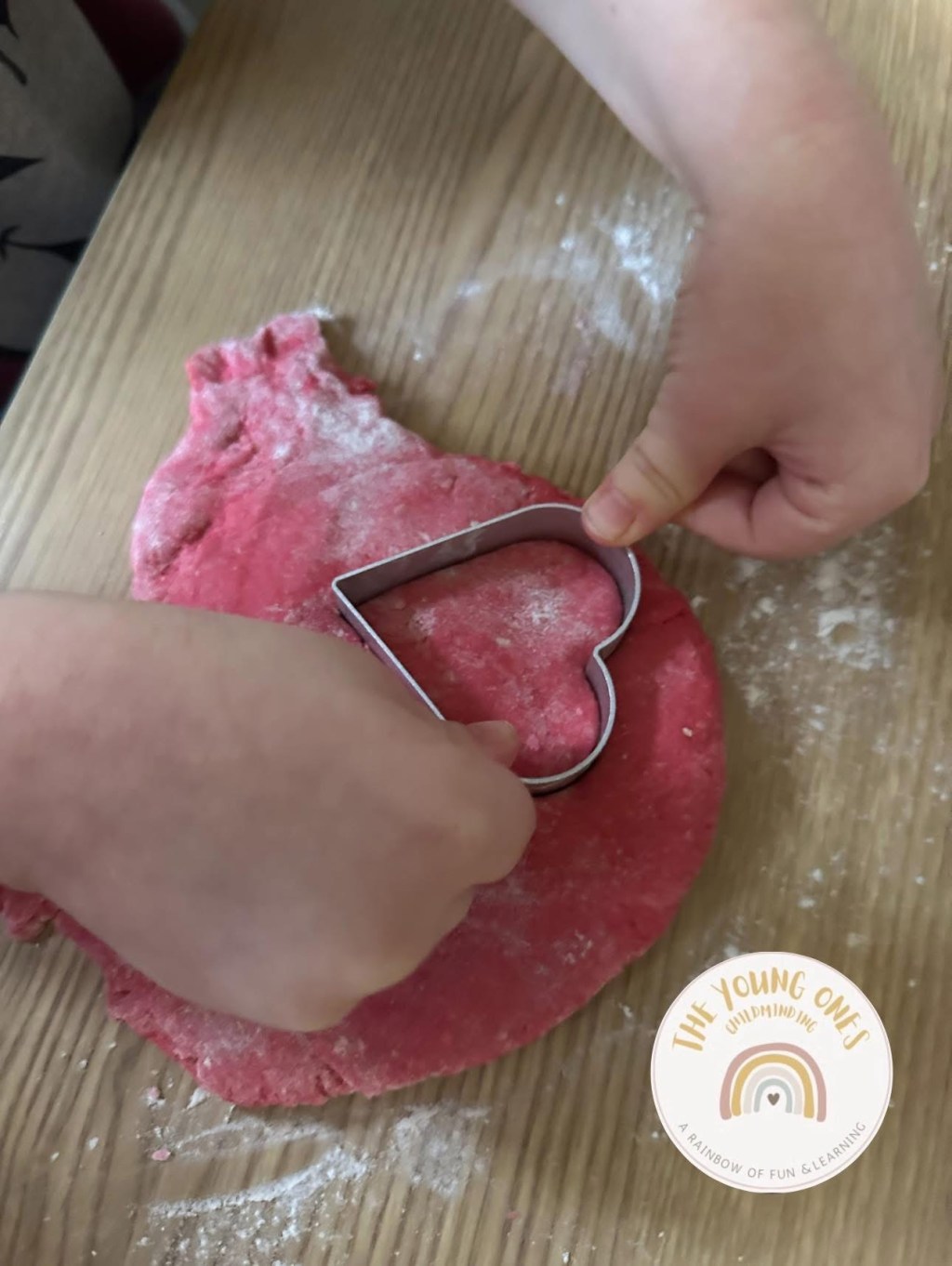
      Tip: Use cookie cutters or your own homemade stamps to create themed shapes, like animals or letters. You can also introduce more sensory elements by adding dried petals, child safe essential oils or food essence, herbs or spices to your playdough.

      3. Woodland Walks: A Story Adventure

      Going on a walk in nature is not only great for physical health, but it’s also the perfect opportunity to use your imagination. If you’re near a wooded area or park, take a walk inspired by a story like We’re Going on a Bear Hunt by Michael Rosen. Have your child pretend to be a bear, explore different “landscapes” like rivers, tall grass, or mud and use their senses to “find” the bear. You could even create a fun scavenger hunt where you both look for animal tracks, leaves or flowers along the way.

      Tip: Collect leaves, sticks, and stones during your walk to create a woodland collage or nature-inspired art project at home!

      4. Imaginative Play: Hairdressers and Other Adventures

      Children love to engage in imaginative play, and it’s one of the best ways for them to learn social skills, practice empathy, and develop their creativity. Set up a “Hairdresser’s Salon” at home where they can give you or their toys a pretend hairstyle. You can also try out other role-playing games, like playing “doctor,” “chef,” or even “shopkeeper” with simple props you already have at home.

      Tip: Set up a little “waiting area” with toy magazines or a pretend cash register, and encourage your child to “act out” customer service scenarios. This helps with communication skills and empathy as they learn to take care of others.

      5. Ready, Steady, Cook! (Early Years Style)

      I am showing my age now but do you remember the TV show Ready Steady Cook? Well, you can bring this concept to life in your kitchen! Get your child involved in helping you cook simple meals. Let them choose some ingredients and create their own “cooking challenge,” mixing flavours, and experimenting with different food textures and colours. You could even make it a themed activity—perhaps a “rainbow salad” or a “fruit salad challenge”. OR use is as a base for imaginative play magic and create your own meals at the play kitchen or mud kitchen.

      Tip: Encourage your child to taste-test different ingredients and describe their flavours. If you are engaging in imaginative play but don’t have a pretend play kitchen, use household objects like pots and pans and you can incorporate natural objects like sticks and pinecones.

      6. Create Your Own Show: Sing, Dance and Perform

      Does your child love to sing and dance? Creating a family performance is a fantastic way to let out energy and share some fun. Put on a talent show where everyone can perform, sing a favourite song or even do a dance routine. Use props (like scarves, hats, or toy instruments) to make the performance more exciting, or put on a play together using costumes and simple backdrops like a sheet.

      Tip: Record the performance so you can watch it together later or send a video to grandparents and friends to share the fun!

      7. Recreate Stories: Bring Books to Life

      Story time is a cherished part of childhood, and you can take it a step further by acting out the stories you read. Whether it’s The Three Little Pigs, Goldilocks and the Three Bears, or any familiar or favourite tale- use props like hats, stuffed animals and costumes to bring characters to life. You can even make your own props – craft a wolf mask or some simple animal ears to wear while you play.

      Tip: After reading, ask your child to tell the story in their own words and encourage them to add their own twists to the plot. This sparks creativity and storytelling skills!

      These simple, early years-friendly activities are a great way for families to spend quality time together, support learning through play, and create memories that last a lifetime. Whether you’re baking together, exploring nature, or putting on a performance, the possibilities for bonding through play are endless. The most important thing is that your child feels loved, engaged and supported in their growth and development.

      For more fun and simple ideas, keep checking out our other blog posts in the Families section. Guiding The Young Ones is here to help you make the most of every moment with your little ones!

      Leave a comment

      Pages: 1 2

    • Let’s Talk about – Self regulation and emotional resilience 

      Let’s Talk about – Self regulation and emotional resilience 

      Supporting Young Children in Developing Emotional Regulation

      Emotional regulation isn’t a skill we’re born with—it’s something we learn over time. In the early years, children’s moods can swing and change massively. Because of this, helping each child learn to self-regulate across a wide range of emotions is one of our most important responsibilities as educators, caregivers or parents.

      The foundations of emotional and cognitive self-regulation are deeply interconnected in the early years and both are essential for behavioural regulation. For young children, this learning process begins with co-regulation—a supportive partnership between child and adult that has both emotional and cognitive aspects.

      Emotionally, co-regulation involves adults modelling calming strategies, naming and talking about feelings and introducing ways to manage them. This helps children begin to recognise their own emotional states and builds their understanding of how to reduce or cope with intense emotions.

      Cognitively, adults can scaffold self-regulation by talking with children about their thinking and learning – helping them pause, reflect and become aware of their thought processes. This early support helps build skills like impulse control, attention, and flexible thinking. It’s also important that adults can model their own thinking processes such as; “I feel sad because” and then what they can do to help themselves “I am going to go for a run because that helps me feel better”, allowing children opportunities to see positive reactions to negative feelings.

      When emotions run very high, they can interfere with a child’s ability to use these cognitive tools. A child overwhelmed by strong feelings may struggle to focus, regulate impulses or think clearly. This is because heightened emotional arousal can overpower the brain’s capacity for logical thought and problem-solving. In these moments, emotional co-regulation must come first – supporting the child in calming down – before they’re ready to reflect or respond thoughtfully to a situation.

      Key Strategies for Co-Regulation

      Researchers have identified three foundational strategies that support effective co-regulation in early childhood. These approaches work together to create the conditions in which children can begin developing their own self-regulation skills.

      1. Positive Relationships
      At the heart of co-regulation is a warm, responsive relationship. When children feel respected, comforted and supported – especially during times of stress – they are more likely to feel safe and understood. Knowing that a trusted adult is consistently there for them builds the emotional security needed to begin regulating their feelings and behaviours.

      2. Enabling Environments
      Children thrive in environments that feel both physically and emotionally safe. A predictable, well-structured space helps reduce unnecessary stress and provides the consistency that young children need. These environments offer space to explore, take risks and try out self-regulation strategies without fear of harsh consequences or confusion.

      3. Learning and Development
      Self-regulation can be taught and strengthened over time. Adults play a key role by modelling calm behaviour, suggesting practical strategies and offering children regular opportunities to practice these skills. Through gentle guidance and scaffolding, children gradually become more confident and capable in managing their emotions, attention and behaviours.

      In Summary

      Supporting emotional regulation in young children is not only about responding to moments of emotional intensity, but also about laying a strong foundation through relationships, environments and daily learning experiences. With consistent, compassionate support, children begin to build the lifelong skills they need to understand, express, and manage their emotions in positive and healthy ways.

      If you’re looking for practical ideas to get started, be sure to check out our Top Tips category – where I have shared simple, effective ways to support emotional regulation every day.

      Leave a comment

      Pages: 1 2