Tag: postpartum

  • Feeding Your Baby – Breast, Bottle & Beyond

    Feeding Your Baby – Breast, Bottle & Beyond

    One of the first questions new parents get asked is: “How’s the feeding going?”
    But the real answer?
    It’s often a lot more complicated than people expect – and it’s not talked about enough!

    The Early Days: Feeding Isn’t Always Straightforward

    Whether you planned to breastfeed, bottle-feed, or weren’t sure yet, it’s important to know this: feeding isn’t always easy. There’s a lot of pressure to “get it right” straight away, but the truth is – many families face challenges, and often in silence.

    When my eldest was born, I struggled. She wouldn’t latch, and I wasn’t given the support I needed. I ended up expressing for six months, and honestly? It was hard. Exhausting. Isolating. Relentless. But I did it because I was doing my best – and so are you.

    There are so many reasons breastfeeding might not go to plan – tongue tie, low milk supply, oversupply, pain, infection, lack of support, exhaustion, or simply because it doesn’t feel right for you.

    And if you choose formula, or decide to switch to it later? There is no shame. Fed is best. Your baby needs nourishment, but you need to be well too – physically and mentally.

    You’re not failing. You’re making the best choices with the information and support you have.

    When Something Feels “Off”

    Sometimes, feeding issues aren’t about the method – they’re about how your baby responds. Colic, reflux, allergies, dairy intolerance – all of these can turn feeding into a battle and make parents feel lost, dismissed or even doubted.

    It’s heart-breaking when your baby is uncomfortable and this can be made even worse when your concerns are brushed aside.

    But trust your instincts. You know your baby best. If you feel something isn’t right – keep pushing. Ask questions. Ask again. You deserve to be heard and your baby deserves to be comfortable.

    It’s okay to advocate for more help, seek a second opinion or ask for referrals to specialists like lactation consultants, dietitians, or paediatricians. If you’re struggling, which so many do when their child is not feeling well – remember, there is no shame in asking for help. Sometimes it can be hard to advocate for yourself and your child, especially when you’re sleep deprived – please know you can always reach out to family, friends or even ask for a chaperone when attending medical appointments.

    Looking After You Too

    Feeding, no matter how you do it, is a full-time job in those early months. It’s not just physical – it’s emotional. If feeding is taking a toll on your wellbeing, it’s okay to reassess. Changing your approach doesn’t mean giving up; it means tuning in to what works best for you and your baby.

    Your wellbeing matters. It always has.

    Solid Starts: It’s Not a Race

    Eventually, your baby will show signs of being ready for solid food – usually around six months. This part can feel exciting, but also overwhelming.

    There’s no one-size-fits-all here, either.

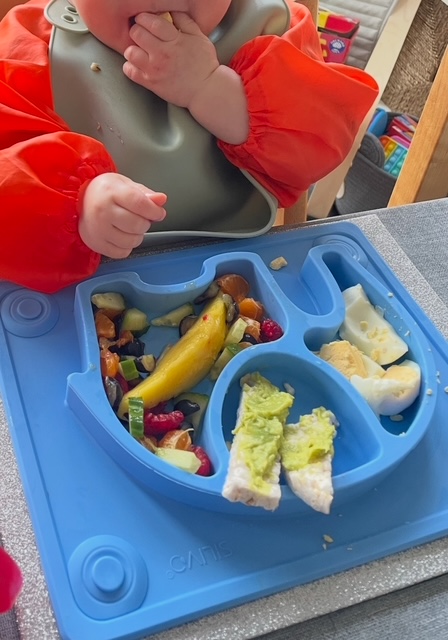
    Some families choose purees. Some go for baby-led weaning (BLW), where babies explore soft, safe finger foods from the start. Some do a mixture of both. I know for many, BLW can feel scary at first – especially with the fear of choking. But learning the difference between gagging and choking is key.

    A helpful rhyme to remember is:
    “Loud and red, let them go ahead. Quiet and blue, they need help from you.”

    For added reassurance, many families now choose to have a LifeVac at home – a non-invasive, emergency choking aid, that has already saved the lives of nearly 4000 people. Thanks to the incredible work of the Oliver Steeper Foundation, awareness of choking safety is growing and tools like LifeVac can offer peace of mind. They’re not a replacement for first aid, but a backup when it’s most needed.

    You’re Doing Great

    Feeding isn’t always the picture-perfect moment we imagine. Sometimes it’s messy, emotional, exhausting, it can even be distressing. But it’s also loving. It’s showing up, hour after hour. It’s learning, adjusting and caring with your whole heart.

    Whatever feeding looks like for you – bottles, breast, both, purees, BLW, allergies, routines or chaos – please know this:

    You are doing an amazing job!

    Leave a comment

    Pages: 1 2

  • The First Days: What No One Tells You

    The First Days: What No One Tells You

    You’ve spent months preparing, reading, waiting. Then suddenly, you’re home – with your baby – and everything feels a little surreal. The moment you’ve been anticipating is finally here… but instead of feeling serene or “ready,” you might find yourself staring blankly, baby in arms, wondering: now what?

    No one really tells you just how disorienting those first few days can be.

    The Emotional Avalanche

    The first days are raw. They’re full of contradictions – love so huge it hurts, tears you don’t understand and a fog of exhaustion that makes the smallest things feel impossible. Your hormones are crashing and shifting. Your body is recovering from something monumental. Whether you’ve had a straightforward birth or, like me, needed emergency surgery and intensive postnatal care, your body has been through something big. And your heart is trying to keep up.

    After my youngest was born, I had to be separated from my eldest for a week while I recovered – a week that felt like a lifetime. I was in high dependency care, battling complications and relying on intravenous, topical and oral antibiotics for 12 weeks. It was a frightening time, physically and emotionally. I wasn’t depressed, but I cried – a lot, in fact, if we are being honest, I cried a lot after having my eldest and that was a much smoother journey… Great, heaving sobs that came from somewhere deep inside. My body was healing, my hormones were shifting, and my heart was holding more than it ever had before.

    And that’s the thing: you don’t have to be diagnosed with postnatal depression to struggle…. Sometimes, this time is just hard. That’s okay.

    Sleep Deprivation Is No Joke

    Let’s talk about the tiredness. The kind of tiredness that makes the hours blur, the tears fall faster and the world feel like it’s spinning just a little too fast. The tiredness that makes choosing what to eat feel like a strategic mission and makes you weep because you dropped a spoon.

    When you’re this sleep-deprived, everything feels bigger. Feeding challenges, a crying baby, a messy kitchen – these things can feel overwhelming not because you’re failing, but because you’re utterly depleted.

    Your Body: A New Story

    This part can be really tough, and it isn’t talked about enough. After birth, your body might feel like a stranger’s. It’s sore, tender, changed. Maybe you’re stitched, bandaged, leaking, or scarred. Maybe you’re still in shock. Even without complications, your body has grown and birthed a human – that is enormous!

    There’s sometimes an unnecessary pressure to “bounce back” or be grateful no matter what but it’s okay if you’re grieving the old version of yourself a little. It doesn’t make you any less strong, loving, or grateful.

    It’s Okay to Ask for Help

    You don’t need to do this alone. And even if you can, you shouldn’t have to.

    Help doesn’t always look like someone swooping in and taking over. It can be someone holding the baby while you shower, someone cooking a meal, someone sitting with you and letting you cry. I’ve been so fortunate to have incredible support – my Mum, Grandma, Auntie, and Sister, all stepping in before I even asked… Meals cooked, injections administered, babies rocked, messes cleaned. No task too big, no job too messy.

    Not everyone has a built-in village like that – and even when people do care, they might not know when or how to step in. People worry about interfering. Sometimes, you’ll need to ask. That’s not weakness – that’s wisdom.

    Routines Take Time

    Whether this is your first baby or your fourth, each addition changes the dynamic. Finding a rhythm is hard. It takes time and patience and often a bit of trial and error. Let go of the pressure to “have it all together” by day three. You’re all learning each other, and that’s a process, not a performance.

    You’re Doing Better Than You Think

    If you feel like you’re floundering – you’re not alone. This is a season of wild transformation. You are healing, learning, and loving in ways you never have before.

    There’s no perfect start. No perfect Mum (or Dad). Just you – showing up, loving hard and finding your way.

    And you know what? That’s more than enough.

    Leave a comment

    Pages: 1 2