
Tag: provocations

  • Let There Be Light: Illuminating Play for Young Explorers

    Let There Be Light: Illuminating Play for Young Explorers

    Light has a magical way of capturing children’s attention – and their imagination. Whether you’re an educator setting up a provocation or a parent looking to spark curiosity at home, incorporating light into play can add wonder, warmth and endless learning opportunities.

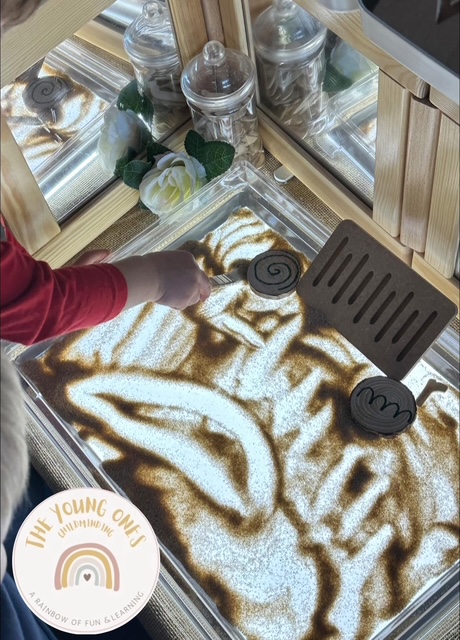
    A light tray is a brilliant place to start. It can transform even the simplest materials into something new and exciting. Try using it to highlight objects for close observation – natural treasures like leaves, shells or feathers suddenly glow with detail when lit from below. Add a topper tray, and it quickly becomes a sensory base for loose parts or sensory materials/bases – such as rice or beans. Want to mix things up? Add playdough for a whole new sensory experience with colour and shadow interplay.

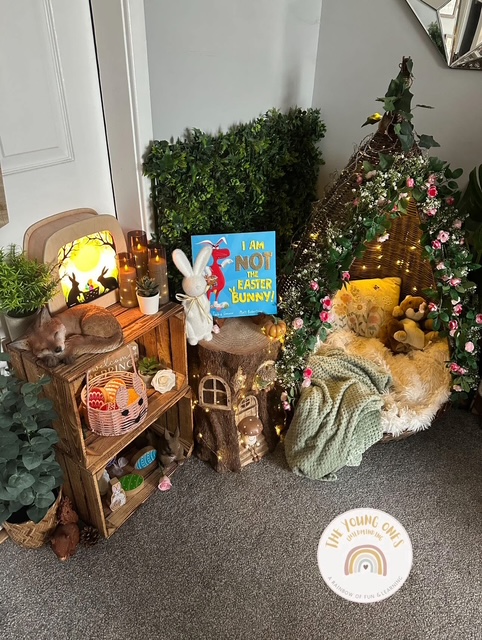
    But light play doesn’t have to stop at the tray…. Fairy lights, soft lamps and rope lights can be woven into invitations to play, creating a gentle, calming atmosphere that draws children in. These additions are perfect for building a hygge-inspired learning space – cosy, inviting and rich in possibility.

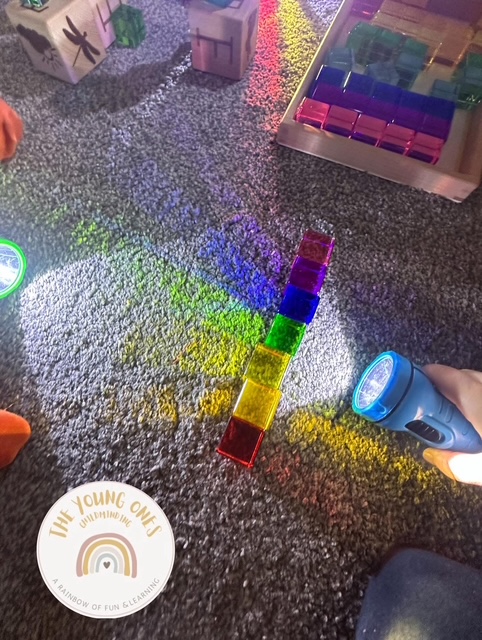
    Torches open up another world of exploration. Use them to cast shadows on the wall, explore reflection with mirrors or observe the magic of refraction through glass and water. Not only are these activities incredibly engaging but they also lay the groundwork for early science concepts in a hands-on, child-led way.

    By incorporating light into your play environments, you’re not only making spaces beautiful and inviting – you’re also inviting children to wonder, investigate and learn in meaningful, sensory-rich ways.

    So next time you’re planning a provocation, ask yourself: how could light shine a new perspective on this experience?

    Let’s light up learning – one twinkle at a time.

    Leave a comment

  • How Long Should You Keep Out Learning Invitations and Provocations?

    How Long Should You Keep Out Learning Invitations and Provocations?

    The answer to this question isn’t set in stone, as there is no “one-size-fits-all” timeline. How long you choose to keep specific resources or materials available will depend on several factors, such as the children’s ages, abilities, interests, and how much they are engaging with the resources. It’s important to assess how much more learning can happen with these materials and if there’s room for deeper exploration.

    At The Young Ones Childminding, we ensure that our core provision – resources that are always available – is in place. However, we also enhance this provision by rotating materials and adjusting them based on the children’s current interests, developmental needs and how best to engage and challenge them. For example, books are always accessible. While some key favourites remain, we rotate others to support the children’s learning and evolving interests.

    An important aspect of using learning invitations and provocations is the continuous observation and reflection on the children’s responses. By carefully observing how children engage with materials, we can determine when they may be ready for a change or when they need more time to explore. Sometimes, children may revisit a provocation after a break, leading to fresh insights or deeper understanding. This process creates a dynamic learning cycle, where provocations are not only used once, but can be returned to at different times, allowing children to build on previous experiences. This ongoing cycle of exploration, observation, and reflection ensures that learning remains meaningful and responsive to each child’s developmental needs.

    It’s crucial to remember that there’s no rush to move on from provocations or invitations. If children are deeply involved and engaged in an activity, consider leaving it out for a longer period of time. Let their play evolve naturally. You never know where it might lead! Sometimes, children may need that extra time to fully explore or question the materials before they’re ready to move on. You can even add, remove or rotate some resources to deepen their curiosity and challenge them further.

    On the flip side, if you notice that children are showing little interest or their engagement begins to wane, it’s completely okay to switch things up. You might discover that children take the learning in directions you hadn’t imagined. This could be because they are following their own interests or schematic urges and that’s wonderful! They are constructing knowledge in their own unique way, which is always worth celebrating.

    Leave a comment

    Pages: 1 2