Tag: support

  • Core Provision and Enhanced Provision: Making Sense of It in Real Life

    Core Provision and Enhanced Provision: Making Sense of It in Real Life

    After a few recent conversations with other practitioners, I realised how much confusion there still is around core provision and enhanced provision. Not because people aren’t doing it — but because they often don’t recognise that they already are.

    I wanted to share what this looks like in my own setting, not as a checklist or a “this is how you should do it”, but as a real, lived example — mess, movement, space limitations and all.

    What core (or continuous) provision really means to me

    For me, core provision is about familiarity, accessibility, and trust.

    It’s the resources that are always available to children — the ones they return to again and again, building on ideas, revisiting learning, and deepening their play over time. These resources don’t need to be flashy or constantly changed. In fact, their power lies in their consistency.

    In my setting, I don’t have a large, dedicated space where everything lives permanently. Storage is something I’ve had to think carefully about, because how resources are stored has a huge impact on how effective core provision actually is. Some areas rotate where they’re stored simply because of space — but the key thing is that the resources themselves are always readily available to the children.

    Core provision isn’t about where something sits. It’s about whether children know it’s there, can access it independently, and feel confident using it.

    Core provision inside and out

    One thing that’s really important to me is that core provision happens both indoors and outdoors.

    Children don’t separate their learning by walls, so I try not to either.

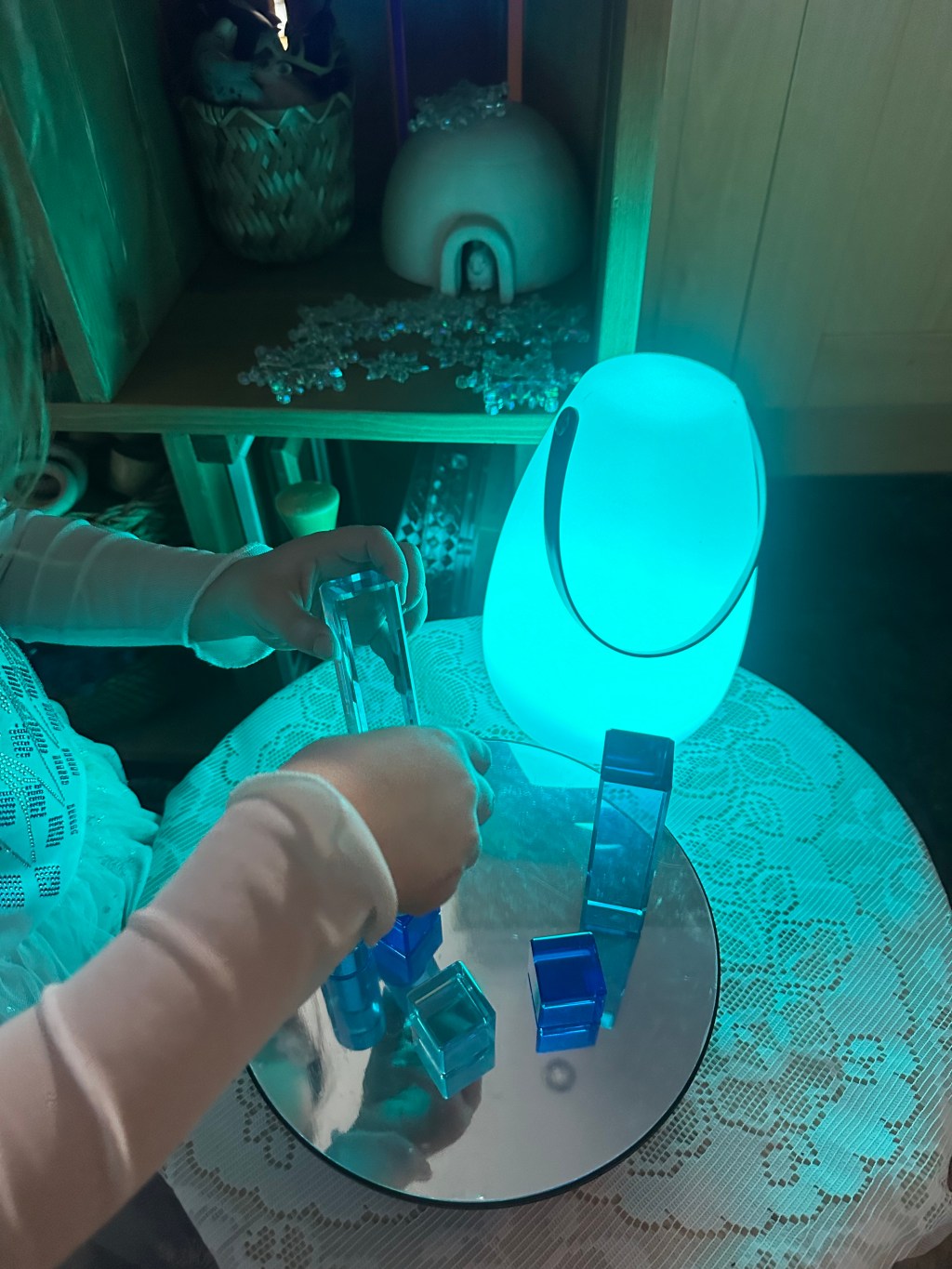
    For example, construction is a huge part of our core provision. Indoors, children always have access to resources like wooden blocks, magnet tiles, acrylic cubes, cars, animals, and loose parts. Outdoors, that same interest is supported on a larger, more physical scale — with wooden planks (cut-down decking), pipes, tyres, guttering, foam blocks, and open-ended materials that allow for big ideas and gross motor play.

    The resources are different, but the thinking is the same.

    This continuity allows children to transfer ideas, revisit schemas, and explore concepts in ways that feel natural to them.

    Open-ended, authentic resources

    Another key part of our core provision is the use of real, authentic materials alongside more traditional resources.

    In our home corner, children have access to real pots and pans, metal and wooden utensils, and items with different weights, textures, and sounds. Alongside this, we also have felt food and open-ended loose parts that children can transform into whatever their play requires.

    You’ll find animals both inside and out — some wooden, some plastic — because children use them differently in different spaces. Natural loose parts like pinecones, stones, and shells are always available too, offering endless opportunities for imaginative play, schematic exploration, and sensory engagement.

    Books as core provision

    Books are woven throughout the setting, not confined to one area.

    We have familiar, well-loved books that are always available — the ones children know by heart, request again and again, and use in their play. Alongside these, we rotate seasonal or interest-led books, often linking them to small world play or simple bookish invitations. Alongside this we always have books and materials that reflect and build on children’s cultural understanding, promoting diversity and inclusivity.

    This is where enhanced provision gently comes in.

    So what is enhanced provision?

    Enhanced provision is not about replacing core provision or creating lots of new activities.

    It’s about responding.

    It might be:

    • adding sensory/messy play provocation that is based round in interest or areas of development that you would like to support
    • introducing a story/bookish play that reflects something children are acting out in play
    • adding new loose parts, textures, or materials linked to a current interestChanging seasonal resources as the seasons change, and introducing books and materials linked to festivals and celebrations from around the world to broaden children’s experiences.

    The core stays steady. The enhancement shifts and adapts.

    EYFS — without forcing it

    I’m always mindful of ensuring that our provision supports all areas of the EYFS, both indoors and outdoors. But I don’t do this by setting up separate “maths”, “literacy”, or “understanding the world” activities.

    Instead, I make sure resources are accessible.

    For children interested in numbers, there are resources with recognisable numerals available inside and out. For those drawn to mark-making or storytelling, there are always opportunities to explore literacy in meaningful ways. Construction naturally lends itself to mathematical thinking, problem-solving, and conversations about the world — from counting blocks to talking about homes, structures, and materials.

    One resource often supports many areas of learning — and that’s exactly how it should be.

    A gentle note on schemas

    Although I won’t go into detail here, it’s worth mentioning that schemas play a big role in how children engage with core provision. When resources are consistent and open-ended, children can fully explore their schematic interests — whether that’s transporting, positioning, enclosing, rotating or more.

    Understanding this has helped me refine our provision over time, and it’s something I’ll be sharing more about separately.

    Less really is more

    If there’s one thing I hope this offers, it’s reassurance.

    Provision doesn’t need to be perfect.
    It doesn’t need to be constant change.
    And it certainly doesn’t need to look the same in every setting.

    What matters is that children feel confident, curious, and capable in their environment — and that practitioners feel supported, not overwhelmed, by the expectations placed on them.

    Chances are, you’re already doing far more than you realise.

    Leave a comment

  • Let’s Talk About – Domestic Violence and Abuse: Support, Information and Reassurance

    Let’s Talk About – Domestic Violence and Abuse: Support, Information and Reassurance

    Domestic violence or abuse can affect anyone, regardless of age, gender, or background. If you’re worried that someone might notice or check on the pages you’ve visited, the Women’s Aid website offers guidance on how to cover your tracks online to protect your privacy.

    What is Domestic Violence and Abuse?

    Domestic violence, also referred to as domestic abuse, encompasses physical, emotional and sexual abuse that occurs in intimate partner relationships or between family members. It can happen to anyone and unfortunately, anyone can be an abuser.


    Getting Help and Support for Domestic Violence

    You do not have to wait for an emergency situation to reach out for help. If you’re experiencing domestic abuse, it’s important to talk to someone and remember that you are not alone.

    Information and Support Resources:

    • For women: Call the Freephone National Domestic Abuse Helpline run by Refuge at 0808 2000 247, available 24/7, offering confidential, non-judgemental information and support.
    • For men: Call Men’s Advice Line at 0808 8010 327 (Mon-Fri 10am-8pm) or visit their webchat (Wed 10am-11:30am & 2:30pm-4pm) for information and support.
    • For LGBT+ individuals: Call Galop at 0800 999 5428 for emotional and practical support.
    • For forced marriage or honour crimes: Call Karma Nirvana at 0800 5999 247 (Mon-Fri 9am-5pm) or GOV.UK Forced Marriage Unit at 020 7008 0151.

    In emergencies, always call 999. You can also email for support. When emailing, please specify when and how it is safe to respond:

    The Survivor’s Handbook from Women’s Aid is a free resource that provides essential information about housing, money, children’s support, and legal rights.

    If you’re concerned about your own behaviour, the Respect Helpline can provide support. Call 0808 802 4040 for confidential, free advice.


    Signs of Domestic Violence and Abuse

    Domestic violence is fundamentally about power and control. There are different forms of abuse, and it can be hard to recognise, especially when the abuser acts differently around others. Here are some questions to help you identify potential abuse:

    Emotional Abuse:

    • Does your partner belittle or put you down?
    • Do they blame you for arguments or abuse?
    • Do they isolate you from family or friends?
    • Do they control your access to money or essential items?
    • Do they monitor your social media or invade your privacy?

    Threats and Intimidation:

    • Are you ever threatened with harm or death?
    • Do they destroy your belongings or intimidate you physically?
    • Are you ever made to feel fearful of their actions?

    Physical Abuse:

    • Has your partner slapped, punched, kicked, or physically harmed you?
    • Have they ever burned or choked you, or thrown things at you?

    Sexual Abuse:

    • Have they touched you in ways you didn’t want?
    • Are you pressured into unsafe or unwanted sexual activity?
    • Are you made to have sex when you don’t want to, even with a partner?

    General Signs of Abuse:

    • Have you ever felt afraid of your partner?
    • Have you changed your behavior out of fear of what they might do?

    If you answered “yes” to any of these, you might be in an abusive relationship. Help is available, and you don’t have to face this alone.


    Domestic Abuse During Pregnancy

    Unfortunately, domestic abuse often increases during pregnancy. If you are pregnant and facing abuse, it can get worse as the relationship dynamics change. It’s essential to seek support, both for your safety and the safety of your unborn child.


    If You Decide to Leave

    The first step in escaping an abusive situation is realizing that you are not alone, and it’s not your fault. Before leaving, it’s important to get advice and create a safety plan. Some organizations that can help with safety planning are:

    • Women’s Aid (for women)
    • Men’s Advice Line (for men)
    • Galop (for LGBT+)

    If you plan to leave, be careful who you tell, and make sure the person abusing you does not find out where you’re going. Women’s Aid provides practical advice on making a safety plan for both men and women.


    Signs of Domestic Abuse on Children

    Domestic abuse often impacts children who witness it. It’s important to be aware of the signs that a child may be affected:

    • Aggression, bullying, or anti-social behavior
    • Anxiety, depression, or suicidal thoughts
    • Bed-wetting, nightmares, or insomnia
    • Frequent sickness or unexplained health issues
    • Eating disorders or substance use
    • Problems in school or learning difficulties
    • Withdrawal or isolation

    If you notice any of these signs, it’s important to seek support for both you and your children.


    Effects of Domestic Abuse on Children

    Children who live in homes with domestic abuse may experience long-term effects on their mental, emotional, and physical wellbeing. These impacts can last into adulthood if left unaddressed.

    What’s crucial is ensuring that the abuse stops and that children are provided with a safe, stable environment where they can heal.


    Support for Adults and Families Affected by Domestic Abuse

    There are several support services available:

    • Relate: Call 0300 003 0396 for support with relationship issues, including domestic abuse.
    • National Domestic Violence Helpline: Call 0808 2000 247 (24/7).
    • Men’s Advice Line: Call 0808 801 0327 for men experiencing domestic abuse.
    • National LGBT+ Domestic Abuse Helpline: Call 0800 999 5428 for LGBT+ individuals.

    Help for Those Worried About Their Behaviour

    If you think you may be abusive, or are concerned about your behaviour, help is available.

    You can call NSPCC at 0808 800 5000 or email help@nspcc.org.uk for advice and support.

    You can also reach out to Respect at 0808 802 4040 (Mon-Fri 9am-5pm) for confidential help. Their webchat service is available on Tuesdays and Thursdays.


    Remember, you are not alone, and help is available. There are professionals who care and can support you through the difficult journey of healing, whether you are experiencing abuse, have witnessed it, or are concerned about your own behaviour.

    Take the first step – reach out, ask for help, and know that there is a path to safety, peace and healing.

    Leave a comment

    Pages: 1 2

  • Let’s Talk About Food, Food Aversions, and Picky Eaters

    Let’s Talk About Food, Food Aversions, and Picky Eaters

    Some children eat everything put in front of them, while others require a bit more encouragement. It’s completely normal for children to go through phases of being picky about what they eat but I understand how frustrating picky eating can be for parents and carers. If your child is only eating certain foods, there are several strategies you can try to help form new, healthier habits. Here are some tips to help your child try more foods and cooperate at mealtimes.

    (If your child isn’t eating at all, this could be linked to illness or additional needs, and you may need to approach it differently. Please refer to the last section for more guidance.)

    Create a Positive Environment

    The setting where you eat can make a big difference. Consider these tips to create a positive atmosphere at mealtimes:

    • Sit together as a family and role model the behaviors you’d like to see. Mealtime is a great opportunity to spend time together and create positive associations with food.
    • Avoid distractions like TV during mealtimes. Distractions can interfere with your child’s ability to recognise their hunger and fullness cues.
    • Set realistic expectations for how long your child should sit at the table, keeping their age and developmental stage in mind.
    • Encourage self-feeding, which helps foster independence and positive food relationships.
    • Make sure your child feels comfortable and included at the table, and avoid rushing them.

    Don’t Force Food

    It’s important not to force food on children. While you may want them to try new things, pressuring them can have the opposite effect, causing distress and creating negative associations with eating. As long as your pediatrician says your child is healthy and eating a variety of foods, try not to worry too much about their current food preferences.

    Gently Expand the Menu

    You can be a great role model by being an adventurous eater yourself and showing your child how to have a positive food relationship. Try creating a list of new foods to try as a family and make it fun—ask, “What new food should we try tonight?” You can even turn it into a game, like Food Bingo, to make exploring new foods exciting.

    Offer Foods More Than Once

    If your child refuses a new food, try offering it again another day. Repeated exposure can help them become more comfortable with unfamiliar foods. It may take multiple attempts (often over ten tries) for a child to accept a new food. You can also encourage your child by showing them that you’re eating the food yourself. This can help normalise it.

    Provide Lots of Praise (Without Pressure)

    Avoid pressuring or bribing your child to eat a certain food, as this can create negative feelings and associations about/around food. Instead, offer new foods in a relaxed, low-pressure way. Praise your child when they’re brave enough to try something new. Some children may also appreciate knowing what they’re eating, so showing them the whole food before chopping or cooking it can help them understand what’s on their plate.

    Avoid Using Food as a Reward

    Using food as a reward can inadvertently create a negative association between certain foods and rewards. For example, children may start to see sweets as “good” and vegetables as “bad.” Instead, try rewarding them with activities such as a trip to the park or playing a game together. It’s also helpful to avoid referring to foods as “treats” for the same reasons.

    Don’t Make a Second Meal

    Rather than preparing a separate meal for your child, always try incorporating “safe foods” alongside new or unfamiliar ones. For example, if your child enjoys certain fruits or vegetables, include those on the plate along with new foods like pasta or chicken. This can make the meal more appealing and less overwhelming.

    Stay Calm with Unwanted Food

    If your child refuses to eat something, try not to react with frustration. Children can pick up on your anxiety, which could make the situation worse. Instead, calmly remove the plate without comment. Teach your child that just because they don’t like a particular food doesn’t mean the whole meal is ruined. For example, if they don’t like a pickle on their burger, encourage them to push it to the side.

    Get Little Ones Involved and Make Food Fun

    Involving children in food preparation can make them more open to trying new foods. Let them help make the shopping list, and turn food shopping into a game- perhaps trying to find certain colours or creating a “rainbow” of foods. Exploring new varieties of foods may also help your child discover preferences they didn’t know they had. For example, they might find they enjoy foods with smoky flavours or prefer sour apples over sweet ones.

    Reading stories that include food or engaging in role-playing cooking games can also help children feel more comfortable with food. Cooking together is another great way to get children interested in new foods. Look through family-friendly recipes and pick one that excites both you and your child, then prepare it together.

    What is a Food Aversion and ARFID?

    A food aversion is a strong dislike or fear of a particular food. The sight, smell, or taste of the food may cause a child to feel nauseous, gag, or even vomit. Food aversions can affect both children and adults.

    Avoidant Restrictive Food Intake Disorder (ARFID) is an eating disorder characterized by the avoidance of certain foods or food groups. Children with ARFID may restrict their food intake due to sensitivities to taste, texture, smell, or appearance. This condition can develop after a distressing experience, such as choking or vomiting, which affects their relationship with food. ARFID is also common among children with Autism Spectrum Disorder due to sensory sensitivities.

    When to Seek Professional Support

    If you’re struggling to get your child to eat a more varied diet or if you’re concerned about their health, it may be helpful to seek support from healthcare professionals such as a GP, health visitor or early intervention team. If your child is losing weight, feeling weak or lethargic or exhibiting other concerning symptoms, contact your doctor immediately. Remember, my door is always open to offer support and guidance, so don’t hesitate to reach out if you have any questions or need additional help.

    Here is the NHS link for further information and guidance –

    https://www.nhs.uk/conditions/baby/weaning-and-feeding/fussy-eaters/

    Leave a comment

    Pages: 1 2

  • The First Days: What No One Tells You

    The First Days: What No One Tells You

    You’ve spent months preparing, reading, waiting. Then suddenly, you’re home – with your baby – and everything feels a little surreal. The moment you’ve been anticipating is finally here… but instead of feeling serene or “ready,” you might find yourself staring blankly, baby in arms, wondering: now what?

    No one really tells you just how disorienting those first few days can be.

    The Emotional Avalanche

    The first days are raw. They’re full of contradictions – love so huge it hurts, tears you don’t understand and a fog of exhaustion that makes the smallest things feel impossible. Your hormones are crashing and shifting. Your body is recovering from something monumental. Whether you’ve had a straightforward birth or, like me, needed emergency surgery and intensive postnatal care, your body has been through something big. And your heart is trying to keep up.

    After my youngest was born, I had to be separated from my eldest for a week while I recovered – a week that felt like a lifetime. I was in high dependency care, battling complications and relying on intravenous, topical and oral antibiotics for 12 weeks. It was a frightening time, physically and emotionally. I wasn’t depressed, but I cried – a lot, in fact, if we are being honest, I cried a lot after having my eldest and that was a much smoother journey… Great, heaving sobs that came from somewhere deep inside. My body was healing, my hormones were shifting, and my heart was holding more than it ever had before.

    And that’s the thing: you don’t have to be diagnosed with postnatal depression to struggle…. Sometimes, this time is just hard. That’s okay.

    Sleep Deprivation Is No Joke

    Let’s talk about the tiredness. The kind of tiredness that makes the hours blur, the tears fall faster and the world feel like it’s spinning just a little too fast. The tiredness that makes choosing what to eat feel like a strategic mission and makes you weep because you dropped a spoon.

    When you’re this sleep-deprived, everything feels bigger. Feeding challenges, a crying baby, a messy kitchen – these things can feel overwhelming not because you’re failing, but because you’re utterly depleted.

    Your Body: A New Story

    This part can be really tough, and it isn’t talked about enough. After birth, your body might feel like a stranger’s. It’s sore, tender, changed. Maybe you’re stitched, bandaged, leaking, or scarred. Maybe you’re still in shock. Even without complications, your body has grown and birthed a human – that is enormous!

    There’s sometimes an unnecessary pressure to “bounce back” or be grateful no matter what but it’s okay if you’re grieving the old version of yourself a little. It doesn’t make you any less strong, loving, or grateful.

    It’s Okay to Ask for Help

    You don’t need to do this alone. And even if you can, you shouldn’t have to.

    Help doesn’t always look like someone swooping in and taking over. It can be someone holding the baby while you shower, someone cooking a meal, someone sitting with you and letting you cry. I’ve been so fortunate to have incredible support – my Mum, Grandma, Auntie, and Sister, all stepping in before I even asked… Meals cooked, injections administered, babies rocked, messes cleaned. No task too big, no job too messy.

    Not everyone has a built-in village like that – and even when people do care, they might not know when or how to step in. People worry about interfering. Sometimes, you’ll need to ask. That’s not weakness – that’s wisdom.

    Routines Take Time

    Whether this is your first baby or your fourth, each addition changes the dynamic. Finding a rhythm is hard. It takes time and patience and often a bit of trial and error. Let go of the pressure to “have it all together” by day three. You’re all learning each other, and that’s a process, not a performance.

    You’re Doing Better Than You Think

    If you feel like you’re floundering – you’re not alone. This is a season of wild transformation. You are healing, learning, and loving in ways you never have before.

    There’s no perfect start. No perfect Mum (or Dad). Just you – showing up, loving hard and finding your way.

    And you know what? That’s more than enough.

    Leave a comment

    Pages: 1 2