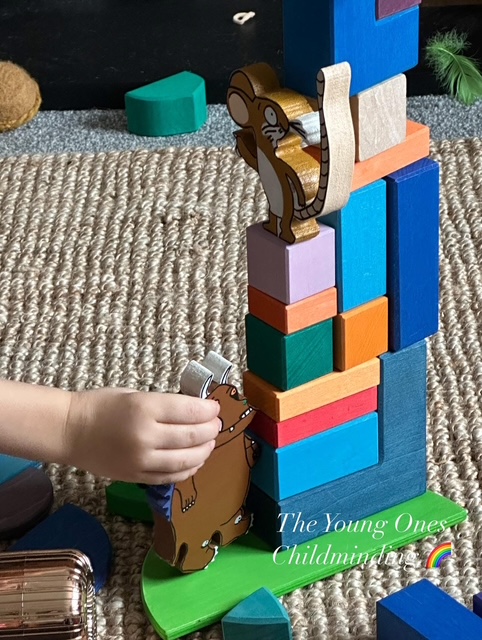
“Just playing.”
It’s a phrase that’s said without meaning to dismiss, but it does… Because when we say a child is just playing, we’re overlooking the fact that play is actually their most important form of learning.
As adults, we often associate learning with sitting still, listening, or holding a pencil. But for young children – especially toddlers and pre-schoolers – play is how they explore, express, imagine, question and problem-solve. It’s how they figure out the world and their place in it. Those who already know me, know that I am a massive advocate for learning through play and the endless proven benefits it provides. Hopefully you will be too, by the end of this piece…
The Magic of Open-Ended Play
Building blocks. Mud kitchens. Dressing up. Dancing around the kitchen in a superhero cape. It may sometimes look like chaos – but to your child, it’s a world of possibility.
Open-ended play (where there’s no fixed outcome or “right” answer) encourages creativity, independence and deep thinking. There are no instructions to follow – just imagination to lead.
When a child builds a tower, they’re not only playing – they’re learning balance, spatial awareness, and perseverance when it falls.
When they make you “dinner” from leaves and mud in the garden, they’re developing social skills, sequencing and role play.
When they paint with their hands or squish playdough, they’re strengthening fine motor skills and processing sensory input.
You Don’t Need Fancy Toys or Perfect Pinterest Setups
We live in a world of curated crafts and colour-coordinated toy rooms, but let’s get this straight: you do not need to be a play expert or have a Montessori-certified space to support your child’s development.
Some of the best play happens with the simplest things:
- Pots and pans and a wooden spoon
- A cardboard box (a spaceship! a shop! a den! The possibilities are endless!)
- Scarves to twirl, animals to line up, pegs to sort
- A puddle and some wellies
You don’t need more stuff – you just need space for imagination.
“But I’m Not Good at Playing…”
You don’t have to be!
You don’t need to be on the floor all day long pretending to be a dinosaur or customer at the café. Your role is to offer the environment, encourage curiosity, and sometimes join in—but it’s okay to step back too. Independent play is healthy and important.
One powerful way to connect is by noticing what your child’s doing and commenting, not directing.
“Wow, you used all the blue blocks!”
“I can see you’re working so carefully on that tower.”
“That dragon looks fierce!”
This shows them you value their play – and their thinking.
Play Builds Brains and Confidence
Through play, children:
- Build emotional resilience (taking turns, trying again, expressing feelings)
- Develop language (narrating, naming, story-making)
- Strengthen their bodies (running, climbing, balancing)
- Learn how to be with others (cooperation, empathy, self-resilience, self-confidence and self-control)
We don’t need to rush them to academics and formal classroom education. All of that learning? It’s already happening – in the block corner, at the water tray, in the back garden.
Let Them Lead
One of the greatest gifts we can give children is time to explore their interests, even if it means getting a little messy or noisy. Let them follow their curiosity. Ask open-ended questions. Offer time and space, not pressure.
When we protect play, we protect joy and joy is where real learning begins.


 Guiding The Young Ones
Leave a comment