A Barefoot Conversation
Why play, presence, and connection matter more than the DFE’s version of “school readiness“
A barefoot conversation with a ladybird.
That’s what stopped me in my tracks.
Tiny toes curled against the grass, a child crouched low and still—whispering gentle words to a ladybird resting on a leaf. No rush. No noise. Just awe. Just presence.
And in that moment, everything made sense again. This is childhood. Not worksheets. Not school-readiness tick lists. Not quiet hands and still bottoms. But muddy feet, wonder-filled questions, and empathy blooming from the tiniest of encounters.
We are raising little humans, not robots. And yet across the country, we’re asking four-year-olds to meet expectations built for older children. We’re asking them to sit before they’re ready, to read before they’re developmentally able — to achieve like an adult, rather than explore like a child.
But the world doesn’t need more children who can sit still at four.
It needs children who care.
Children who feel.
Children who notice the smallest creatures and imagine their stories.
Because from these early acts of compassion — like chatting to a ladybird — come the roots of kindness, empathy, and responsibility for the world around them.
What the Research Says
We don’t have to guess what children need. Decades of child development research is clear: play is not a luxury—it’s a biological necessity.
- The Harvard Center on the Developing Child highlights that young children learn best through active, joyful, and engaging experiences— not passive instruction.
- The Alliance for Childhood and UNICEF advocate strongly for delayed formal schooling, with many European countries (like Finland and Sweden) beginning structured academic learning at age 6 or 7 — after a long foundation of play-based early years education.
- Neurological studies show that movement, exploration, and connection are essential for developing executive function, emotional regulation, and long-term cognitive skills.
Yet here in England, we’re still pushing four-year-olds (and younger) into formal classrooms. We’re turning play into a performance. Exploration into outcomes. And our children are paying the price.
A Personal Reflection
When I think of the children in my care, I think of the ones who can build entire worlds out of sticks and stones. The ones who soothe slugs and rescue worms. The ones who tell me, with complete seriousness, what the ladybirds are saying back.
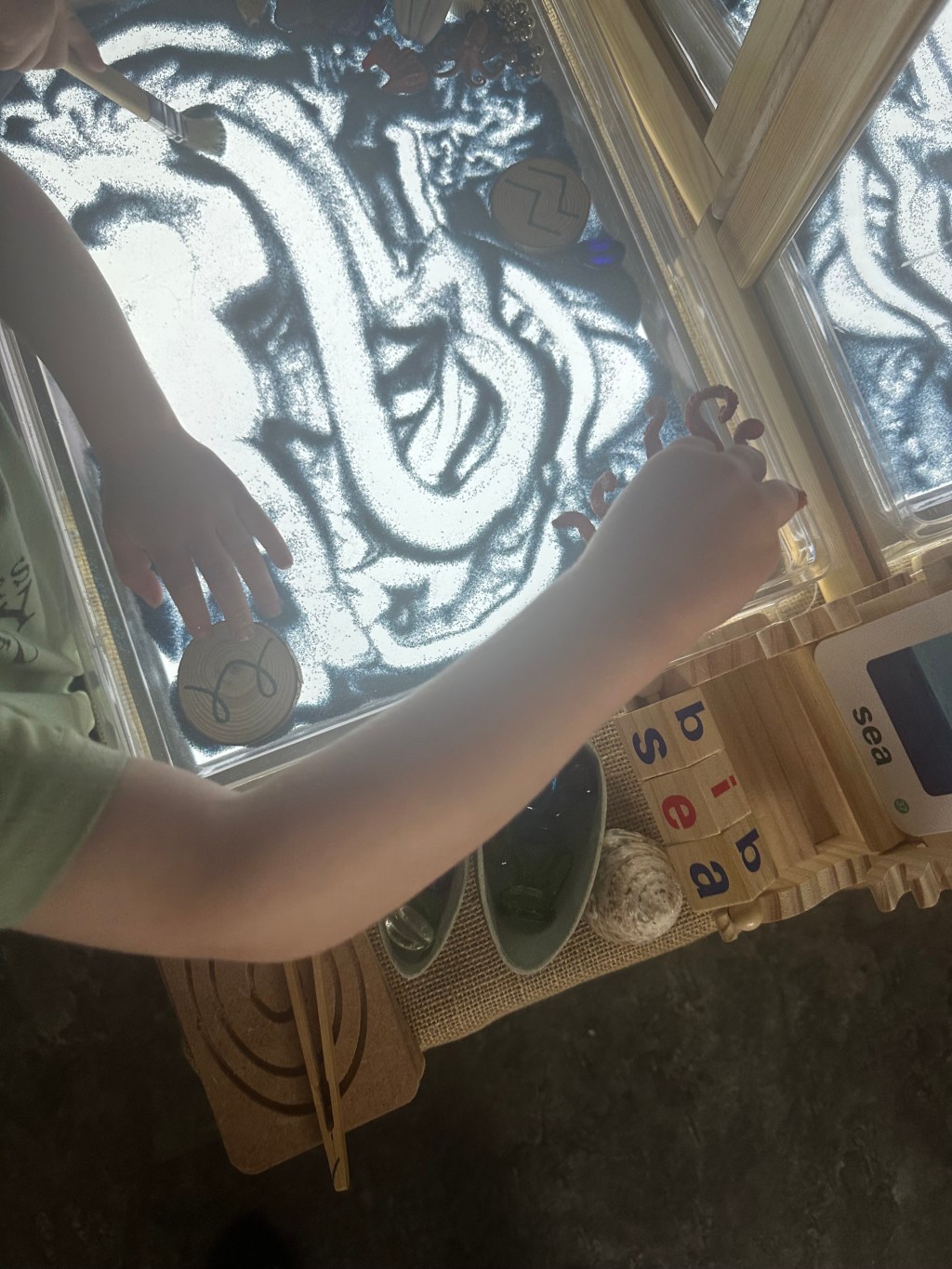
And I think of the quiet ones — the ones who thrive when they are not rushed. The ones who don’t always find sitting easy, but who can spend 40 minutes moving conkers from bowl to basket with deep, meaningful concentration.
These aren’t children who are behind. These are children who are becoming.
Children who are deeply engaged with their world.
Children who will grow into compassionate, thoughtful, resilient humans — if we let them.
And yet I see the increased pressure creeping in. From “school readiness” checklists. From misunderstood expectations. From a system that has forgotten what childhood is meant to be.
The Bigger Picture
This isn’t just a professional frustration — it’s a national concern. We are seeing a sharp rise in childhood mental health difficulties, and many professionals in the early years sector are sounding the alarm.
Children today are growing up in a world that is louder, faster, and more pressured than ever before. Many are struggling with anxiety, attention difficulties, and burnout — at just four or five years old. And instead of responding with care and compassion, we are asking them to sit longer, try harder, be quieter. This is not developmentally appropriate. It is damaging.
Every child learns in their own way. Some need movement to think clearly. Some need silence. Some learn through messy, sensory exploration, while others thrive in quiet, focused play. They are not carbon copies. They are not data points. And they are certainly not “failing” because they can’t yet conform to adult-driven expectations. If we truly care about children, then their wellbeing, mental health, and right to a childhood must become our top priority — not optional extras squeezed in between phonics and fine motor worksheets.
Why are we ignoring the mountain of evidence? Why are we still using outdated models of achievement when the world (and the child) has changed?
It’s time we remembered: school readiness isn’t about sitting still. It’s about being secure, curious, and emotionally equipped to handle new environments. And we build those foundations through love, play, and presence — not pressure.
A Call to Action
Unfortunately, we can’t wait for policymakers to catch up — because far too many of the people making decisions about children have little understanding of child development and seem unwilling to listen to those who do. The system won’t fix itself. But we can be the change, from the ground up.
Here’s how:
- Speak up. Share your stories, your knowledge, your child-centred practice. Help shift the narrative from achievement to wellbeing.
- Advocate. When conversations arise about “school readiness,” bring it back to what matters: secure attachments, emotional literacy, and developmentally appropriate expectations.
- Connect. With parents, with educators, with community leaders. The more unified our voice, the harder it is to ignore.
- Protect play. Let children be barefoot. Let them talk to ladybirds. Let them carry sticks and ideas and questions. This is not time wasted — it is everything.
Final Thoughts From an Educator
One day, our children will look back on these years.
Will they remember a world that rushed them, silenced them, and tried to make them smaller?
Or will they remember being seen, heard, and cherished for exactly who they were?
That gentle whisper to a ladybird might just be the first step in raising a child who will one day protect the planet, comfort a friend, or stand up for what’s right.
And that begins not with the DFE’s current version of readiness, as described by Bridget Phillipson…
But by people who truly understand child development and with respect for childhood.
So, let us be the ones who slowed down.
Who knelt beside them in the grass.
Who made space for joy, for wonder, for messy, magnificent becoming.
Because when we protect childhood, we protect everything that matters.




 Guiding The Young Ones
Leave a comment